In healthcare, every minute spent fighting software friction is a minute taken away from patient care. Cybercriminals are well aware of how high-stakes the environment is, and they actively exploit staff to execute their campaigns.
Modern threat actors aren’t spending months trying to break complex cryptographic controls. These days, they go after administrative staff, clinical directors, and IT help desks directly through multi-channel social engineering.
Historically, health systems have relied on annual compliance videos and generic, email-focused phishing simulations to satisfy baseline regulatory checkboxes. But passive compliance tracking fails against modern, machine-speed tactics. 62% of breaches (opens in new tab) continue to involve the human element, proving that static training modules can’t withstand active adversary pressure.
We’ll break down how threat groups exploit the unique operational constraints of healthcare systems, why legacy compliance models leave critical blind spots across non-email channels, and how healthcare CISOs can transition toward a unified Social Engineering Defense (SED) strategy that dismantles attacker infrastructure at the source.
Threat actor playbook: Conversational AI meets weaponized empathy
Modern cybercriminals don’t rely exclusively on software vulnerabilities to breach hospital networks. Instead, sophisticated threat groups run coordinated, multi-stage campaigns designed to bypass technical perimeters through conversational manipulation.
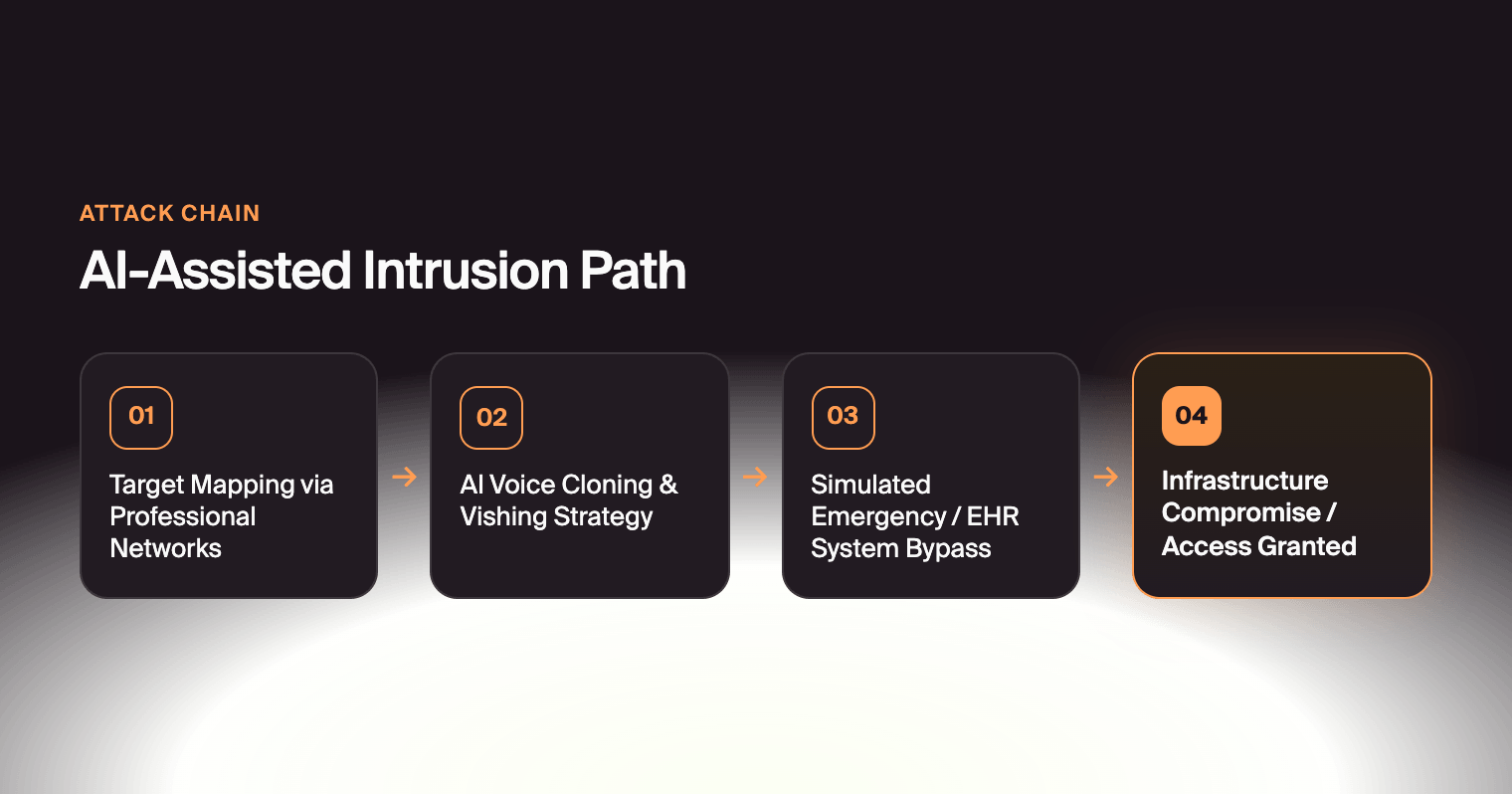
Advanced threat actors execute a precise operational loop to exploit the human layer in healthcare settings:
- Open-source reconnaissance: Threat actors map clinical hierarchies, identifying target personas such as IT help desk staff, surgical leads, and patient access representatives across public professional networks.
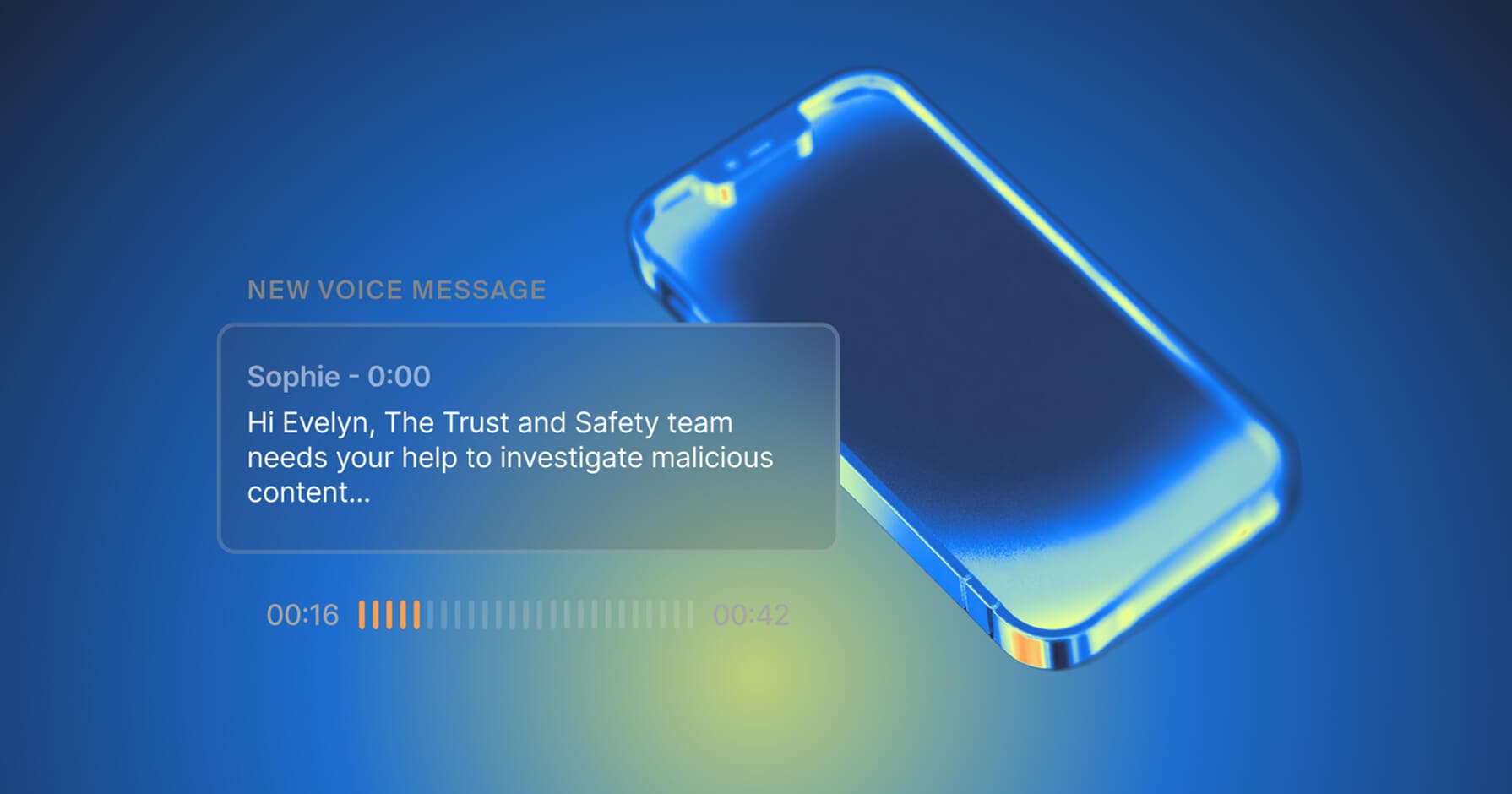
- AI-native voice mimicry: Deploying generative voice cloning, attackers call internal help desks impersonating locked-out physicians who require immediate access to Electronic Health Records (EHR) systems.
- Fabricated clinical urgency: By introducing synthetic background audio (such as active clinical alarms or emergency department chatter), attackers create high-stress environments. Support agents are coerced into resetting passwords or altering multi-factor authentication (MFA) parameters to avoid delaying care.
Sector-specific vulnerabilities in care environments
Defending a health system requires managing operational realities that directly match adversary capabilities.
Threat actors continuously exploit three variables unique to healthcare environments:
High workforce transience
Healthcare organizations manage a fluid workforce of shift workers, traveling nurses, locum tenens physicians, and outsourced patient-intake staff. Static, annual training schedules are fundamentally obsolete in this environment; temporary staff often complete their rotations before completing an assigned compliance module.
Weaponization of caregiver empathy
Healthcare workers are culturally conditioned to remove friction, act quickly, and prioritize patient outcomes. Social engineers aggressively turn this disposition into a vector of compromise. Fabricating time-sensitive emergencies allows attackers to push staff into bypassing identity verification protocols.
Cross-channel blind spots
Clinical workflows extend far beyond traditional desktop email. Operations rely on VoIP phones, mobile devices, SMS alerts, and collaboration channels. Legacy email security tools offer zero visibility into these secondary vectors, leaving open communication paths that threat actors systematically exploit.
Breaking the social engineering attack chain
To fight back against AI-driven, multi-channel campaigns, healthcare security leaders must transition away from legacy models and adopt a modern social engineering defense posture.
Operational focus | Legacy SAT model | Modern healthcare SED |
Testing scope | Email phishing templates only | Multi-channel testing (voice/vishing, SMS, mobile messaging) |
Simulation content | Generic, static templates | Threat-informed scenarios mirroring live campaign intelligence |
Training delivery | Annual 45-minute video modules | Just-in-time micro-coaching delivered at point of failure |
Success metrics | Low click rates (vanity metric) | Quantifiable risk reduction, mean time to report, access-weighted scoring |
Recommendations for healthcare CISOs
Building continuous organizational resilience requires a data-driven approach to tracking, modeling, and disrupting behavioral exposure. Security leaders should focus on three technical pillars:
Execute multi-channel deception testing
Validate IT support and patient intake workflows against automated deepfake voice calls and multi-channel text simulations. Testing must measure whether support agents maintain verification standards when subjected to conversational pressure and simulated medical emergencies.
Implement real-time micro-coaching
For dynamic clinical workforces, education must be immediate and context-aware. Delivering brief coaching modules the moment a staff member misses a simulated threat ensures immediate comprehension without taking valuable time away from clinical operations.
Establish dynamic, role-based risk modeling
Move away from static spreadsheets and vanity click-rate metrics. By aggregating real-time behavioral data, role-based access privileges (e.g., full EHR administrative access vs. limited scheduling access), and live threat intelligence into a unified Doppel Threat Graph, security teams can pinpoint high-exposure groups.
Connecting these risk scores directly to identity providers enables automated, adaptive access policies, such as requiring hardware security keys for high-risk accounts, before a breach occurs.
From reactive mitigation to systemic disruption
Relying on compliance-centric training and isolated inbox filters creates a false sense of security while attackers operate freely across unmonitored channels. Healthcare organizations must move beyond reacting to isolated lures and begin disrupting the underlying infrastructure supporting multi-surface campaigns.
By unifying external intelligence, human risk modeling, and cross-channel enforcement, health systems can systematically outpace adversary velocity, preserve patient trust, and safeguard critical care operations.
Ready to see how AI-native SED dismantles attacker infrastructure before it reaches your workforce? Request a demo with Doppel today.