A convincing call from someone who sounds exactly like the CFO can move money, reset credentials, or open up privileged systems before any control in the enterprise stack ever fires. That call is vishing, or voice phishing, a social engineering attack that targets people through the one channel the security stack was never built to inspect: phone calls.
Attackers use AI-generated voice clones, real-time conversational manipulation, and multi-channel pretexts to impersonate executives, bypass help desks, and extract wire transfers, credentials, and system access in a single call.
This article breaks down how vishing attacks unfold, why standard security defenses are vulnerable to them, and what a solid vishing defense requires.
Key Takeaways
- Attackers now use AI voice clones and multi-channel pretexts to impersonate executives, bypass help desks, and compromise enterprises in a single call.
- The enterprise security stack cannot inspect live phone calls, and legacy security awareness training leaves employees underprepared for an urgent, authoritative call that sounds exactly like someone from the C-suite.
- A durable defense requires three things working together: live voice simulations, voice-specific coaching, and a closed loop that feeds external threat intelligence directly into internal training.
- Doppel operationalizes that defense loop end-to-end by unifying Digital Risk Protection and Human Risk Management. Doppel converts detected vishing campaigns into employee simulations with one click, compounding workforce resilience with every attack the platform sees.
What Is Vishing?
Vishing is a voice-based social engineering attack in which an attacker impersonates a trusted person or institution to manipulate the target into handing over credentials, approving a transfer, or granting access to internal systems.
The attack runs entirely through the voice channel, often reinforced with AI-generated voice clones that mimic how a real executive, vendor, or colleague would actually sound. The mechanism is trust, and attackers use a familiar tone: contextual knowledge only an insider should have, and pressure calibrated to override the target's instinct to verify.
How Vishing Attacks Unfold
Vishing attacks follow a repeatable pattern. The call is one step in a broader social engineering attack chain that starts before the phone rings and often continues across other channels.
Reconnaissance Builds the Pretext Before the Phone Rings
Attackers profile targets using AI-augmented open-source intelligence. LinkedIn profiles, corporate org charts, job postings, earnings calls, and conference recordings become raw material.
A short audio clip yields a voice clone, an org chart reveals which finance employees report to which executives, and a job posting leaks the internal tech stack. They can also use personal information scraped from public profiles to bypass identity-verification questions and pass human checks.
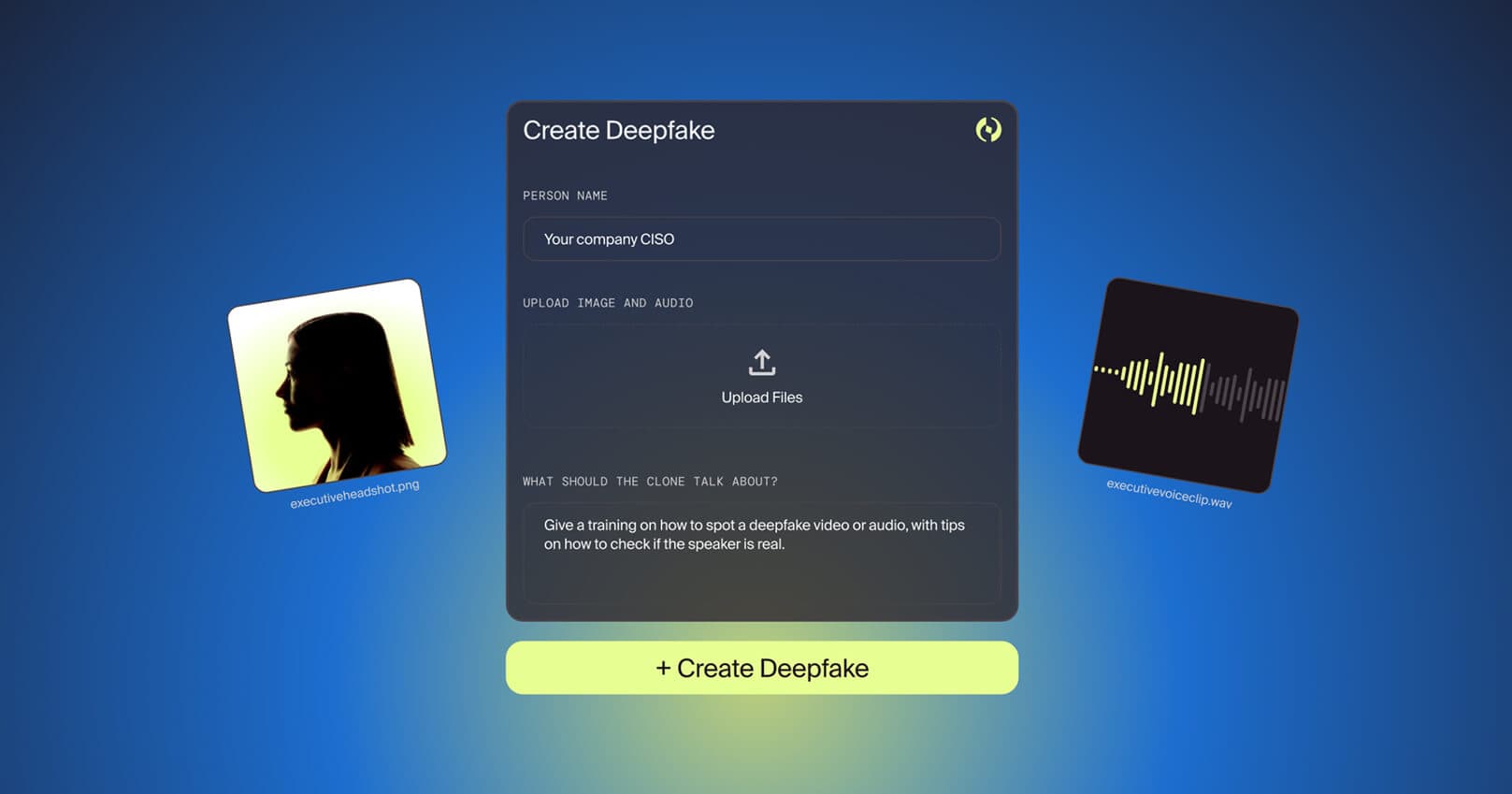
AI has collapsed the gap between a convincing impersonation and the real thing. Voice clones produced from a short audio sample (opens in new tab) can carry out real-time conversations that security professionals struggle to distinguish from those of a live human.
The Call Deploys Authority, Urgency, and Context to Manufacture Trust
The pretext turns into action during the call itself. The attacker opens with contextual detail that suppresses skepticism. A reference to a real meeting, a project name, or a colleague's recent promotion establishes familiarity before the request arrives.
Authority comes through a synthesized voice matched to a known executive, and role claims like "This is the CIO's office." Urgency lands next with a closing deadline, a compliance review, or a security incident that demands immediate action.
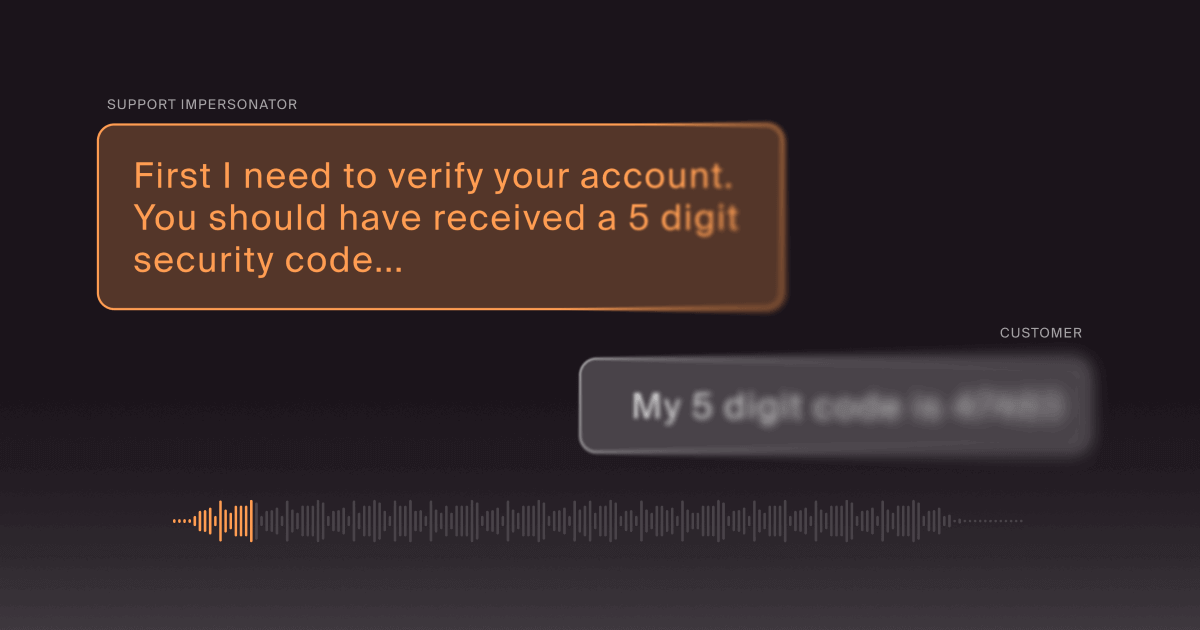
The speed is what makes these attacks so dangerous. In real incidents, a single call to the helpdesk, for example, is enough for an attacker to walk away with admin-level access, with the entire attack playing out in minutes rather than hours or days.
Follow-On Channels Convert Initial Engagement Into Compromise
Voice opens the door, then the attacker widens the operation. An attacker who establishes trust over voice pivots to email ("I'll send you the wire instructions now"), SMS ("Here's the verification link"), or collaboration platforms like Microsoft Teams and WhatsApp.
In one impersonation attempt (opens in new tab), attackers used a cloned voice, a fake WhatsApp account, and YouTube footage to stage an operation that resembled a Teams meeting. Combining voice contact with follow-on email or messaging increases the odds that the second step lands without scrutiny.
Why Standard Security Defenses Are Vulnerable to Vishing
Vishing succeeds because it bypasses technical controls, and static training resources sometimes don't account for the sophistication of the attacks.
Technical Controls Don't Inspect the Voice Channel
A real-time phone call can route the threat past every inspection point the enterprise stack relies on:
- Email gateways analyze headers, sender reputation, and payload signatures. None of those exist on a voice call.
- Network perimeter tools inspect packet flows and protocol behavior, but a vishing call over the public switched telephone network typically occurs outside enterprise IP network monitoring.
- VoIP and collaboration traffic placed through spoofed numbers or platforms like Teams or Zoom closely resembles legitimate use at the network level, making it difficult to distinguish on packet or protocol characteristics alone.
- SIEM platforms correlate log events across systems, but by the time a vishing-related signal surfaces, the social engineering step has often already succeeded.
The attack happens in a conversation, but technical controls don't have visibility into conversations.
Legacy Security Awareness Training Doesn't Change Behavior on a Live Call
Many legacy security awareness training (SAT) programs were built to satisfy audit requirements, not to prepare employees for a live, urgent, authoritative voice call. The format itself is the limitation:
- Passive video modules deliver information one-way, with no decision-making, no pushback, and no live pressure to navigate.
- Periodic quizzes test recall instead of reflex, measuring whether employees can identify vishing on a page rather than resist it during a call.
- Email-centric content trains employees to scrutinize a written message, leaving them unprepared for an attacker who never sends one.
- An annual or quarterly cadence lags attacker innovation by months, while voice-clone tactics evolve within weeks.
Knowing about vishing in the abstract leaves employees exposed when someone who sounds like the CEO is on the line with context and pressure designed to override verification.
What a Solid Vishing Defense Requires
A defense that holds against vishing has to match how the attack actually works, with realism across channels, behavioral reinforcement, and a live feedback loop between external threats and internal training.
1. Simulations That Match the Attacks Employees Will Actually Face
Voice simulations should be live, dynamic, and conversational, built from the actual vishing tactics targeting the organization right now.
The caller on the other end of the line has to respond to whatever the employee says, push back with pressure tactics and authority claims, and pivot mid-call to email or SMS the moment the employee resists. Single-step, single-channel tests miss how real attackers behave.
2. Voice-Specific Training Tied to the Exact Failure Mode
When an employee fails a voice simulation, the subsequent training must contextualize what just happened. A finance director who submitted data over the phone needs a different coaching path than an engineer who clicked a follow-up link in the post-call email.
Personalized reinforcement delivered immediately after the failure is the mechanism that converts a mistake into behavioral change. A periodic compliance module assigned later creates a weaker effect.
3. External Threat Intelligence That Feeds Internal Training
Threat intelligence about active vishing campaigns targeting the organization's brand, executives, or industry must flow directly into the simulation program. If attackers are running voice-clone campaigns impersonating the CEO, that tactic should quickly become the simulation running across the org. The loop between external detection and internal training keeps the program current as attacker tactics shift.
How Doppel Mounts an Effective Defense to Vishing
Doppel is an AI-native Social Engineering Defense platform that unifies Digital Risk Protection (DRP) and Human Risk Management (HRM) in a single closed loop. The platform detects external impersonation infrastructure and converts it into training that hardens employees against the same attacks.
For vishing specifically, Doppel surfaces voice-clone campaigns and helpdesk lures to use as the simulations your workforce runs against, with behavioral outcomes feeding back into how the next campaign is shaped.
In practice, that loop shows up across the platform:
- Threat-informed agentic voice simulations mirror real attacker behavior across channels, including scenarios derived directly from DRP-detected campaigns.
- One-click threat-to-simulation conversion turns a detected vishing campaign into an employee simulation with the same lure, pretext, and voice tactic, defanged for safe internal use.
- Per-employee behavioral coaching tied to the specific failure mode delivers different quizzes and training paths for phone-based data disclosure versus link engagement in a follow-up message.
- Unique risk profiles for every employee include personal risk scores, fail-streak tracking, channel-level breakdowns, and an LLM-generated behavioral summary that recommends what to test next.
- Global scale at single-campaign simplicity, with per-employee language and local phone number auto-configured based on IDP integration.
- Doppel Threat Graph correlates attacker activity across voice, SMS, email, and web channels into a unified view. It uses agentic AI to prioritize and execute at scale, so analysts focus on the escalations that need human judgment.
The structural advantage of this model is that defense compounds with every fight. Each detected vishing campaign, whether it's a cloned CMO targeting marketing teams or a helpdesk lure aimed at IT, feeds the Threat Graph, sharpens detection for every customer on the platform, and arms HRM with a fresh simulation derived from a live attack rather than a generic template.
Close the Loop Between Vishing Detection and Defense
The sophistication of vishing attacks increases with every advance in voice cloning, every new collaboration channel attackers learn to pivot into, and every employee who has never been tested against a live, urgent, authoritative call.
A durable defense must keep pace with the attackers themselves, learning from every campaign in the wild and converting it into training and simulation material for the team. This workflow means the next attacker who tries the same playbook hits a workforce that has already seen it.
Over time, attacker economics shift. The cost of running a voice campaign against an organization that has already inoculated its people against that exact tactic can exceed the return, and the brand becomes too costly to attack.
Doppel delivers the playbook for turning every campaign your team detects into a simulation that hardens your workforce against the next one. See it in your own environment.
Request a demo to see how Doppel converges detection, simulation, and behavioral defense against vishing before the next call gets through.
Frequently Asked Questions About Vishing
What Is Vishing?
Vishing, short for "voice phishing," is a type of fraud where an attacker uses a phone call to trick someone into handing over sensitive information, approving a payment, or granting access to a system. The attacker typically poses as a trusted figure, such as a coworker, an executive, or a government official, and relies on tone, urgency, and plausible context to pressure the target into acting.
What Is Vishing in Cybersecurity?
In a cybersecurity context, vishing is a form of social engineering that exploits human trust and decision-making over a voice channel to obtain credentials, multi-factor authentication codes, financial approvals, or privileged access. It's increasingly powered by AI voice cloning, which makes impersonation of specific individuals far more convincing than traditional phone scams.
What Is Vishing vs Phishing?
Phishing is the umbrella term for social engineering attacks that trick a target into taking harmful action, typically delivered via email with malicious links or attachments. Vishing is the voice-based variant, carried out over a phone call, a VoIP line, or a voice channel inside platforms like Microsoft Teams or Zoom. While phishing relies on written content the victim reads, vishing relies on a live conversation the victim hears, which makes urgency, authority, and emotional pressure far harder to resist.
What Is a Vishing Example?
A common vishing example is the "executive wire fraud" scenario. An employee in finance receives a call from someone who sounds exactly like their CFO, referencing a real deal or upcoming deadline, and instructs them to wire funds to a new account before the end of the day. Another frequent example is the "IT help desk" variant, where an attacker calls an employee claiming to be from internal IT, walks them through a fake security check, and harvests their password or one-time code.