
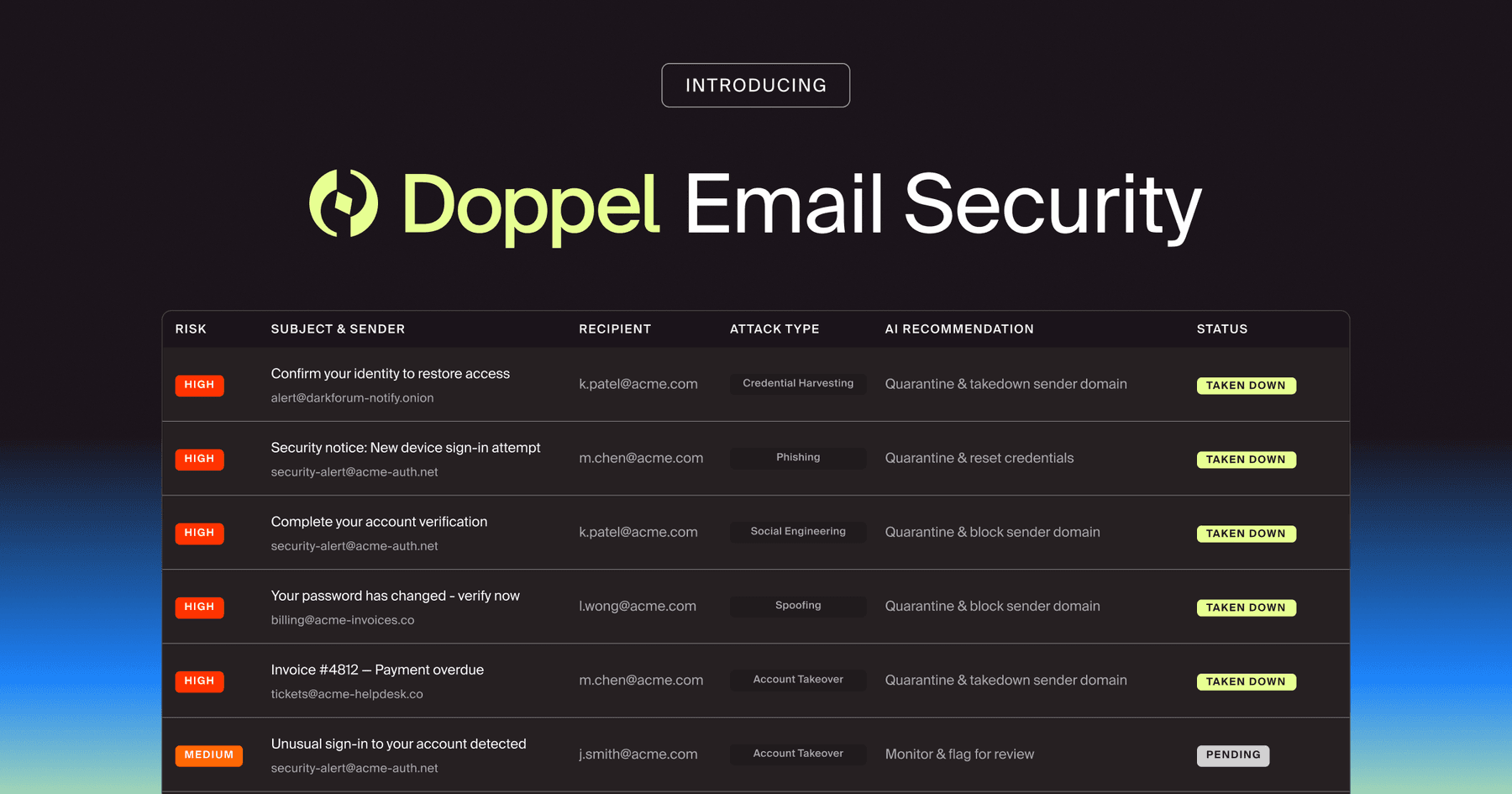
Doppel Email Security is now generally available
The agentic email security solution that empowers you to fight back against social engineering attacks. Detection isn't enough. Disruption is the difference.
Helpdesk agents are trained to resolve issues quickly. Attackers weaponize that instinct. Doppel tests where security protocols hold up, and where they fall apart, strengthening defenses at your frontline.
Helpdesk agents are the prime target. They are among the most heavily targeted by threat actors looking to gain access to internal systems.
With AI-powered voice cloning and sophisticated messaging fraud, attackers can now scale believable pretexts faster than ever before. Armed with targeted scenarios and compelling deepfakes, they prey on a helpdesk agent's instinct to resolve issues, unblock users, and close tickets quickly. And it doesn't take much: a simple password reset can lead to access and lateral movement that costs an organization billions.
8.8 minutes is the average conversation with a human agent
15% of calls leaked information about internal processes
92% of calls perceived as human
12% violated internal protocols
7 organizational technology leaks
Helpdesk Vishing Simulations
Protocol Hardening
Behavioral Measurement & Targeted Interventions
Modern helpdesk attacks follow a predictable but effective pattern. The attacker gathers publicly available information about a target company, surveilling LinkedIn profiles, company websites, and organizational charts. They then contact the helpdesk using a spoofed number or email, impersonating an employee or executive.
Feigning time pressure and with convincing authority cues, they request a password reset, MFA removal, or access. Trained to be efficient and solution-oriented, helpdesk agents make exceptions and skirt processes to unblock the user.
The entire attack can take less than five minutes on a phone call, but the breach can cost an organization billions and cause reputational damage that extends for years.
Doppel replicates this exact attack pattern through safe, defanged simulations, so your helpdesk agents experience the pressure, learn the tells, and practice the security protocols that prevent real compromises.
Reduced Account Takeovers
Higher Protocol Compliance
Faster Reporting & Escalation
Audit-Ready Evidence
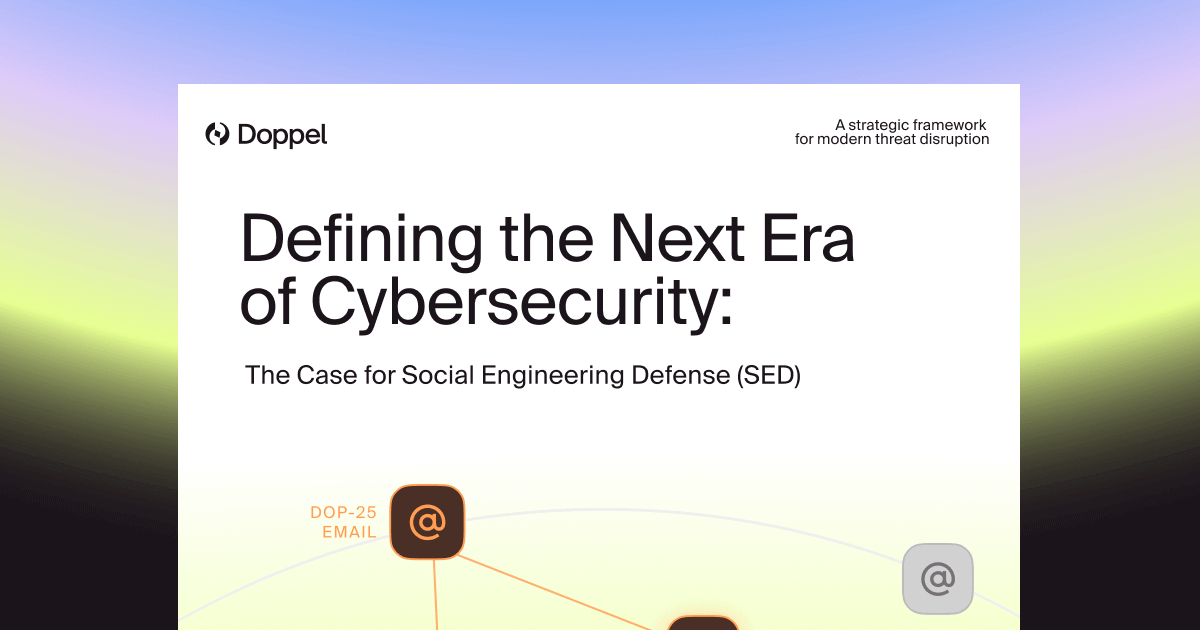
Download eBook
Download eBook
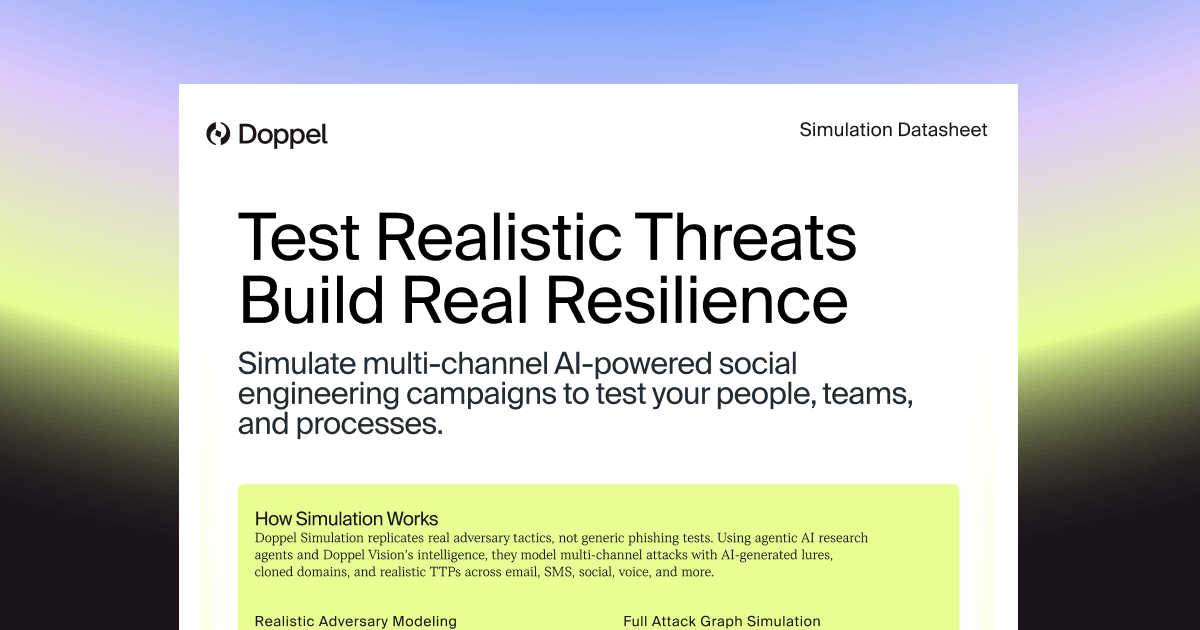
Download Datasheet
Doppel can simulate any attack pattern. Common scenarios include password reset fraud, MFA reset/social bypass attempts, executive impersonation requests, contractor onboarding pretexts, and voice-based scams. Doppel proactively recommends campaigns based on actual attacks targeting helpdesks in the wild—all anchored in Social Engineering Defense methodology.
No. Doppel complements existing systems by strengthening human verification behavior and process compliance under real-world pressure. It works alongside your IAM, ITSM, and ticketing tools.
We recommend leveraging measurable risk reduction metrics: protocol adherence rates, verification compliance rates, escalation speed, reporting rates, and trend data over time—aligned to modern Human Risk Management (HRM) programs.
Helpdesks have the authority to reset passwords, bypass MFA, provision access, and modify accounts, and are inherently trained to be helpful and act quickly. A single successful social engineering call to a helpdesk can unlock enterprise-wide access, in just minutes. Attackers know that helpdesk agents are trained to help—and they exploit that instinct.
Yes. Doppel Simulation goes beyond email to include voice calls, SMS, messaging apps, and multistep scenarios that chain channels together—mirroring how real helpdesk attacks actually unfold.
See how Doppel's helpdesk simulations, protocol hardening, and behavioral measurement turn your helpdesk from an attack vector into a control point.
Download eBook
Download eBook
Download Datasheet