

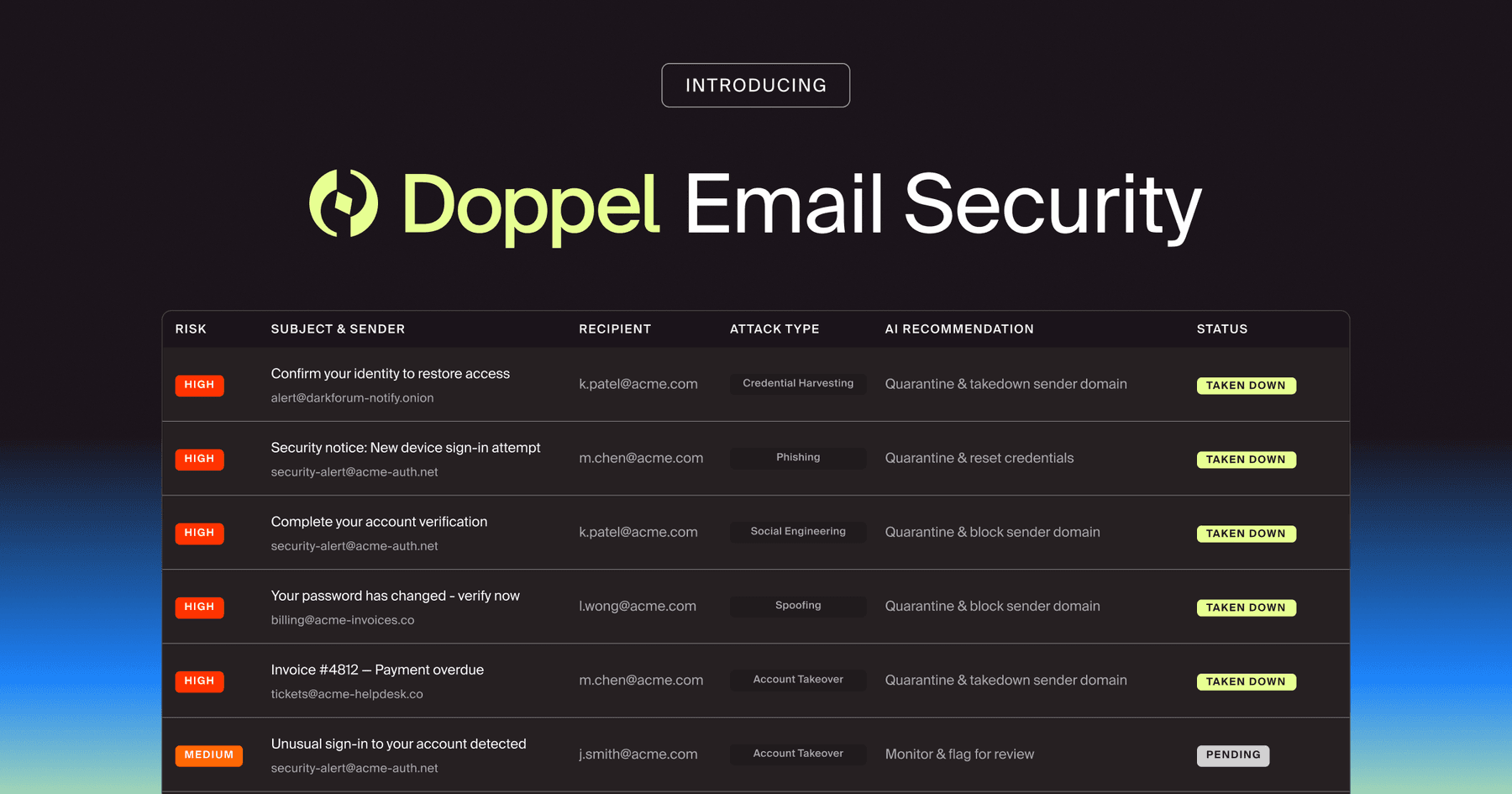
Doppel Email Security is now generally available
The agentic email security solution that empowers you to fight back against social engineering attacks. Detection isn't enough. Disruption is the difference.
Compliance frameworks increasingly require organizations to demonstrate that employees follow secure processes, not just that policies exist. Doppel provides continuous, evidence-backed validation that employees respond appropriately to real-world social engineering scenarios, helping security and GRC teams prove operational readiness during audits.
Modern compliance frameworks — from SOC 2 and ISO 27001 to NIST and industry-specific regulations — expect organizations to demonstrate that security controls work in practice.
Policies, training modules, and annual awareness courses are no longer sufficient evidence. Social engineering attacks target human behavior and operational workflows, which means organizations must show that employees consistently follow verification procedures, escalate suspicious activity, and avoid granting unauthorized access. Without measurable testing and documentation, proving that readiness to auditors becomes difficult and time-consuming.
8.8 minutes is the average conversation with a human agent
15% of calls leaked information about internal processes
92% of calls perceived as human
12% violated internal protocols
7 organizational technology leaks
Continuous Control Validation
Always-On Compliance Readiness
Defensible Behavioral Evidence


Auditors increasingly ask organizations to demonstrate how their security awareness programs translate into real-world resilience. Traditional programs rely on static training modules or basic phishing simulations, which measure engagement but not operational behavior. Modern attackers exploit the same workflows auditors expect organizations to secure: password resets, access approvals, vendor requests, and financial authorization processes.
Validating how employees respond to these scenarios provides measurable evidence that security procedures are understood and followed.
Doppel enables organizations to simulate realistic attack scenarios, deliver required training in a way that drives meaningful behavioral change, and captures the signals that demonstrate compliance readiness and gives security leaders defensible proof that controls are functioning as intended.
Stay Compliant and Protected
Test Against Active Threats
Audit-Ready Reporting
Operational Readiness

Download eBook
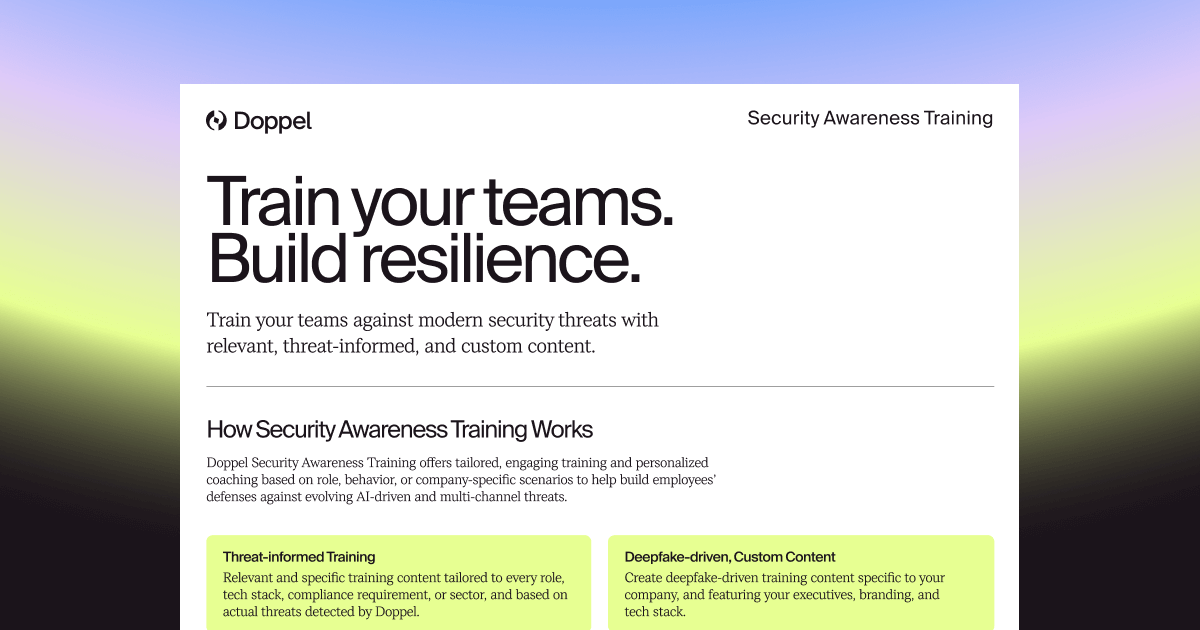
Download Datasheet
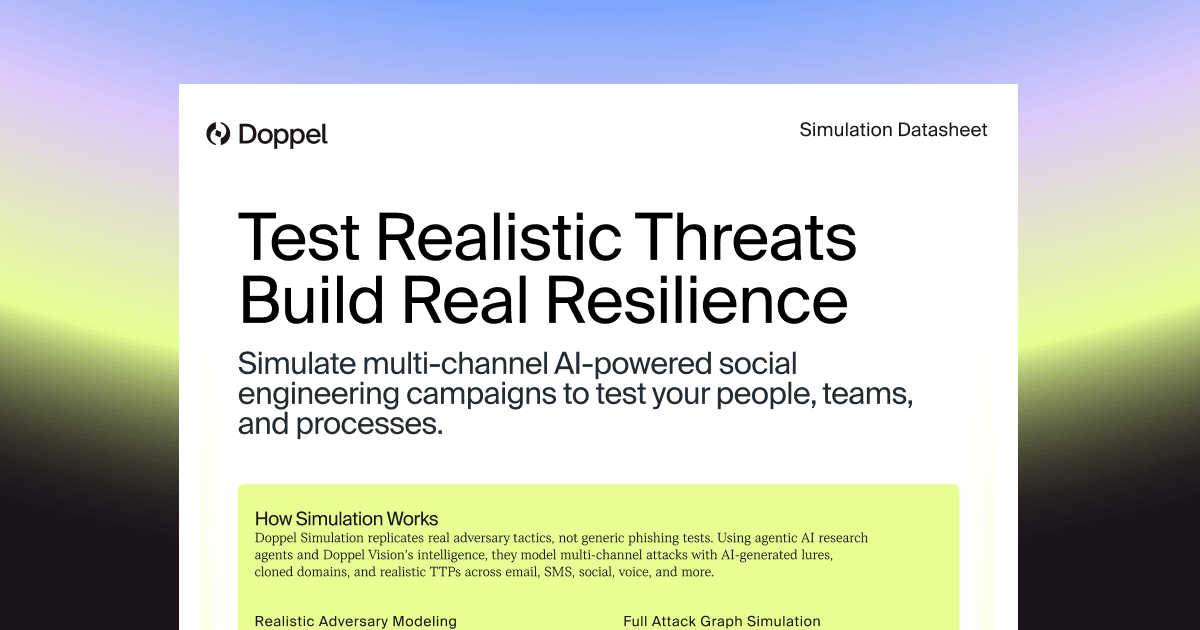
Download Datasheet
Training is necessary but not sufficient. Compliance frameworks increasingly expect evidence that controls work in practice, validated through realistic testing, measurable behavioral outcomes, and documented remediation processes.
Behavioral outcomes including training progress, quiz pass rates, protocol adherence, reporting speed, response readiness across realistic social engineering scenarios, and improvement over time. These metrics go far beyond "completed training" checkboxes.
SED provides a campaign-level framework (detect, prevent, disrupt, defend) that better matches modern social engineering threats than single-channel controls. This alignment helps organizations demonstrate controls that are proportional to actual risk.
Doppel supports evidence requirements across SOC 2, ISO 27001, NIST, PCI, HIPAA, GDPR, DORA, and industry-specific frameworks. The behavioral metrics and continuous testing model maps naturally to control validation requirements. Doppel also allows companies to generate custom, compliant training content based on uploaded source materials or frameworks.
Continuous testing is the gold standard—quarterly at minimum is required for many compliance frameworks. Annual point-in-time exercises are increasingly insufficient for auditors who want evidence of ongoing program maturity and measurable risk reduction over time.
Download eBook
Download Datasheet
Download Datasheet