Everyone in cybersecurity convinced themselves that if they just bought over a dozen best-in-breed security tools, they’d build an impenetrable fortress.
You bought a tool for endpoint detection. You bought a separate tool for email security. You then bought another one for brand monitoring, and yet another for fraud prevention.
But you didn’t actually build complete social engineering defense. You built a labyrinth of operational silos.
While everyone is busy patting themselves on the back for buying top-tier point solutions, sophisticated adversaries are slipping right through the cracks between them.
Fragmented tooling is an active, highly exploitable security vulnerability. When different departments work out of completely disconnected dashboards, they lose the overarching context of a social engineering attack.
This broken architecture allows syndicates to execute massive, multi-channel campaigns right under our noses.
Here’s how fragmented security creates dangerous blind spots, and why it is time to collapse the silos for good.
Silos in Action: Inside a Scattered Spider Scenario
Look at how a modern, financially motivated threat actor actually operates to understand why a fragmented security stack is dangerous.
Let's walk through a highly realistic scenario involving an advanced syndicate like Scattered Spider (opens in new tab). This group is notorious for executing multi-channel, highly coordinated social engineering attacks.
They don’t just send a single bad email. They wage a campaign. And here’s how that campaign plays out against a siloed enterprise.
Ticket 1: Brand Team
On a Tuesday morning, the Brand Protection team gets a ping. Their external digital risk monitoring tool has flagged a newly registered, typosquatted domain that closely resembles your company's primary customer portal.
The analyst investigates, confirms it is a malicious lookalike, and submits a manual takedown request to the domain registrar. The ticket is marked "Resolved." The Brand team grabs a coffee, feeling victorious.
Ticket 2: SecOps Team
An hour later, over in the SOC, the SecOps team sees a fresh alert in their legacy email gateway. An employee reported a suspicious email. The email contains a link asking the employee to "update their payroll routing information."
The security analyst reviews the email, sees the malicious intent, quarantines the message, and blocks the sender. The ticket is marked "Resolved." The SecOps team gives itself a high five.
Ticket 3: Fraud Team
That afternoon, the internal Fraud team receives an automated alert from the financial systems. Someone is attempting to execute an anomalous, high-value wire transfer from a compromised vendor portal.
The fraud analyst jumps into action, flags the transaction, freezes the transfer, and locks the compromised vendor account. The ticket is marked "Resolved." The Fraud team logs off for the day, proud of their rapid response.
Here’s Why This Leads to Security Gaps
Three different teams successfully closed three different tickets in a single day. On paper, all of their individual security tools worked perfectly.
But because of fragmented tooling, they are completely blind to the catastrophic truth: they were all fighting the exact same Scattered Spider campaign.
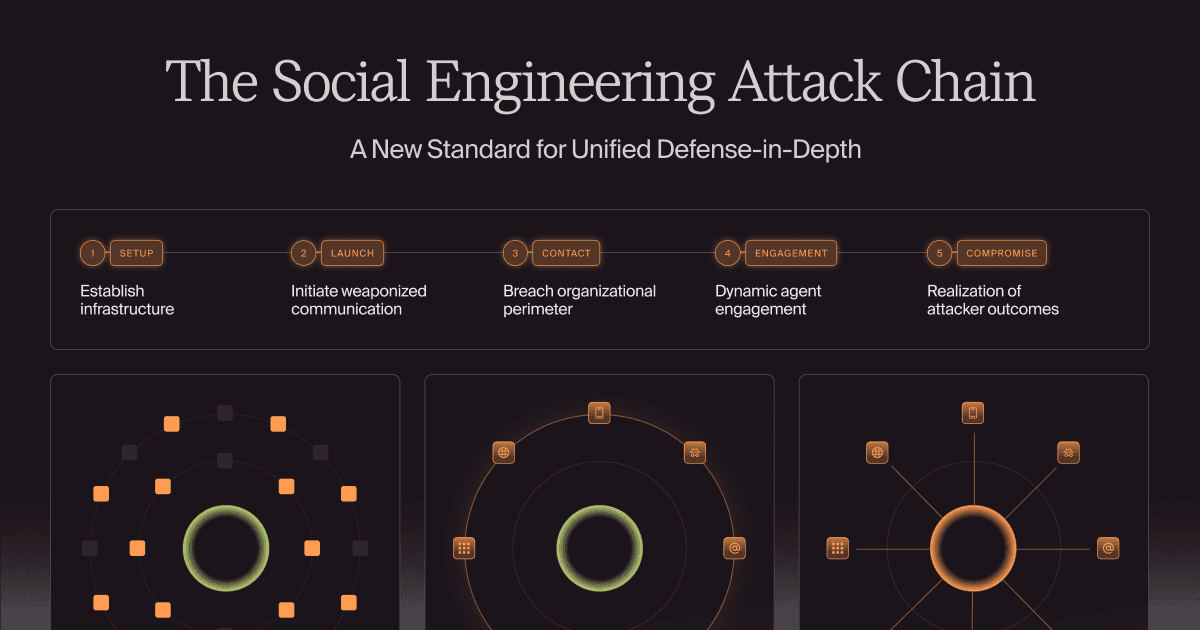
The typosquatted domain identified by the Brand team served as the staging ground. The phishing email caught by SecOps was the delivery mechanism driving traffic to that domain. And the wire transfer that the Fraud team blocked was the final payload.
Because none of these tools talk to each other, nobody connected the dots.
Nobody realized this was a coordinated, multi-channel attack, and the threat actor is likely still in the network, quietly pivoting to a new channel because the root infrastructure was never fully destroyed.
Hidden Costs of Fragmented Security
When you force your security teams to operate in silos, you are actively giving the adversary a massive operational advantage.
Here is exactly why this broken architecture benefits the threat actor and drains your resources:
- Loss of Contextual Intelligence: An isolated indicator of compromise (IOC) often looks like low-level, ignorable noise. A weird login attempt or a single reported email doesn't trigger a massive response on its own. It only becomes a critical, glaring threat when correlated with simultaneous malicious activity on other channels. Silos destroy this context.
- Dwell Time Advantage: Speed is everything in modern cybersecurity. While your analysts are manually copying and pasting IP addresses and sender domains between five different vendor portals, the attacker is laterally moving through your network at machine speed.
- Alert Fatigue & Redundancy: Fragmented tools create a massive duplication of effort. Multiple point solutions will often generate distinct, duplicate alerts for the exact same overarching event. This forces highly paid analysts to waste hours investigating incidents that a different department has already triaged.
- "Not My Problem" Culture: Silos naturally create strict departmental boundaries. If an attack starts on social media, moves to a personal SMS message, and ends in a corporate email inbox, whose jurisdiction is it? When nobody owns the entire lifecycle of a multi-channel social engineering attack, the response becomes fragmented and sluggish.
Fragmented Point Solutions vs Unified Intelligence
A unified intelligence layer fundamentally changes how an organization responds to a threat.
Here’s how a fragmented stack compares to a modernized, consolidated architecture:
Defensive Capability | Fragmented Point Solutions | Unified Intelligence Layer |
Threat Visibility | Siloed to a single specific channel, like inbox or web only | Omni-channel correlation across the web, email, and social media |
Incident Response | Fragmented across multiple disjointed dashboards and teams | Unified investigation timeline tracking the entire lifecycle |
Analyst Workflow | Manual context switching, copy-pasting IOCs, and duplicated effort | Automated enrichment, agentic triage, and cross-channel context |
Strategic Outcome | Playing endless whack-a-mole with isolated symptoms | Disrupting the root campaign infrastructure at machine speed |
Collapsing the Silos: You Need an Intelligence Layer
Don’t fire your entire security team or rip out every single tool you own. But you should definitely collapse the silos that keep them from talking to each other.
The modern enterprise requires a single, unified intelligence layer.
You have to consolidate external brand monitoring, internal human risk management, and incoming messaging channels. When you unify this data, your defense actually compounds. The math changes entirely.
Revisit the Scattered Spider scenario under a unified architecture.
The moment the Brand team's digital risk tool flags that new typosquatted domain, the system doesn't just open a manual takedown ticket. That intelligence is immediately and automatically fed into the detection logic of your email security tool.
Thirty minutes later, when the threat actor tries to send a phishing email using that typosquatted domain, the email gateway instantly drops it. SecOps doesn't even have to look at it. The phishing email is neutralized before it ever hits an employee's inbox, which means the Fraud team never has to deal with a compromised wire transfer.
That’s the power of compound defense. By sharing intelligence across channels, you stop playing defense and start actively predicting the attacker's next move.
Automating the Takedown with AI-Native Social Engineering Defense
You cannot fight a coordinated, multi-channel adversary with disconnected, single-channel tools.
This is exactly why Doppel built a unified social engineering defense platform. We recognized that the most dangerous threats in the world live in the blind spots between your security silos.
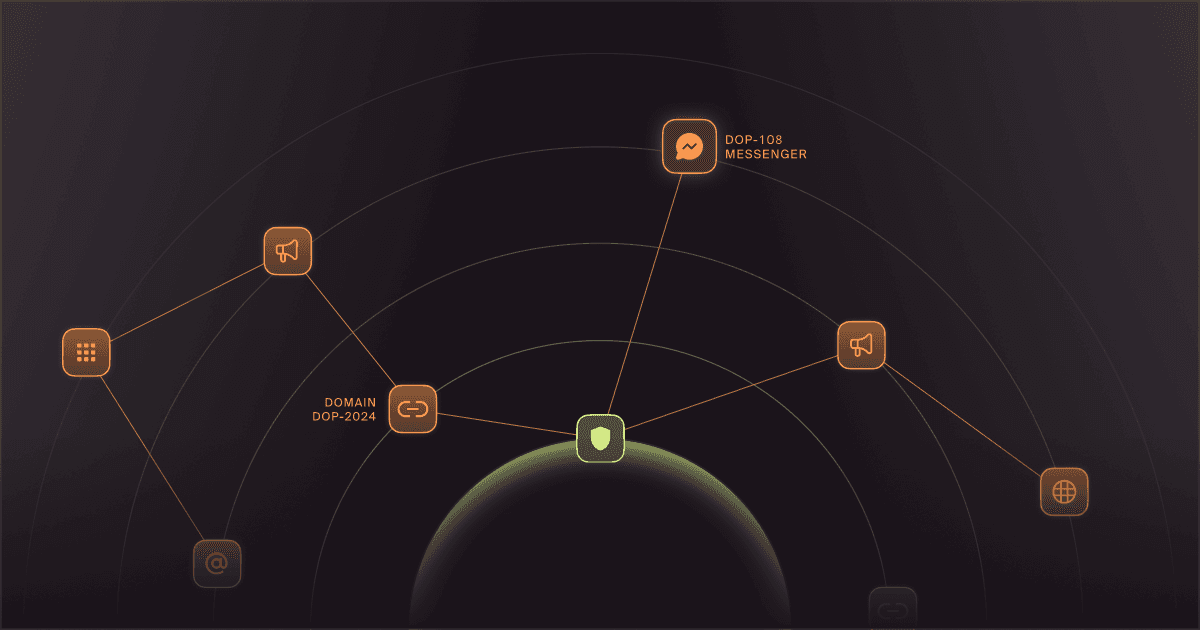
Doppel dismantles these operational walls by providing a single, continuous threat graph. Our platform consolidates external infrastructure attacks, brand impersonation, inbox threats, and human risk into a single cohesive intelligence layer.
When Doppel detects a threat on the open web, that intelligence instantly hardens your email defense. When an employee reports a sophisticated vishing attempt, that data immediately informs your digital risk protection strategy.
Doppel’s agentic AI eliminates the manual context switching that slows down your SOC. Our platform does not just generate alerts; it executes multi-channel takedowns, burning down the attacker's domains, social media profiles, and email infrastructure simultaneously from a single pane of glass.
Stop closing isolated tickets, and start dismantling the overarching campaign.
Ready to eliminate the blind spots in your security stack? Get a demo with Doppel to see how our unified intelligence layer and agentic AI execute multi-channel takedowns at machine speed.