Cyber’s AI Moment
Over the past few weeks, AI hype in cybersecurity has hit an inflection point. Mythos and GPT 5.5-Cyber have woken people up to the AI cyber threat, as their ability to discover vulnerabilities far exceeds human capabilities. The foundational AI companies have even limited access due to the existential risk of this technology getting into the wrong hands. This is exactly why Rahul Madduluri and I founded Doppel. We saw the risk associated with AI and the need for a strong defense to combat that risk.
In a world where cyber attacks can be orchestrated autonomously and relentlessly, it is clear that human-in-the-loop processes can’t keep up. Only agents can keep up with agents, but it's important for every organization, including Doppel, to deploy an agentic architecture successfully.
Agentic Built for Success
A successful agentic defense goes beyond spinning up LLMs on top of a traditional security stack. To truly enable a no-human-in-the-loop defense that can operate autonomously, an agentic architecture must be able to:
- Auto-remediate. It’s mostly trivial to create agents that only identify vulnerabilities and detect active threats. More visibility and threat intel is not enough. We need systems that can detect AND respond in order to scale up defense to meet the AI threat. Agents need to be able to close the full loop without relying on humans.
- Coordinate across the stack. The industry has preached defense-in-depth for a decade, but that’s the gap attackers exploit. Several agentic point solutions is an insufficient architecture because agents need to be able to coordinate and respond across the stack. When attacks are happening at machine speed, human handoffs between tools are unscalable.
- Learn continuously. One of the greatest challenges with the latest AI models is that they can continuously iterate and invent new attacks. They can produce self-evolving malware and exploit 0-days instantaneously. Agentic defense needs to be able to learn autonomously as well, via its own misses, red teaming, and threat research just as human cyber defenders would.
Moving Forward
The world is changing fast. Security teams are accepting that we will have to take risks to roll out autonomous cyber solutions and push the limits of agentic architectures, as the alternative will be too costly. The successful architecture will not be traditional software with LLMs bolted on top, but rather agentic solutions built AI-native from the ground up.
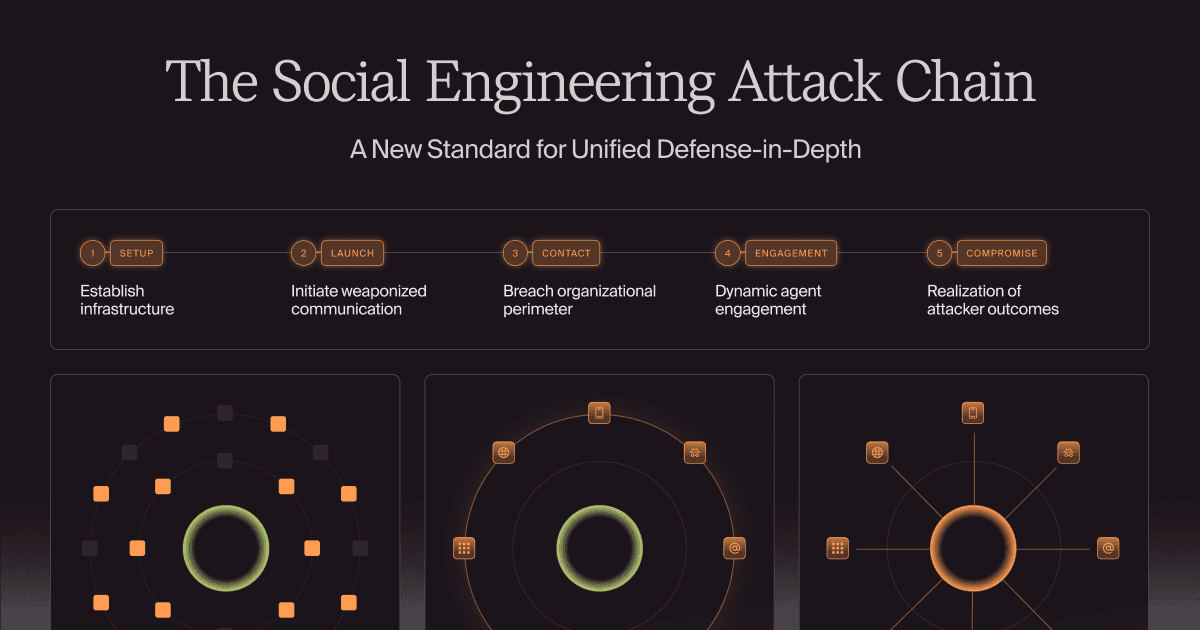
At Doppel, this has been our engineering vision from day 1 - to build the unified AI-native security plane for the autonomous era. We were the first to build agentic takedowns and digital risk protection with OpenAI (opens in new tab), and this agentic-first approach helps customers reduce digital risk and lower overall costs with unlimited takedowns. We’ve quickly expanded to build a unified Social Engineering Defense platform with agentic social engineering red teaming, human risk management, and email triage integrated natively. We’re just getting started, and we believe the next generation of cybersecurity companies will be defined by their ability to operationalize AI-native defense faster than attackers can weaponize AI.