The most expensive vulnerability in your security operations center isn’t a zero-day exploit or an unpatched staging server.
It is a signed resignation letter.
For years, cybersecurity leadership has evaluated security investments through a rigid, technology-centric lens: risk reduction, asset coverage, and breach prevention. But as generative AI allows threat actors to deploy multi-channel social engineering campaigns at an unprecedented scale, a secondary crisis has emerged.
Tier-1 and Tier-2 analysts are drowning in an unmanageable volume of repetitive, low-signal alerts. When security teams spend their days manually verifying domain typosquatting links, copying text message screenshots from inbound employee reports, and chasing manual takedown queues, the result is predictable: chronic burnout and high employee turnover.
This blog will cover how to build a resilient security posture by shifting from siloed, legacy security platforms to automated Social Engineering Defense (SED). By deploying automated platforms, organizations can unlock an overlooked financial dividend: the talent retention ROI of security automation.
The Hidden Capital Drain of SOC Churn
Every time an experienced analyst leaves an organization due to alert fatigue, the business incurs significant financial damage. Recruiting, onboarding, and training a specialized cybersecurity professional is an expensive, multi-month endeavor.
The operational math being that churn involves recruitment costs, lost productivity costs, onboarding drag, and the institutional knowledge premium that comes with hiring SOC professionals. In total, replacing a skilled analyst can cost upwards of 150% (opens in new tab) of that employee's annual salary when accounting for external recruiter fees, internal HR overhead, and the productivity dip during the three-to-six-month ramp period.
Plus, during high-turnover cycles, remaining analysts must absorb the departed employee's workload, triggering a cascading effect of burnout across the entire security operation.
Legacy security tools and security awareness training (SAT) models actively accelerate this churn loop. They treat threat detection and response as isolated, manual workflows, transforming highly trained security engineers into glorified data-entry clerks.
Where Legacy Security Models Break Down
Security leaders have historically relied on a mix of security vendors, point solutions, and traditional compliance training. While these tools were designed to manage risk, their architecture introduces massive operational friction for SecOps teams.
First, legacy tools often flood security teams with raw data from the deep web or public feeds. Because these systems lack sophisticated validation mechanisms, security teams are forced to manually sift through false positives to verify if an alert represents an actual, actionable threat. This high-noise environment forces analysts into a loop of continuous, low-value triage.
Second, when employees report suspicious text messages (smishing) or phishing emails, they frequently submit screenshots or raw message text. Analysts must then manually extract the text, look up sender data, reverse-engineer phishing kits, or reply using specialized accounts to gather hidden email headers. This turns standard inbound analysis into a highly manual, time-consuming operation.
Finally, many alternative takedown services require internal security teams to compile and submit comprehensive evidence packages before initiating a removal request. If a threat surfaces across multiple channels (such as a fake domain pointing to an executive impersonation account on TikTok), analysts must coordinate manually with individual providers and domain registrars.
When analysts realize their primary function is fighting a losing battle against manual queues rather than engineering proactive defenses, job satisfaction plummets.
From Bureaucracy to Autonomous Execution
Social Engineering Defense (SED) replaces manual, reactive pipelines with an integrated, automated defense layer. Rather than treating domain protection, social media monitoring, email defense, and mobile app scanning as disparate security siloes, SED unifies these channels under a real-time threat graph.
In a legacy setup, detection relies on basic text-matching queries and manual search, requiring extensive analyst overhead just to clear out the noise. Takedowns mean chasing manual forms and internal evidence gathering.
Unified SED completely flips this dynamic. It relies on advanced AI models, computer vision, and real-time native integrations to discover threats. High-signal automated validation uses machine learning to filter out the noise before it ever hits an analyst's desk, while API-driven takedowns handle the removal automatically through established partner networks.
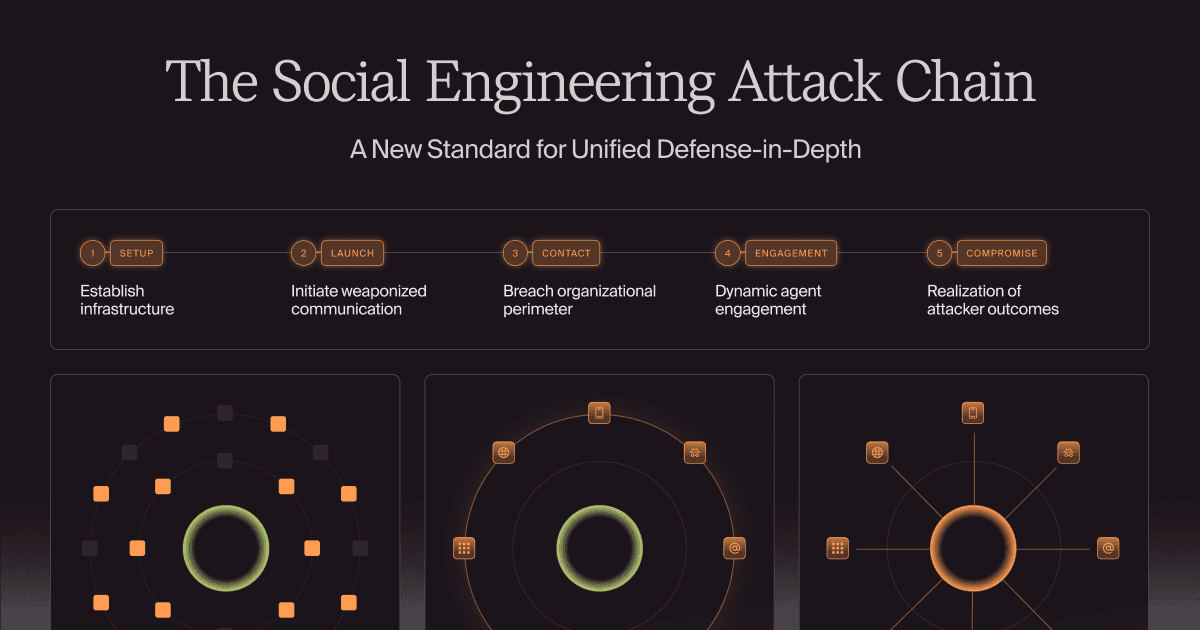
By using cutting-edge proprietary AI and machine learning, an SED platform automates threat discovery and mitigation across the entire social engineering attack chain. For instance, when a spoofed domain or an image-based ad-fraud campaign is launched, computer vision and advanced OCR immediately flag the threat, confirm malicious intent, and execute automated backend takedowns via native API integrations.
Instead of demanding hours of manual triage, the system presents analysts with a closed loop: a threat detected, validated, and eliminated at machine speed.
Quantifying Retention ROI
Investing in an automated SED platform directly optimizes headcount efficiency and builds a highly defensible economic business case for the CISO.
The concrete talent retention returns of this shift include:
Eliminating the Click Tax
Automating the identification and removal of deepfakes, malicious impersonations, and phishing domains reduces the volume of repetitive tasks hitting your tier-1 analysts. This automation yields a significant reduction in noise, allowing your existing headcount to handle a vastly larger scale of operations without adding stress.
Instead of analysts manually transcribing smishing texts or parsing metadata from forwarded images, platforms like Doppel use advanced OCR and honeypots to extract headers and evidence automatically. This shifts your team's focus away from administrative overhead and toward high-value threat intelligence work.
Elevating the Analyst Experience
When you automate the baseline noise, your security team can transition from reactive defense to proactive engineering. They can focus on strategic threat hunting, refining custom simulation playbooks, and running automated red-team exercises to identify structural organizational blind spots.
This directly improves employee engagement. Security professionals want to spend their time engineering solutions to complex challenges rather than manually clicking through identical takedown forms.
Disrupt the Attacker, Preserve the Defender
The ultimate goal of a robust security program is to skew the economic equation in favor of the enterprise. If your organization relies on human analysts to manually combat this automated deluge, you are fighting an asymmetric, losing economic battle.
By deploying autonomous AI agents to counter malicious campaigns in real time, you match the attacker's velocity without burning out your internal staff. Your technology absorbs the volume, your automated workflows execute the velocity, and your human security talent is preserved to lead your overarching cyber resilience strategy.
Stop letting manual takedowns and high-noise alert queues drive your best security talent out the door. Schedule a demo with Doppel to see how automated threat detection can maximize your team's headcount efficiency.