A security practitioner’s day is often swallowed by repetitive tasks: extracting URLs, checking HTTP vs. HTTPS behaviors, and pivoting to IPs during investigations.
Some practitioners are building Chrome extensions (one example is called the URL Assistant (opens in new tab)). Many of these extensions have grown to hundreds of daily users simply because they address a universal pain point: security analysts are being buried by manual, repetitive work.
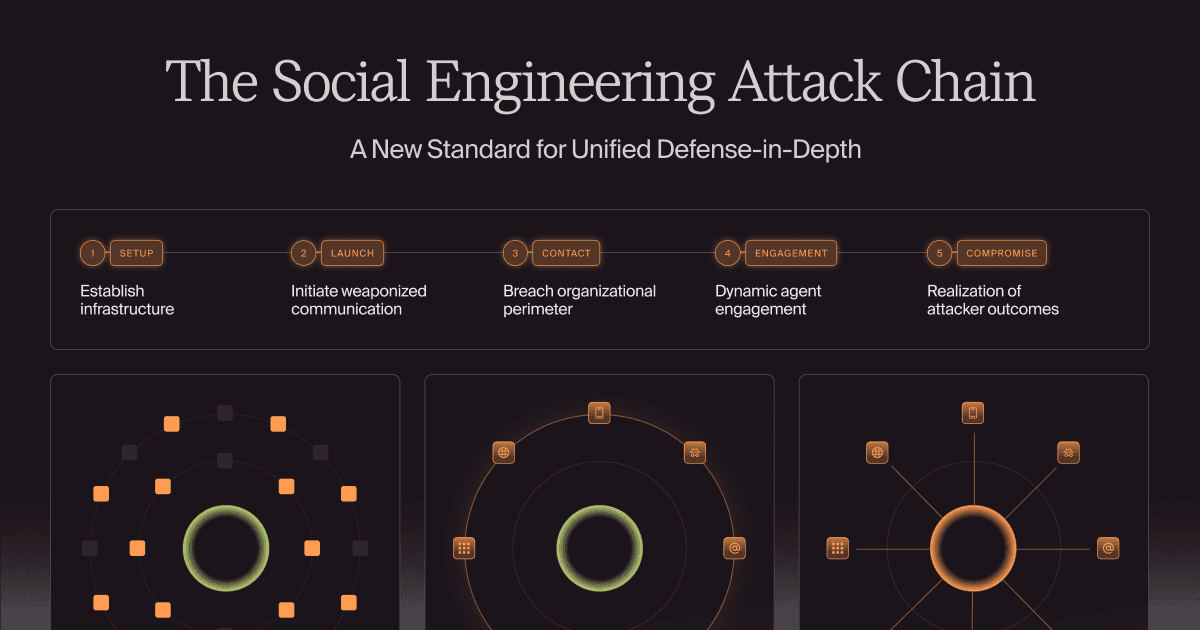
In this blog, we’ll dissect why legacy security models fail the SOC front lines and how a Unified Social Engineering Defense (SED) framework solves the “death by a thousand clicks" through AI-native automation. We’ll explore the transition from reactive manual triage to the active economic disruption of attacker infrastructure, providing CISOs with a strategic roadmap for operational efficiency and measurable ROI.
Modern Security Orchestration, Automation, and Response (SOAR) platforms promise to automate everything, but they often arrive with high complexity, long implementation cycles, and a steep learning curve.
For many teams, true time-savings don’t come from a massive, top-down workflow designed for a boardroom presentation. They come from solving the thousand clicks that happen before a ticket even reaches the platform.
When you focus on automating the smallest, most frequent manual actions—like the triage of a single URL—you close the efficiency gap. Solving a repetitive click is about preserving cognitive load.
An analyst who has spent their morning manually de-fanging hundreds of URLs is an analyst who lacks the mental bandwidth for the complex investigations that actually require human intuition.
There is a widening divide between enterprise security marketing and the reality of the SOC floor.
While platforms promise AI-powered transformation, practitioners are increasingly gravitating toward "quiet" tools (grassroots utilities and browser extensions like the URL Assistant) that solve immediate, specific pain points.
The URL Assistant (opens in new tab) has grown to over 200 daily users organically, simply because it addresses a universal pain point: Security analysts are being buried by manual, repetitive work.
Security pros trust tools that prioritize utility over noise. They value tools that help them move away from whack-a-mole defense and toward actual infrastructure disruption.
Based on the usage of grassroots tools, the data reveals exactly what modern analysts actually care about:
- The ability to link domains, social media signals, and messaging apps into a single view.
- Analysts don't want a higher volume of isolated alerts. They want the full story of an attack.
- Shifting from clearing the queue to dismantling an attacker’s infrastructure before a link is even created.
Why CISOs Must Invest in Quiet Efficiency
If you want to secure a budget for modern defense, you have to stop talking about legacy training and start talking about risk management and operational efficiency.
The technical perimeter is no longer enough. Adversaries are using AI and phishing-as-a-service (PhaaS) to launch hyper-realistic attacks at scale. They bypass multi-million dollar defenses with a $5 AI voice clone and a single phone call to an IT help desk.
In this environment, your employees and your SOC analysts are your most important sensors. But sensors fail when they are overloaded with noise.
By automating the thousand clicks and providing tools that offer the full story of an attack, you reduce the blast radius when technical controls are inevitably bypassed.
How to Build the Business Case
To convince a technically minded executive to invest in this shift, highlight the following:
- Automated triage saves analysts hours of manual work, directly impacting retention.
- Technical controls are blind to WhatsApp, LinkedIn, and SMS. SED closes this gap.
- Move beyond click rates to actual risk reduction analytics that strengthen cyber liability insurance postures.
For a deep dive into pitching this to your CISO, see our guide on How to Pitch Human Risk Management.
Or, Schedule a demo with Doppel to see how we automate Social Engineering Defense and solve the SOC's death by a thousand clicks.