A job applicant opens an interview link and meets a polished, endlessly patient AI recruiter.
Across the internet, a hiring team feeds résumés to its own AI screener. One of those systems may be fake. The other may be reading instructions an applicant planted in a résumé.
Welcome to the hiring pipeline's two-sided trust problem.
The concern is that the same conveniences making recruiting faster also give attackers new ways to impersonate the employer, manipulate the screening tool, or slip an unverified identity into the workforce. HR owns the process, but security has a stake in what gets through it.
When the screening bot is the target
A résumé is applicant-supplied data. When an AI system reads it, that data crosses a trust boundary: the applicant controls the content, while the employer expects the model to follow the employer's screening rules. Most résumés simply describe experience. Some try to tell the screener how to judge it.
A résumé can talk back to the AI
In 2026, researchers studying roughly 200,000 real-world résumés found hidden prompt injections in about 1%. The USENIX study (opens in new tab) doesn't mean 1% of applicants are criminals or that every injection succeeded. It does show that attempts to influence automated screening have reached real hiring data, not just lab demos.
The trick can be as blunt as an invisible instruction to rate a candidate highly, or as subtle as text designed to steer the model's evaluation without adding a single qualification. Another 2026 study (opens in new tab) found that injections sometimes improved an applicant's ranking when candidates were closely matched, though their effect varied by setting. That's a reliability and fairness problem before anyone even joins a video call.
Keyword stuffing and ordinary résumé tailoring are different. A candidate can describe relevant skills in a way a screener understands. Hidden text that tells the model to ignore its instructions is an attempt to take over the evaluator. The paper shouldn't be allowed to grade itself.
An effective review asks two separate questions. Is the candidate qualified for the role, and did the screening system reach that conclusion from job-relevant evidence? If the model produces an oddly emphatic recommendation, trace it back to the source material. Screeners can be useful assistants, but an opaque score isn't an explanation.
Security and talent teams can test the tool with benign résumés that contain hidden, instruction-like text. Check whether the model ignores those instructions, flags them for review, or quietly lets them shape a ranking. That exercise tests the boundary without assuming the vendor's marketing claim is a control.
A convincing face isn't identity proof
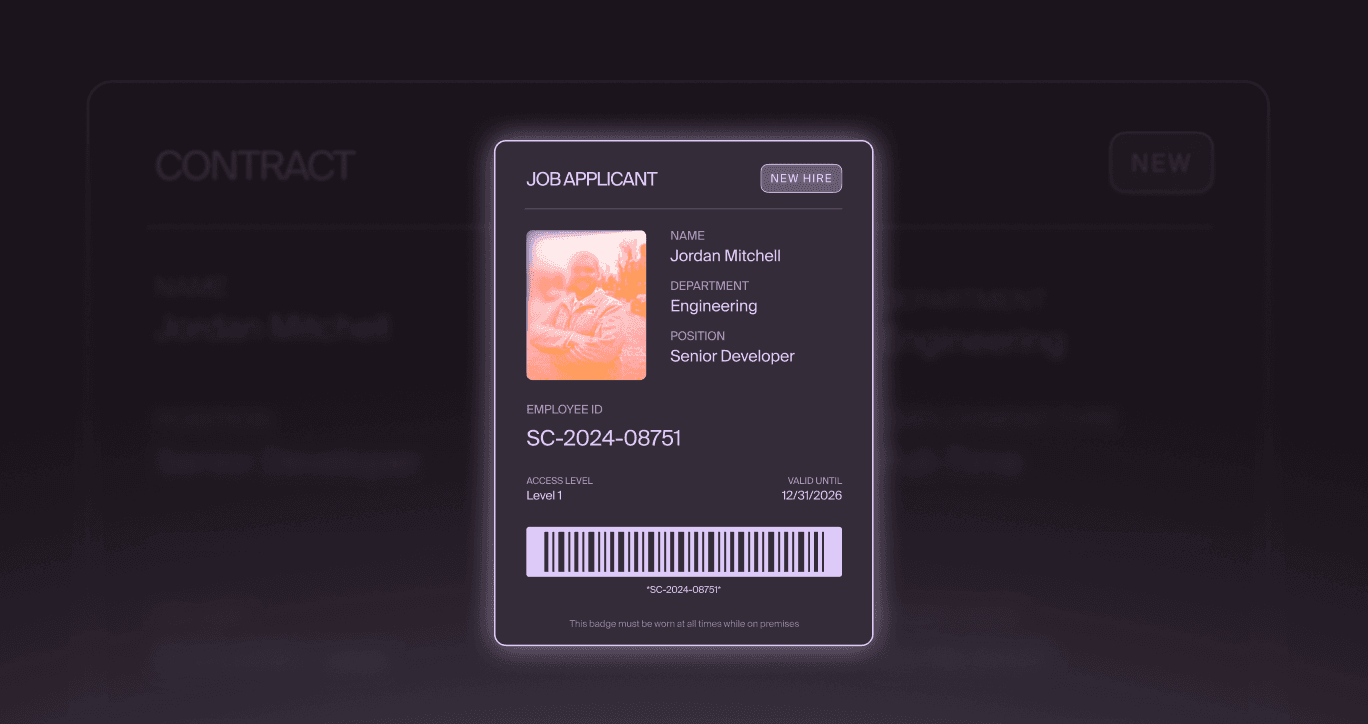
The video stage brings a different risk. The FBI has warned (opens in new tab) that North Korean IT workers have used AI and face-swapping during remote interviews to hide their identities. In an April 2026 case, the Justice Department described (opens in new tab) a scheme that used stolen identities and U.S.-based laptop farms to place overseas workers at more than 100 American companies.
Those are documented cases, not a reason to treat remote candidates with suspicion by default. They are a reason to verify that the person who interviewed, supplied identity documents, received the laptop, and signs in for work is the same person. A good answer to a technical question doesn't establish that continuity.
Doppel's guide to deepfake job applicants covers the interview tells in more detail. Stronger control, though, comes from a repeatable verification process. Video glitches can be a clue; their absence isn't a clean bill of health.
When the interview bot is the imposter
Now flip the direction. A candidate sees a role that appears to belong to your company, hears from a supposed recruiter, and enters a chat or automated screening flow. The questions sound credible because the scammer borrowed your job description, logo, and hiring language. At some point, the flow stops assessing the applicant and starts collecting from them.
The FTC's 2026 warning (opens in new tab) describes fake recruiters using legitimate company names to draw job seekers into conversations that end in requests for money. Its broader guidance (opens in new tab) also notes fake online interviews and phony onboarding. A bot isn't required to run that scam, but AI-generated messages and conversational tools can make the impersonation cheaper to operate and easier to scale.
The request might be an equipment payment, a background-check fee, a copy of an ID, or banking details supposedly needed for payroll. By then, the candidate may have spent days answering questions and picturing a real offer. That's what makes the pretext work: it borrows both the employer's reputation and the applicant's investment in the process.
Doppel's recruitment fraud guide maps the fake-recruiter side of the attack. Its Doppelpedia entry on fake profile detection explains why a convincing account, a lookalike domain, and a scam ad are often pieces of the same operation.
Give candidates a reliable way to check
A warning buried in the careers-page footer won't help someone mid-interview. Put the verification route where applicants will find it, and make it specific:
- Publish one canonical careers page: List open roles there and link to the approved application platform.
- Name the channels you use: Tell candidates how recruiters contact them and what your interview invitations look like.
- Say what you'll never ask for: Make it clear that applicants don't pay for interviews, equipment, or a job offer.
- Offer a reporting route: Let candidates flag a suspicious listing, profile, call, or bot without continuing the conversation.
Those details let a job seeker verify independently instead of asking the suspicious recruiter to vouch for themselves. They also give your brand-protection team a cleaner signal when someone reports a fake.
Make the policy visible in the actual invitations too. A candidate should know which domain sends scheduling emails, where the application form lives, and whom to contact if a chat suddenly asks for a fee or a document upload. Even a legitimate AI interviewer benefits from that context. It shouldn't ask the applicant to trust a logo as proof of authority.
The hiring process needs two trust checks
The inbound and outbound risks look different, but they converge on the same question: who controls this interaction, and what evidence would change our minds? One check protects the employer from a manipulated screening flow. The other protects applicants from a counterfeit one.
Treat recruiting as a shared HR, security, and brand workflow. A practical starting sequence looks like this:
- Map the handoffs: Identify where résumé content enters AI tools, where humans review results, and when identity or access is granted.
- Keep applicant content in the data lane: Test AI screening against hidden instructions and require human review of consequential rankings or unusual outputs.
- Verify identity at more than one point: Use consistent checks during interview, onboarding, device delivery, and the first access to sensitive systems.
- Watch the public-facing trail: Monitor fake recruiter profiles, cloned career pages, fraudulent ads, and lookalike domains.
- Close the loop on reports: Give HR a route to escalate suspect candidates, and give security a route to escalate candidate complaints about impersonation.
The FBI's remote-hiring guidance (opens in new tab) recommends cross-checking reused résumé content and contact details, reviewing staffing partners, and watching for unusual remote-access activity. Those controls have more staying power than asking an interviewer to spot a synthetic face from a few pixels on a call.
Where Doppel fits and where human judgment still matters
Doppel's brand protection helps find and disrupt the external half of the problem: fake recruiter profiles, lookalike career sites, ads, and the infrastructure connecting them. The threat graph can tie those scattered assets into a campaign, so a takedown doesn't stop at one obviously fake listing.
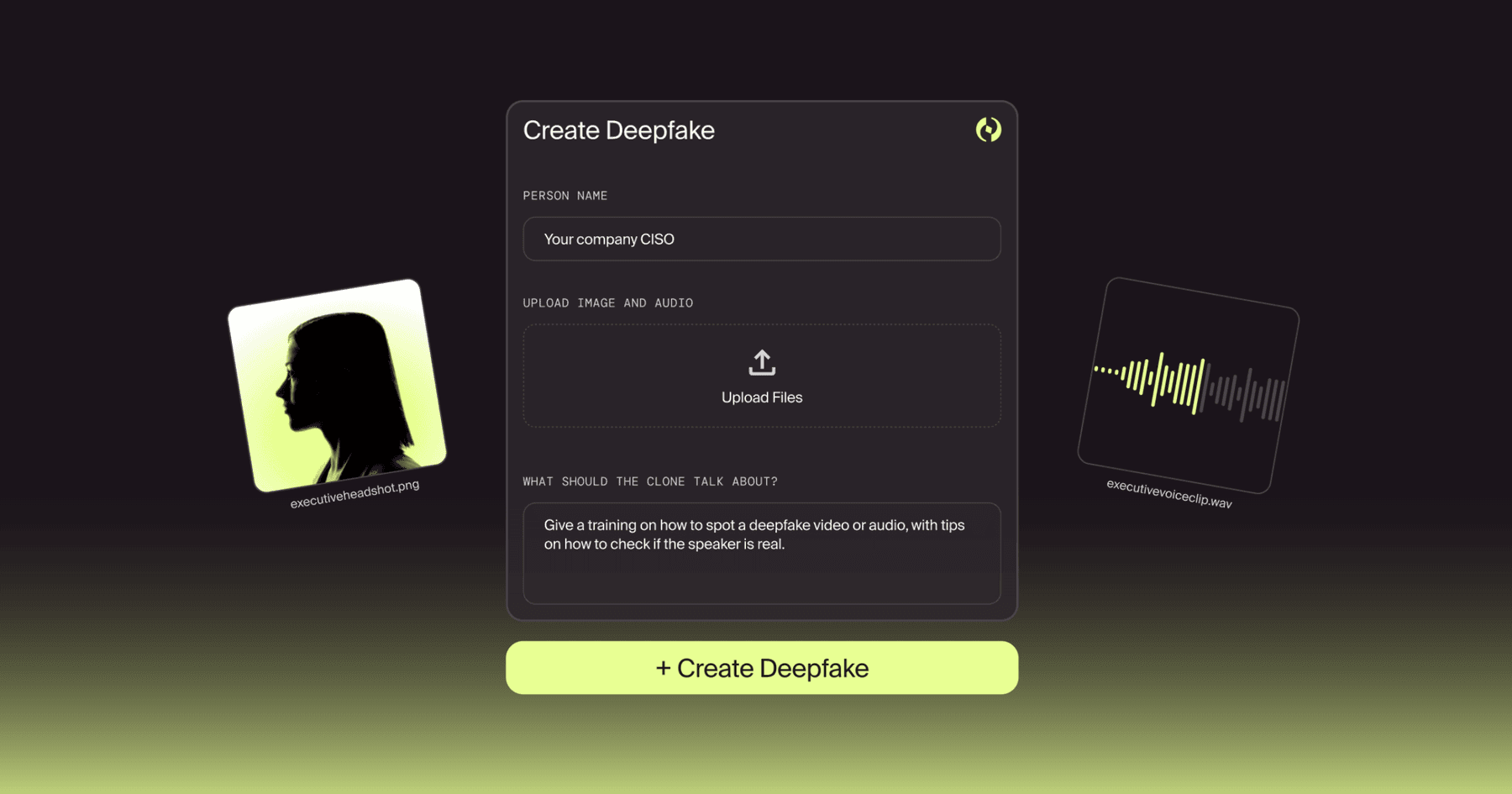
Inside the company, Doppel Simulation can help recruiters and hiring managers rehearse deepfake-enabled conversations and cross-channel impersonation. That's useful practice for the moment when a polished call, message, or meeting asks someone to skip verification. It doesn't replace an employer's identity checks or make an AI screener's judgment automatically trustworthy.
The point is to protect both sides of the interview. A legitimate applicant should have an unmistakable path to the real employer. A legitimate employer should know who, or what, is crossing the hiring threshold.
Don't let the bot set the terms of the interview
Hiring automation can save time. It can also make a bad signal look official: a résumé ranking that came from applicant-supplied instructions, or a convincing interview that never belonged to your company. Neither deserves a free pass because the interface looked professional.
Could your team spot a manipulated applicant and a fake recruiter using your brand in the same week? Schedule a Doppel demo to see how campaign visibility and realistic simulations can help close the gaps around the hiring process.