Recruiting runs on an assumption of identity.
HR teams verify past experience, check professional references, and run standard criminal background checks. Through all of this, the organization implicitly trusts that the person smiling on the Zoom meeting is real.
Threat actors recognize this massive loophole in the recruitment process. They realize that the easiest way to breach a company isn’t to hack a firewall. It’s much easier to simply apply for a job.
That’s because cybercriminals are aggressively deploying deepfake candidates and AI bots directly into the recruitment pipeline. HR departments and hiring managers are now the frontline of corporate security, and they’re largely unprotected against this type of social engineering.
It’s difficult to keep up with fake job applicants and deepfake candidates. As of March 2026, there were 6.9 million job openings (opens in new tab), and attackers prey on these listings to slide through recruitment pipelines.
Here’s everything you need to know about trap recruiters are walking into every week.
What is a Deepfake Job Candidate?
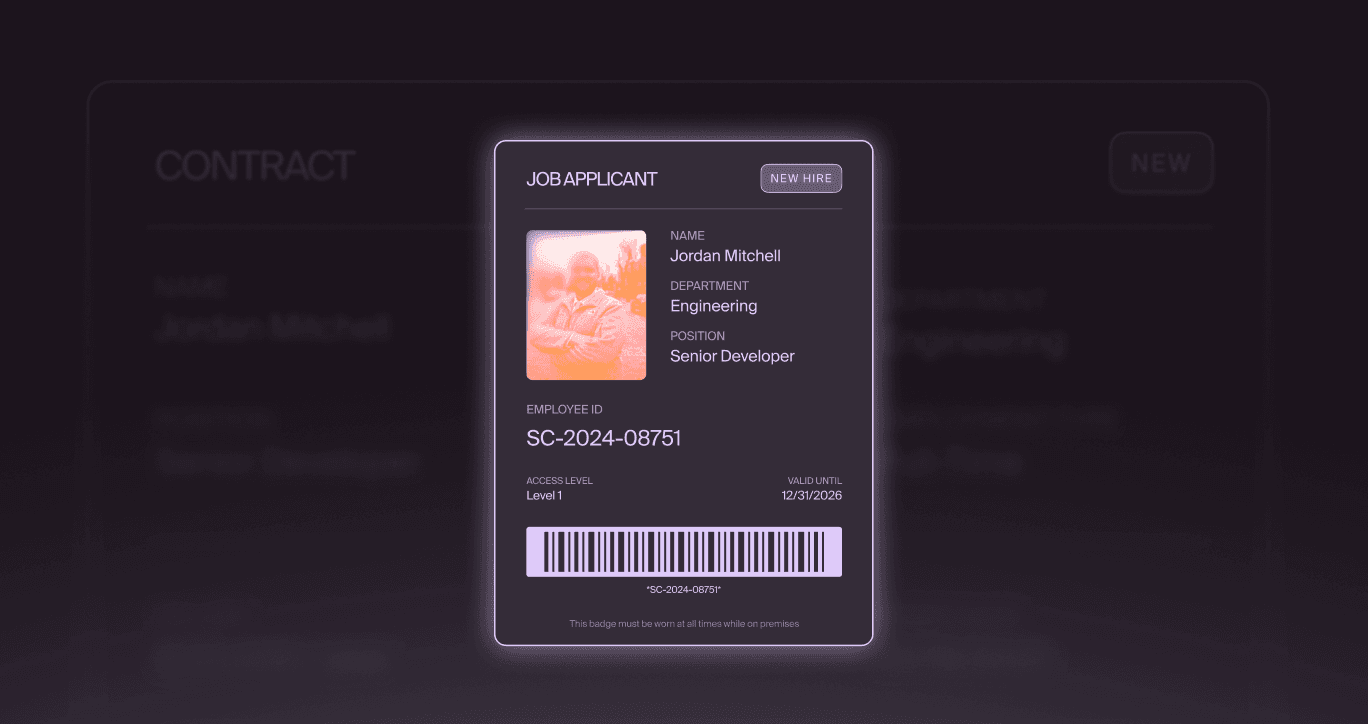
A deepfake job candidate is a cybercriminal who uses AI to digitally mask their real appearance and voice during the hiring process. They post as highly qualified professionals to trick companies into hiring them.
This is a fully synthetic persona, not a traditional candidate padding their resume or exaggerating their skill set.
Attackers use stolen, legitimate identities paired with AI-generated headshots (opens in new tab). During live interviews, they use real-time voice cloning and sophisticated face-swapping technology.
The goal is to get a company-issued laptop. They want the remote VPN credentials. They’re hunting for internal, unmonitored access to source code, customer databases, and financial infrastructure.
Organized crime rings and state-sponsored actors are leading the charge. In 2025, several reports identified North Korean IT workers (opens in new tab) “using real-time deepfake technology to infiltrate organizations through remote work positions.” It’s led everyone from Indeed (opens in new tab) to the New York State Bar Association (opens in new tab) to issue warnings on fake job applicants.
Recruitment Kill Chain: How This Social Engineering Works
Fake job applicants infiltrate an organization through a highly structured, multi-stage social engineering attack.
Here’s the kill chain adversaries use to bypass the recruitment pipeline:
- AI-Optimized Resume: Attackers use LLMs to generate flawless, keyword-optimized resumes. These documents are explicitly designed to bypass your applicant tracking system (ATS) effortlessly and guarantee initial screening.
- Deepfake Interview: Once the candidates secure a live screening, the deception begins. Using virtual cameras and real-time deepfake software, the attacker maps a synthetic face and a cloned voice over a malicious operator.
- Proxy Technical Test: During technical interviews or coding assessments, the person visible on the screen isn’t the one actually answering the questions. An off-screen export, or a sophisticated AI model, feeds live, perfect answers to the deepfake candidate.
- IT Onboarding Exploit: The company hires the candidate and ships a fully provisioned corporate laptop to a proxy address. The attacker receives the hardware and immediately uses it to establish a persistent backdoor into the corporate network.
5 Signs of a Fake Job Applicant During a Live Interview
Hiring managers need to act as human security sensors during the interview process, complete with a tactical checklist to spot visual and auditory anomalies in real time.
Watch for these behavioral and visual red flags when interviewing remote talent:
- Audio & Visual Desynchronization: Pay close attention to the candidate's mouth. If the lips don’t match the spoken words perfectly, or if there’s a consistent micro-delay throughout the conversation, you’re likely looking at a deepfake rendering issue.
- Artifacting & Glitching: Look for strange visual artifacts around the face, jawline, or hair. Deepfake software often struggles when the candidate moves quickly, turns their head sideways, or touches their face with a hand.
- Static Background Blur: Deepfakes render best against a static, motionless background. Be highly suspicious of candidates who refuse to turn off their background blur when asked, or who appear to be sitting in front of a completely frozen digital image.
- Unnatural Lighting Reflections: Check how the light falls on the candidate's face relative to their surroundings. If the lighting on their skin doesn’t match the room's shadows, the face is likely a digital overlay.
- Robotic Pacing: Listen carefully to the cadence of the conversation. Highly rehearsed responses that lack natural conversational pauses, filler words, or cultural nuance are a strong indicator of a scripted AI response or an off-screen proxy reading answers.
Why Traditional Background Checks Can’t Stop Deepfake Candidates
Traditional background checks are inadequate for stopping this type of threat.
Screening services verify (opens in new tab) a name and Social Security number (SSN), but they don’t verify that the person on the video call is actually the owner of that SSN.
If an attacker purchases a stolen identity on the dark web, the background check will come back perfectly clean. So the company believes they’re hiring a real person with a clear criminal record and excellent credit.
This creates a dangerous disconnect between what HR departments look for and how attackers actually operate.
| | Legacy HR Screening | AI-Powered Impersonation |
Identity Verification | Running a Social Security number (SSN) through a database | Using a stolen, clean SSN purchased on the dark web |
Visual Confirmation | Trusting the face on the live video call | Using real-time face-swapping software to match a stolen ID |
Technical Competency | Administering a live coding test or whiteboard session | Having an off-screen proxy or LLM feed answers to the deepfake candidate |
Reference Checks | Contacting listed professional references | Providing fake email addresses and VoIP numbers routed to co-conspirators |
Here’s Why You Need to Simulate Deepfake Candidate Attacks
Recruiters and hiring managers can’t be expected to act as biometric security scanners without a human risk management (HRM) strategy in place.
If a hiring manager has only ever interviewed real, eager professionals, they’ll fail to spot a high-quality deepfake. The human brain naturally wants to trust the person smiling on the screen.
Run live, conversational simulations against your hiring team. You’ll build their muscle memory before a real threat actor enters the Zoom or Microsoft Teams room.
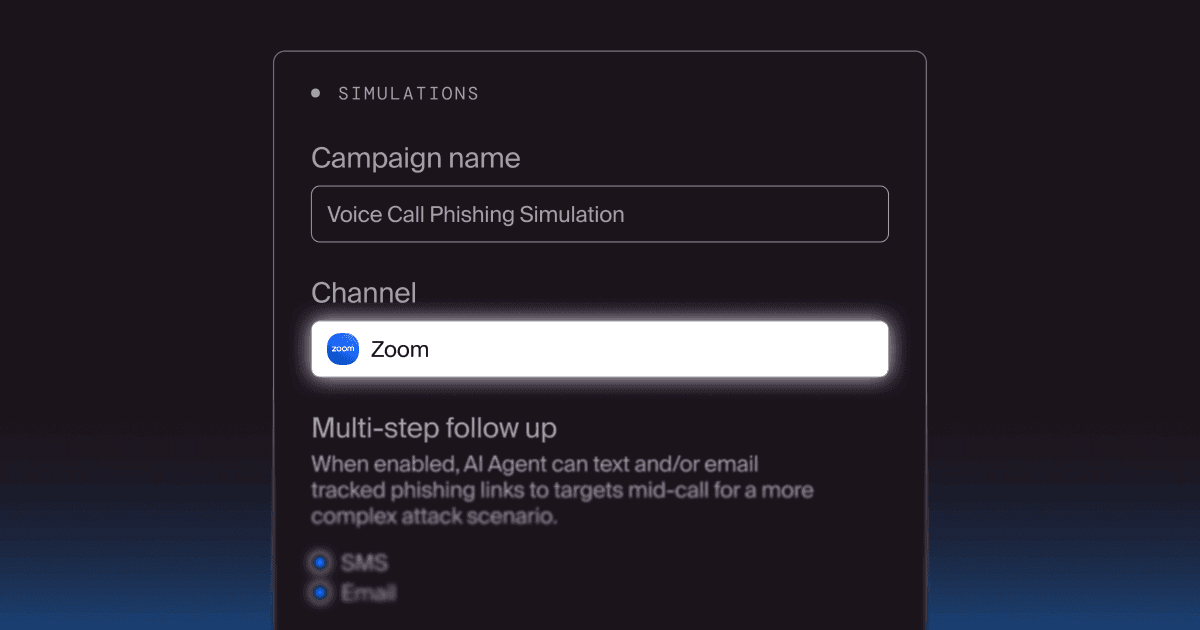
Doppel’s AI-native social engineering defense (SED) platform includes specialized Zoom Meeting simulations. You can place your hiring managers in live, mock interviews with deepfake candidates. This actively trains your team to identify behavioral and visual red flags in a safe, zero-shame environment.
When your recruiters experience a deepfake interview in a simulation, they learn exactly how the technology behaves. They learn how to ask verification questions and spot subtle visual glitches that give away the attacker.
Doppel provides security leaders with detailed behavioral metrics that show exactly where the recruitment pipeline is most vulnerable to impersonation.
Secure the Recruitment Pipeline with AI-Native Defense
The recruitment pipeline is a highly exposed attack surface. Securing it requires HR and security teams to break out of their traditional silos and collaborate aggressively.
Accept that the person applying for your open engineering role might be an active threat actor.
Cybercriminals will continue to use AI bots and deepfake candidates to infiltrate organizations from the inside out. You must equip your hiring teams with the tools, protocols, and live-simulation training necessary to defend the gates.
Are your hiring managers prepared to interview a deepfake candidate? See how Doppel protects your recruitment pipeline.