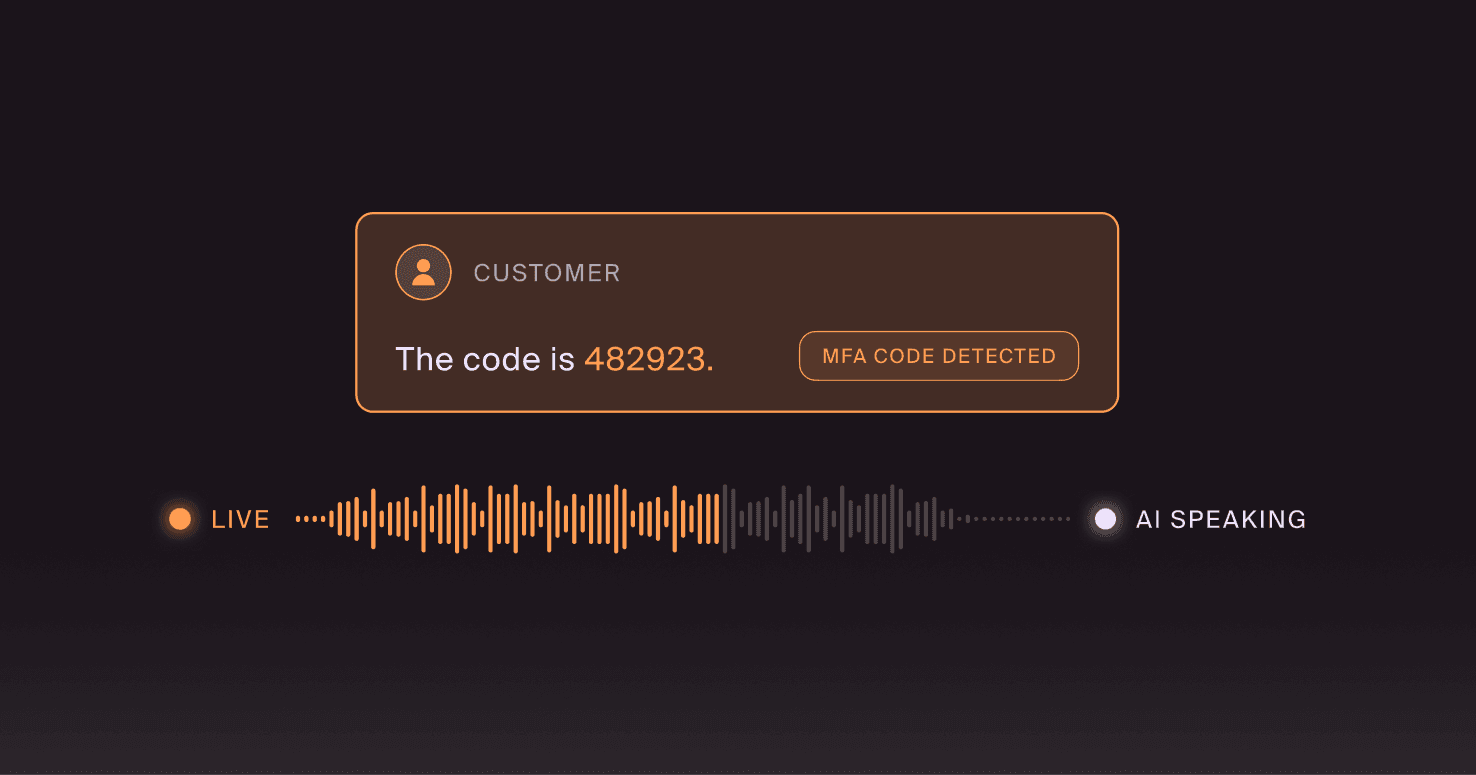
A help desk number flashes on an employee's phone late in the afternoon. The caller knows the employee's manager by name, references a ticket opened that morning, and explains that a failed security update has locked their account. They need the verification code that was just texted to restore access. The employee reads it back. By the time the call ends, the attacker has reset the password and is logged in.
This scenario mirrors attacks that have caused major financial damage. Human judgment still sits inside most breaches, with 60% (opens in new tab) of breaches in the 2025 DBIR involving a human element, and a live voice pressures that judgment directly in ways email cannot. Today's vishing calls combine believable pretexts, caller ID spoofing, cloned voices, and real-time adaptation.
Key Takeaways
- Vishing follows a small set of repeatable plays that turn trusted workflows into attack paths: help desk resets, deepfaked executive wire requests, payroll and vendor bank-change calls, MFA push-approval pressure, and bank fraud-department callbacks.
- Every vishing call shares the same four tells: authority paired with urgency, resistance to callback verification, a request to skip an established control, and an attempt to corroborate the story across another channel.
- Voice cloning, live conversational AI, and multi-channel coordination across SMS, email, and collaboration tools have outpaced the "I'd know a fake voice" assumption, and regulators, including NYDFS, are now codifying vishing simulation and verification expectations.
- Closing the gap between awareness and reflex requires repeated, realistic practice: adaptive voice simulations that mirror live attacker tactics, connect external threat detection to internal training, and produce per-employee, per-channel risk data that security teams can act on.
What Is Vishing?
Vishing is voice-based social engineering that pressures a target over a phone call or voice channel into handing over credentials or moving money. It works because a live human voice carries authority and urgency cues that employees process in real time, and because the attacker controls the pace of the conversation, adjusts pressure based on the target's reactions, and pivots when skepticism surfaces.
Most vishing attacks rely on three components. A pretext supplies the story, often a locked account or a flagged transaction. A spoofed number makes the caller ID appear to come from a trusted institution or familiar contact, which exploits misplaced trust (opens in new tab) in the security of phone services.
A single ask carries the objective, such as reading back a code or approving a push notification.
Five Vishing Plays That Turn Trusted Workflows Into Attack Vectors
Most vishing follows a short list of repeatable plays. Seeing each one in concrete form is what lets a security team train the roles attackers target to recognize the pattern when the phone rings.
1. Help Desk Reset Calls Turn Support Workflows Into Account Takeover
An attacker posing as an employee pressures the help desk into resetting a password or MFA token, which turns the support workflow into the path to account takeover. In a Scattered Spider intrusion (opens in new tab), the group identified an employee via LinkedIn, called the IT help desk while impersonating that employee, and requested a credential and MFA reset under a claimed lockout.
The intrusion ended in ransomware on VMware ESXi hosts and heavy losses, and the technique maps directly to MITRE ATT&CK T1566.004 (opens in new tab), Spearphishing Voice. A parallel campaign reached a second hospitality target through an outsourced help desk vendor.
2. Cloned Executive Voices Push Fraudulent Wire Transfers Past Finance Teams
A cloned CFO or CEO voice instructs finance to push an urgent payment ahead of a fabricated deadline. In the most advanced version, the target joins a video call where every other participant, including the apparent CFO, is an AI-generated deepfake (opens in new tab), and authorizes transfers worth millions before anyone verifies the request.
Executive impersonation defenses have to assume any leader with a public footprint can be cloned from publicly available audio.
3. Payroll and Vendor Bank-Change Calls Redirect Funds for Weeks Undetected
A caller impersonating an employee or supplier requests a change to direct-deposit or vendor banking details. Payroll diversion (opens in new tab) is a persistent business email compromise tactic, and AI-generated phishing is a growing enabler of these schemes.
Once attackers change the banking details, funds are routed to an attacker-controlled account, and the impersonation often surfaces only when the legitimate employee or vendor reports a missing payment.
4. MFA Push-Approval Calls Talk Targets Into Approving the Attack
A caller times the call to a flood of MFA prompts and talks the target into approving one to stop the alerts. In a documented attack sequence (opens in new tab), the target received a large volume of login verification codes in rapid succession. After denying them all, a call arrived that appeared to come from the service generating the notifications.
The attacker posed as support and guided the target toward approving a prompt. Any enterprise identity platform that relies on push-based MFA is exposed to this play.
5. Bank Fraud-Department Callbacks Couple Credential Theft With Financial Manipulation
A caller posing as the company's bank or card-fraud team asks a finance or AP employee to confirm a transaction by reading back a one-time code. Reading it back hands over the account: the attacker resets the password and wires the funds out (opens in new tab) before the company regains access.
The displayed caller ID matches the bank's known number, which is exactly how phone impersonation scams make compliance feel like the responsible move.
Every Vishing Call Shares the Same Four Tells
The examples above repeat the same handful of tells. A workforce trained to hear these patterns can recognize unfamiliar scam variants before the caller gains momentum.
Urgency and Authority Show Up in the Same Breath
A claimed authority role, whether IT, security, an executive, or a bank fraud team, paired with time pressure to act before verification, is the defining red flag. Every play above carries it: the lockout that needs immediate resolution, the wire transfer with a tight deadline, the MFA flood that stops with one approval.
The Caller Resists Verification on a Channel You Control
Legitimate internal callers have no reason to object to a callback at a number the employee has on file. Verifying identity through a known contact method (opens in new tab) stored independently is the standard counter-social-engineering move. A caller who discourages a callback, objects to ticket creation, or instructs the employee not to consult a manager is showing one of the strongest recurring vishing indicators.
The Request Skips a Control the Process Requires
A request to skip a ticketing system, bypass dual-approval, or share credentials verbally is the attack itself. The Scattered Spider help desk calls succeeded because staff performed MFA resets without out-of-band identity confirmation.
The deepfake wire-transfer fraud bypassed dual approval because the caller framed the payment as too urgent for the normal process. Legitimate business requests follow established workflows.
The Call Tries to Jump to Another Channel
A vishing call that points you to a text, an email, or an app notification is manufacturing corroboration that the attacker controls at every step. In one documented campaign (opens in new tab), attackers impersonated IT staff over the phone and reinforced the calls with phishing messages, so each channel lent the others apparent legitimacy.
An SMS lure "confirms" the call, an email "confirms" the text. An MFA push notification arriving during an unsolicited call should trigger immediate callback verification at an independently sourced number.
Why Spotting Vishing by Ear No Longer Scales
Attackers now sound more convincing, adapt faster, and coordinate across more channels than any single alert employee can track in the moment. Regulators have taken notice. A February 2026 vishing advisory from New York's financial regulator directs covered firms to put identity verification, targeted awareness training, and continuous monitoring in place, and top-tier banks have been told that mandatory vishing exercises are coming.
Red-flag training still matters, but it now has to be backed by process-based verification and realistic practice.
AI Voice Cloning Defeats the "I'd Know a Fake Voice" Assumption
Attackers can clone a convincing voice from seconds of public audio (opens in new tab). Any executive who has spoken on an earnings call, a conference keynote, or a podcast has supplied more than enough source material. Voice-based attacks have climbed sharply (opens in new tab) through 2024 and 2025, and process-based verification is the more reliable defense against cloned audio.
Live Vishing Agents Reroute the Moment a Target Pushes Back
A live vishing agent shifts tactics the instant a target resists, the same way a skilled human social engineer would, and automated vishing platforms now put that adaptability within reach of low-skill attackers. Live vishing simulations (opens in new tab) show the conversation changing with each rebuttal, testing judgment that a scripted robocall never reaches.
Adversary simulations that continue past the first refusal test the skill attackers actually use.
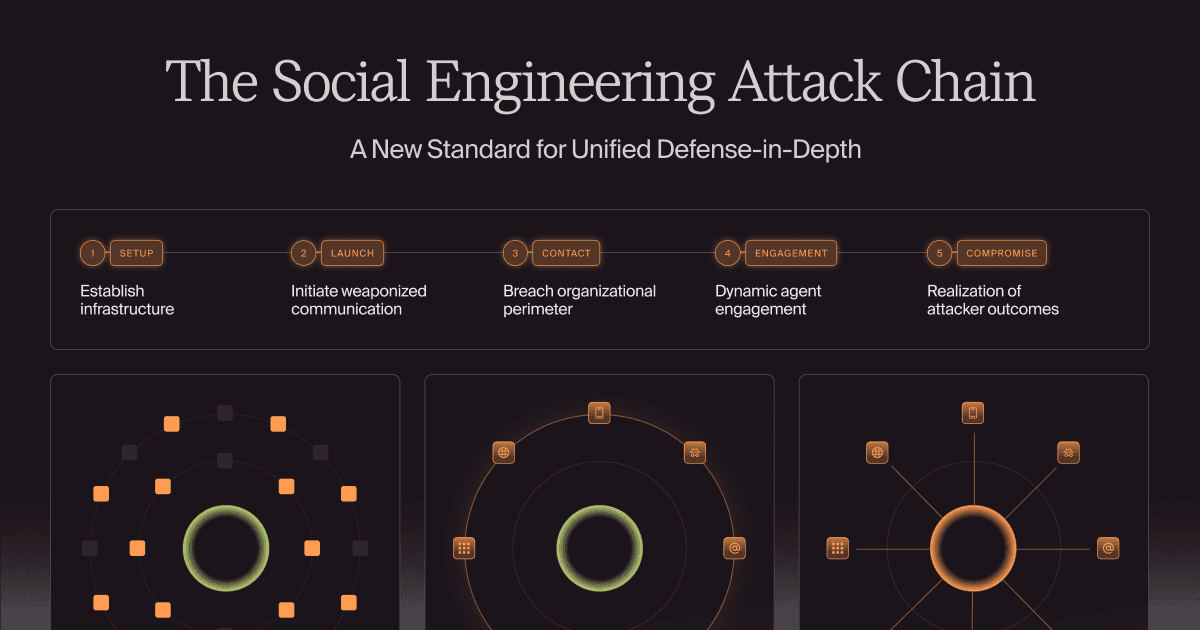
A Single Vishing Call Is One Stage of a Multi-Channel Campaign
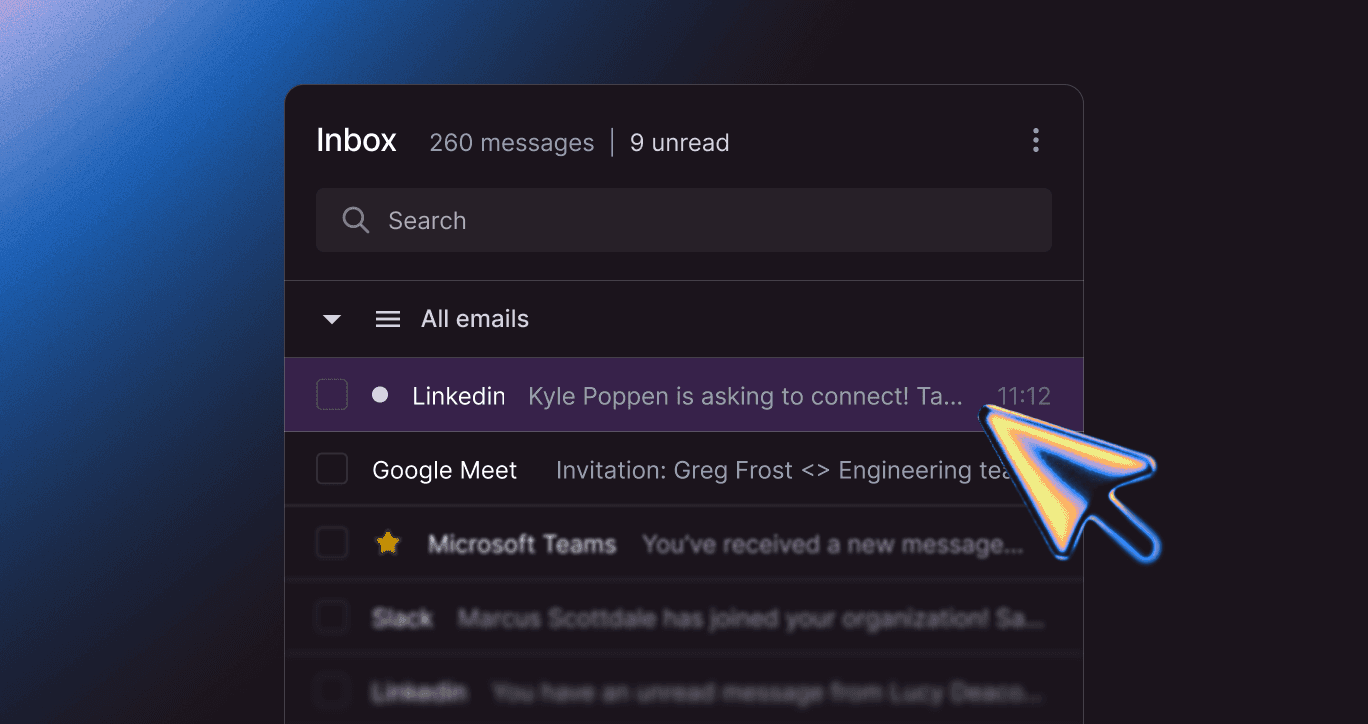
A vishing call rarely travels alone. It is one stage of a campaign that also moves across LinkedIn, SMS, and the help desk. Documented Scattered Spider intrusions combined LinkedIn reconnaissance, SMS phishing, and help desk voice calls in a single operation.
Black Basta affiliates used Microsoft Teams calls (opens in new tab) for initial access in a 2024 advisory, often staging a calendar invite ahead of the call to lend the meeting apparent legitimacy. In a separate pattern, Scattered Spider campaigns flooded targets with spam email as a psychological setup before a vishing call posed as IT support offering to clear the spam.
Email security, telephony monitoring, and collaboration-platform controls each see only one segment of an attack chain that spans all three at once.
How Doppel Turns Red-Flag Awareness Into Trained Reflex
Reading a list of red flags once does little to change how an employee reacts when a caller who sounds exactly like the CFO demands a wire transfer in three minutes. Repeated, realistic practice closes the gap between awareness and reflex.
Dynamic Simulation Mirrors the Attacks Targeting Your Organization
Doppel is the AI-native Social Engineering Defense platform that unifies Digital Risk Protection and Human Risk Management. Its Dynamic Simulation puts that practice to work through live vishing simulations run by agentic voice agents, using deepfake or AI-generated voices across phone, Microsoft Teams, and Zoom.
The agents work through IVR menus, wait out hold times, and handle line transfers, which makes help desk testing feasible at scale. When a target pushes back, the agent adapts and can pivot mid-call to a follow-up email or SMS, mirroring the multi-channel tactics in the Scattered Spider campaigns above.
One-Click Threat-to-Simulation Conversion Closes the Intelligence Loop
Doppel detects impersonation campaigns, maps the attacker infrastructure through the Doppel Threat Graph, and dismantles it across channels while turning the same tactics into simulations.
If the Threat Graph flags a brand impersonation campaign today, the same lures can run as an org-wide vishing simulation tomorrow. Security teams at companies, including Coinbase, use Doppel for brand protection and social engineering defense.
Risk Modeling Tracks Every Channel and Every Response
Doppel tracks each employee's behavior across channels through a per-employee risk profile that includes consecutive fail streak count, response speed, data submission rate, and a per-channel breakdown. Every voice call produces a full transcript with line-by-line sentiment analysis, so analysts can see exactly where a target refused, deflected, or submitted.
Automated training assignment routes progressive security awareness training content to employees who need it, without analyst intervention. The result is a measured, multi-channel human risk baseline that improves with every simulation cycle.
Rehearse the Vishing Call Before an Attacker Places It
These real-world examples show attackers exploiting highly personalized, realistic scenarios. The gap between knowing the red flags and acting on them under pressure is the gap attackers walk through. Training has to mirror real-world attack flows across the channels attackers actually use.
Teams that pull ahead drill voice as continuously as attackers use it. Doppel's Dynamic Simulation runs those drills with adaptive, AI-generated voice calls that reflect the campaigns targeting the organization. The practice turns red-flag awareness into a trained reflex that makes an organization more costly to attack.
Request a Demo to run a live vishing simulation against your organization before an attacker does.