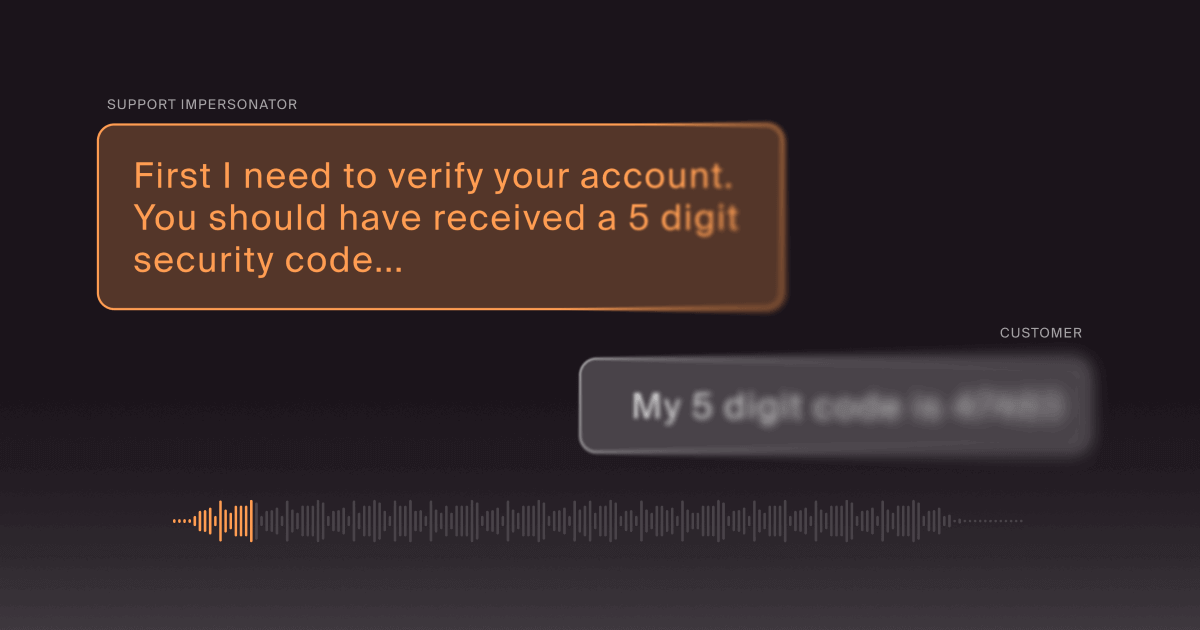
The New York Department of Financial Services didn’t update 23 NYCRR Part 500 to add more controls. It didn’t issue an associated cybersecurity advisory to CISOs (opens in new tab) about the risks associated with vishing to create fear. It issues these updates because the nature of breaches has fundamentally changed.
Most incidents no longer begin with a technical exploit. They begin with a conversation—an employee resetting a password, approving a request, or bypassing a control under pressure. Social engineering has become the dominant initial access vector, and it scales with the same speed and sophistication as the organizations it targets.
The 2023 amendments reflect that reality. They shift the focus of compliance away from static controls and toward something harder to demonstrate, but far more meaningful: whether security procedures actually hold up in practice. The February 2026 letter extends that further by highlighting a new and rapidly growing threat vector.
From awareness to evidence
For years, awareness training sat comfortably in the compliance checklist. Employees completed annual modules, acknowledged policies, and occasionally engaged in email phishing tests. Completion rates were high. Click rates were low. Audit readiness was straightforward.
But those signals no longer map to risk.
The updated Part 500 raises the expectation, and the latest letter reinforces the urgency. It’s no longer enough to show that employees were trained against yesterday’s tactics. Organizations must demonstrate that employees behave securely—consistently, under realistic conditions, and in the face of modern attacker tactics.
That distinction changes everything. Training is no longer a one-time event. It becomes an ongoing process of validation.
What “targeted awareness training” actually requires
The direction is clear. Training must be relevant to real threats, tailored to the roles most exposed to them, and reinforced continuously. Most importantly, it must be measurable in terms of outcomes.
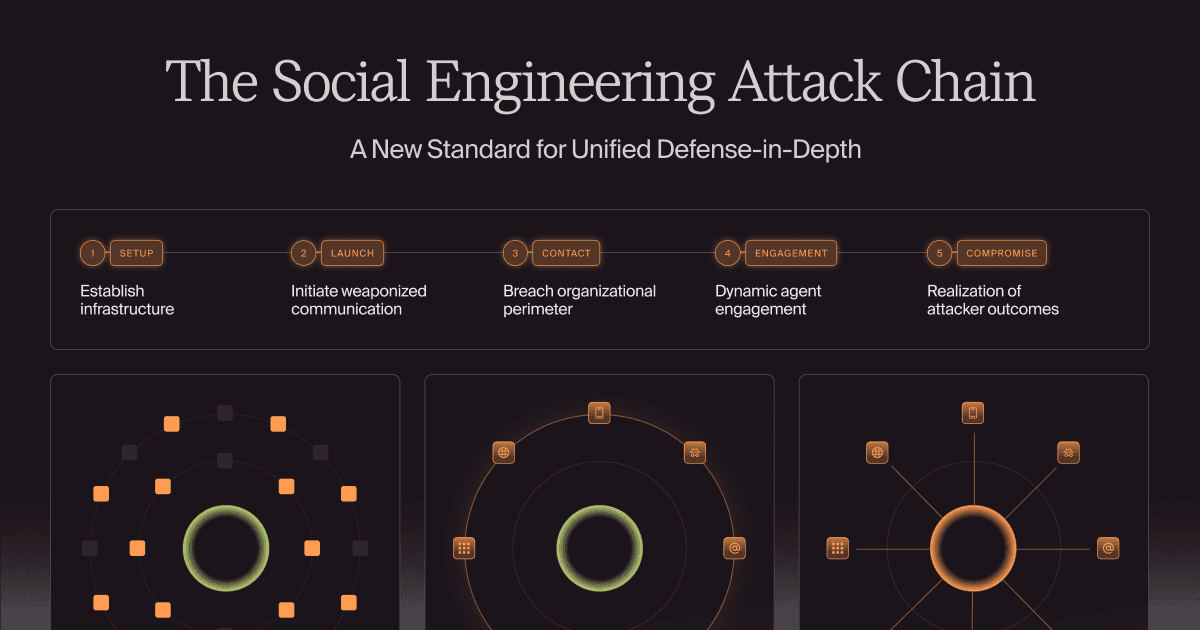
This aligns with how attacks actually unfold. Modern campaigns don’t rely on a single phishing email. They span channels, build context over time, and exploit the exact workflows organizations depend on—password resets, vendor requests, executive approvals. They are designed to trigger urgency, trust, and action.
Preparing employees for that environment requires more than static content. It requires exposing them to those conditions and measuring how they respond.
Where traditional programs fall short
Most compliance programs already include the baseline components: training platforms, phishing simulations, and policy tracking. The problem is that these systems measure exposure, not effectiveness.
Completion rates, quiz scores, and click metrics create a sense of coverage, but they don’t answer the question regulators are increasingly asking: do your controls work when it matters, against the attacks targeting organizations today?
That gap introduces real regulatory risk. When evidence is limited to participation metrics and training lags behind threats, it becomes difficult to demonstrate that human-layer controls are functioning as intended.
How Doppel HRM strengthens security and enables compliance
Doppel approaches this problem from a different starting point. Instead of treating training as the output, it treats behavior as the signal.
Doppel’s realistic, threat-informed simulations span the channels that attackers use, and regulators watch: email, SMS, voice, and collaboration tools. The platform recreates the conditions under which real breaches occur. Employees aren’t just taught what to look for; they are placed in scenarios where they must apply security procedures under pressure.
From there, the system captures how those interactions unfold. Who verifies identity. Who escalates. Where processes break down. This creates a behavioral layer of evidence that moves beyond awareness and into control validation.
When gaps appear, the response is immediate and targeted. Training is tied directly to observed behavior, delivered in context, and reinforced through just-in-time interventions. Over time, this creates a continuous loop: simulate, measure, reinforce, and improve.
For compliance teams, the result is not just better training, but defensible documentation. Instead of pointing to completion rates, they can demonstrate that employees consistently follow required procedures in realistic scenarios and stay ahead of the latest, evolving regulations.
Why this matters now
The shift in Part 500 reflects a broader change in how regulators think about security. Controls are no longer evaluated based on their presence, but on their effectiveness.
The February 2026 advisory highlights the changing nature of the attack landscape. Attacks are spanning channels and chaining together tactics, challenging employee defenses regardless of how much training has been completed.
And in an environment where most breaches originate with human behavior, the effectiveness against modern tactics is defined by how people respond in real situations.
Organizations that continue to rely on static awareness programs will find it increasingly difficult to prove that readiness. Those that adopt a continuous, behavior-driven approach will not only meet regulatory expectations, but also reduce the likelihood of breach in the process.
Shifting from compliance to resilience
The difference is subtle, but important.
Compliance used to mean demonstrating that employees were trained. Now it means demonstrating that they act securely.
Doppel enables that transition by turning awareness into something measurable, testable, and defensible. It gives organizations a way to show—not just say—that their people can recognize and stop real attacks, even as they’re constantly evolving.
And in the context of the NYDFS and 23 NYCRR Part 500, that’s what compliance now requires.
Learn more about how Doppel supports financial services organizations here.