

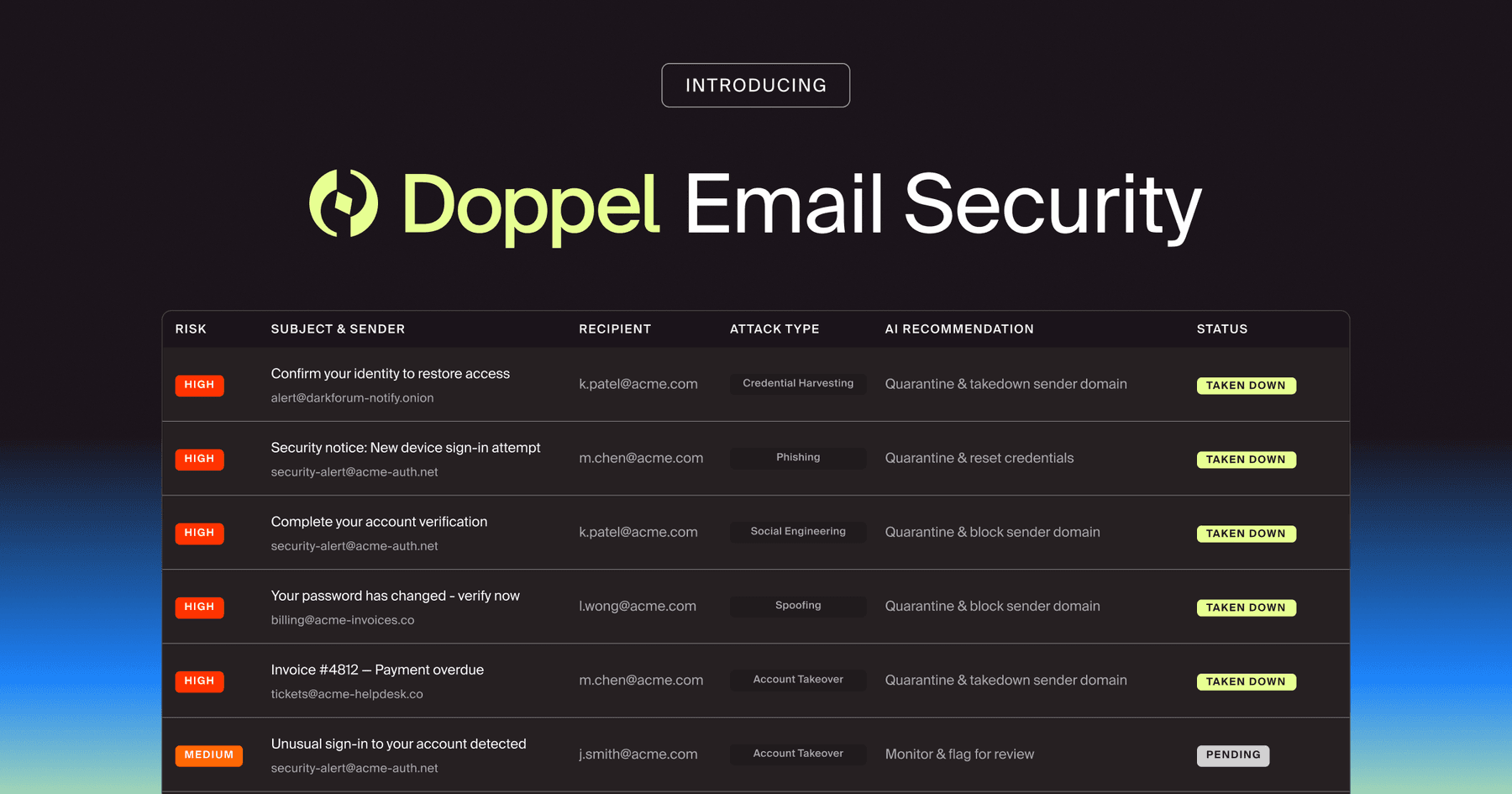
Adversary simulations are controlled exercises that recreate realistic attacker behaviors and scenarios to test how an organization’s people, workflows, and controls perform under pressure. In a human risk management context, they focus on the decisions people make when they face impersonation, deception, urgency, and exception-based requests across channels such as email, phone, chat, collaboration tools, and support workflows.
They matter because many modern attacks do not begin by bypassing technical controls. They succeed by manipulating trust. An attacker pressures a help desk agent to reset MFA, convinces a finance employee to approve a payment change, or impersonates support to push a customer toward an unsafe action. Adversary simulations give organizations a repeatable way to measure whether employees and workflows hold up in those moments.
Summary
Adversary simulations help organizations recreate realistic attacker behavior to test how people, teams, and workflows respond under pressure. In Doppel’s context, that includes scenarios involving executive impersonation, help desk abuse, support fraud, phishing, and other social engineering tactics that target human judgment across modern channels. For human risk management, the goal is not to produce abstract awareness metrics. It is to measure whether people verify identity, follow secure processes, resist manipulation, and escalate suspicious activity before fraud, account takeover, or customer harm occurs.
What Do Adversary Simulations Mean for Human Risk Management?
For human risk management, adversary simulations test the human attack surface using realistic attacker behavior, not just whether technical controls trigger alerts. It recreates how attackers manipulate trust, exploit urgency, and abuse normal business processes to get someone to bend a rule, skip a verification step, or approve an exception.
They Test Human Decisions, Not Just Technical Exposure
Many security teams already test infrastructure, endpoints, and identity controls. Adversary simulations add another layer by testing whether a help desk analyst resets credentials without proper verification, whether an executive assistant trusts a spoofed urgent request, or whether a finance approver follows policy when a vendor banking change arrives through a believable chain of messages.
That matters because attackers often look for the easiest path around hardened systems. A cloned login page or spoofed domain may be part of the attack, but the real breakthrough usually happens when a person accepts a false identity claim or overrides a secure process.
They Mirror Attacker Behavior Across Real Channels
Adversary simulations should not look like a dated phishing exercise built around one suspicious email. Modern attackers work across channels. A victim may receive an SMS about a support issue, click on a lookalike page, then get a follow-up phone call from someone using a spoofed number and a polished script. An employee may get a Slack or Teams message that appears to come from leadership, followed by a calendar invite and a fake approval request.
That is why adversary simulations fit Doppel’s human risk management approach. They reflect how attackers actually manipulate people across email, voice, messaging apps, collaboration tools, and support workflows.
It Creates Controlled Pressure without Waiting for a Real Incident
A good simulation recreates stressful decision points in a safe, controlled environment. Organizations do not need to wait for a real payment diversion attempt or help desk takeover incident to learn where their workflows break down. They can create realistic scenarios, measure responses, identify weak points, and improve processes before an attacker finds them first.
Why Do Adversary Simulations Matter for Modern Brands?
Adversary simulations matter because modern fraud and social engineering campaigns increasingly depend on human action. Attackers do not need a sophisticated exploit chain when they can manipulate a person into resetting access, approving a change, or trusting a fake support interaction.
Attackers Increasingly Target Workflows, Not Just Inboxes
Many legacy testing programs still focus on whether someone clicked a link in an email. That misses the larger problem. Real attackers often target workflows where trust and speed matter more than suspicion. Help desk resets, finance approvals, customer support exceptions, refund processing, loyalty account changes, and vendor updates are all attractive because they are designed to help legitimate users quickly.
That operational reality changes what should be tested. Organizations need to know whether employees follow identity verification steps when the request feels urgent and plausible. They need to know whether exceptions are logged, escalated, and challenged. They need to know whether customer-facing teams can recognize scam patterns tied to the brand.
AI Has Made Impersonation More Scalable and More Believable
Adversary simulations matter even more now because attackers can use AI to make scams faster, more personalized, and harder to dismiss. They can generate polished email copy, realistic chat language, spoofed support scripts, cloned websites, and convincing audio for voice-based pretexts. That does not mean every attack uses cutting-edge deepfakes. It means the baseline quality of social engineering has improved, and employees now face more interactions that look legitimate on first pass.
A help desk analyst might hear a confident caller who appears to know the employee’s name, department, and recent ticket history. A finance manager might receive a payment change request referencing an active vendor relationship, sent in a familiar tone. A customer support team might see a flood of scam-driven contacts after fake brand accounts push users into compromised flows.
Leaders Need Repeatable Validation, Not Assumptions
Awareness alone is not proof. Policy alone is not proof. Even a secure workflow diagram is not proof. Adversary simulations give leaders evidence. It helps them answer practical questions:
- Do employees verify identity when pressure rises?
- Do support teams follow trusted callback procedures?
- Do finance approvers challenge unusual requests that appear operationally normal?
- Do customer-facing teams recognize when a brand impersonation campaign is driving fraud and support volume?
- Do teams improve over time when scenarios become more realistic?
That is why simulation fits so well with human risk management. It turns people-centered risk into something measurable and improvable.
How Do Adversary Simulations Work in Practice?
Adversary simulations work by recreating realistic attacker behavior in controlled scenarios, then measuring how people and workflows respond. The design should start with likely attack paths and business outcomes, not generic templates.
Start With the Attacker’s Objective
Every simulation should begin with a clear attacker goal. The goal might be to gain access via a help desk reset, divert a payment via a vendor change request, trigger a fraudulent refund, or push a customer into a fake support flow through brand impersonation. Starting with the objective keeps the exercise grounded in business risk rather than generic testing.
This also helps organizations choose the right participants, channels, and success metrics. A help desk scenario should test verification controls, escalation steps, and documentation quality. A finance scenario should test approval discipline, callback procedures, and change-management controls.
Build Scenarios around Realistic Trust Manipulation
The best simulations recreate how attackers manipulate judgment. They do not rely only on obvious red flags. They use plausible context, believable timing, familiar language, and controlled urgency. They may include identity claims, social proof, support language, policy exceptions, or reputational pressure.
For example, a scenario might involve:
- a caller posing as a locked-out executive who needs an immediate reset before a board meeting
- a fake vendor representative requesting a banking update tied to an existing invoice
- a customer service interaction driven by a scam campaign that has already primed the victim through SMS and a lookalike website
- a spoofed internal message that pressures a finance employee to process a confidential transfer outside the usual workflow
These are human decision tests. The point is to see whether a secure process wins when the request feels real.
Measure Behavior and Workflow Outcomes
Strong adversary simulations do not stop at whether someone clicked, replied, or complied. It measures the behaviors and workflow outcomes that matter to Doppel customers. That includes whether identity was verified, whether trusted channels were used, whether approvals were challenged, whether suspicious activity was reported, and whether escalation paths worked cleanly.
At this point in the program, many organizations also benefit from tying simulations to broader human risk management efforts, especially where role-specific testing and behavior measurement matter most. Human risk management provides the overlay that connects simulation results to measurable behavior change and risk reduction.
When Are Adversary Simulations a Better Fit Than Adversary Emulation for Human Risk Measurement?
Adversary simulations are often better suited for repeatable, scalable testing of human decisions across many scenarios. Adversary emulation and adversary simulations are closely related, but they are not always used in exactly the same way. In practice, emulation is often more tightly tied to a known threat actor or campaign pattern, while simulation is often broader and more scenario-driven.
Emulation Is Actor-Specific, While Simulation Can Be Scenario-Specific
Adversary emulation usually aims to reproduce the tactics, techniques, and procedures of a known threat actor or campaign pattern with higher fidelity. That is valuable when teams want to validate whether defenses hold up against a specific real-world adversary or attack style. Doppel’s published adversary emulation page already positions it as a controlled way to replicate real-world impersonation and social engineering patterns to safely validate defenses and workflows.
Adversary simulations are often broader and more flexible. They recreate attacker-like behaviors without requiring a one-to-one mapping to a named actor. That makes them useful for testing common human risk scenarios that appear across many campaigns, such as help desk abuse, executive impersonation, support fraud, phishing, and approval bypasses.
Simulation Is Easier to Repeat at Scale
Human risk programs need consistency and repetition. They need to run many scenarios across many users, roles, geographies, and workflows, then compare how performance changes over time. Adversary simulations are well-suited to that because they can standardize scenario logic while still preserving realism.
That is especially important for organizations that need ongoing validation, not one-off exercises. A program can test finance approvals one month, help desk resets the next, then customer support exception handling after that, all while using comparable metrics and scenario design principles.
Simulation Aligns Better with Workflow-Based Measurement
For human risk management, the question is often not, “Could we reproduce one specific actor’s full playbook?” The question is, “Do our people make secure decisions when confronted with realistic deception?” Simulation answers that more directly. It gives leaders a repeatable way to measure identity verification, exception handling, reporting behavior, escalation quality, and policy adherence across multiple attack patterns.
That is also why adversary simulations naturally connect with other Doppel concepts, such as vibe phishing simulations and multi-channel testing, which extend beyond simple inbox click rates to measurable behavior across workflows and channels.
How Should Teams Design Adversary Simulations for Help Desk and Workflow Abuse?
Teams should design adversary simulations around the business processes attackers abuse most often. That means focusing less on abstract awareness and more on where employees are asked to trust, approve, reset, verify, or make exceptions.
Help Desk Reset Scenarios Should Test Identity Verification Under Pressure
Help desks remain a high-value target because they can unlock accounts, reset factors, bypass normal friction, and speed up access recovery. A realistic simulation might involve a caller who claims to be a senior employee who has been locked out before a critical meeting. The script may include urgency, confidence, internal vocabulary, and enough context to feel credible.
The goal is to test whether agents stick to approved verification steps, use trusted channels, and document exceptions. If they skip those controls for convenience, the organization learns exactly where the human attack surface is exposed.
Finance and Vendor-Change Scenarios Should Test Approval Integrity
Finance teams are prime targets for impersonation because a believable request can lead directly to payment diversion or fraud. Simulations should test whether employees verify changes independently, challenge timing pressure, and avoid trusting a message simply because it looks operationally familiar.
A strong scenario might involve an existing vendor relationship, a plausible invoice chain, and a request to update banking details before a deadline. The measurement should focus on whether the employee broke the process, not merely whether they noticed something suspicious.
Customer Support Scenarios Should Connect Internal Behavior to Brand Abuse
Customer support teams often see the downstream impact of impersonation campaigns first. Victims contact the company because they followed a fake support account, clicked a brand lookalike page, or were pushed into a callback scam. Simulations can test whether agents recognize scam indicators, guide users back to verified channels, and escalate patterns that may signal a broader campaign.
This is where adversary simulations should tie back to Doppel’s broader detection and disruption capabilities. A strong program does not treat human behavior in isolation. It connects internal readiness with social engineering defense, threat monitoring, and brand protection workflows so teams can align simulations with real attacker behavior and response processes.
What Are Common Mistakes to Avoid?
Organizations often undermine adversary simulations by making them too generic, too narrow, or too disconnected from business outcomes.
Treating Simulation Like a Rebranded Phishing Test
One of the biggest mistakes is calling something adversary simulations when it is really a basic email exercise. If the program tests only whether someone clicks a link, it misses the point. Human risk exposure often arises in judgment calls before or after the click, such as whether a person trusts a caller, shares sensitive information, approves a request, or bypasses a secure workflow.
Ignoring Cross-Channel Attack Paths
Another mistake is designing simulations around one isolated touchpoint. Real scams often move across channels. An attacker may use social media, SMS, phone calls, fake sites, and collaboration tools in sequence. Testing only email creates a false sense of readiness and leaves large parts of the human attack surface untouched.
Measuring Vanity Metrics Instead of Operational Outcomes
Programs also fail when they obsess over simple completion data or raw failure rates. Those can be useful signals, but they are not enough on their own. Leaders need metrics tied to actual outcomes, such as stronger verification behavior, fewer insecure exceptions, lower support load from scam-driven incidents, and reduced fraud exposure.
That broader measurement mindset becomes even more valuable when simulation results inform related efforts such as brand impersonation fraud removal, vishing response, and deepfake scam prevention, where attacker infrastructure and human response need to be managed together.
Key Takeaways
- Adversary simulations recreate realistic attacker behavior to test how people, workflows, and controls perform under pressure.
- For human risk management, they are most useful when they measure identity verification, escalation, approval discipline, exception handling, and reporting behavior across real workflows.
- They are especially valuable for help desk, finance, vendor, executive support, and customer support teams that attackers commonly target with impersonation and social engineering.
- Adversary simulations are often more scalable than actor-specific emulation when organizations need repeatable measurement across many scenarios and roles.
- Doppel’s approach is strongest when simulations reflect real multi-channel attacks and connect to broader social engineering defense and brand protection efforts.
Adversary simulations
Adversary simulations are most useful when they reflect how attackers actually manipulate people and business processes, not just how a security team expects them to behave. For organizations investing in human risk management, it provides a repeatable way to validate secure decision-making, expose workflow gaps, and strengthen defenses against impersonation and social engineering tactics that drive real business harm. For Doppel, that value increases as simulations span multiple channels and map back to the real trust breakdowns that attackers exploit every day.
Frequently Asked Questions about Adversary Simulations
What are adversary simulations in simple terms?
Adversary simulations are controlled exercises that simulate realistic attacker behavior, allowing an organization to test how employees, workflows, and defenses respond under pressure.
How are adversary simulations different from adversary emulation?
Adversary emulation usually tries to reproduce a specific adversary or campaign pattern with high fidelity. Adversary simulations are broader and more flexible, which makes them better suited for repeatable testing of common human risk scenarios across roles and workflows.
Why are adversary simulations relevant to human risk management?
They are relevant because human risk management is about measuring and reducing the decisions attackers exploit. Adversary simulations test whether people verify identity, resist pressure, follow secure processes, and escalate suspicious activity when an interaction feels real.
What teams benefit most from adversary simulations?
Help desk, finance, vendor management, executive support, and customer support teams often benefit most because they routinely handle requests involving trust, urgency, access, payment, and exception handling.
What should organizations measure in an adversary simulation program?
They should measure behavior and workflow outcomes, such as identity verification compliance, secure use of trusted channels, reporting rates, escalation quality, exception handling, and reductions in fraud or scam-driven support load over time.