
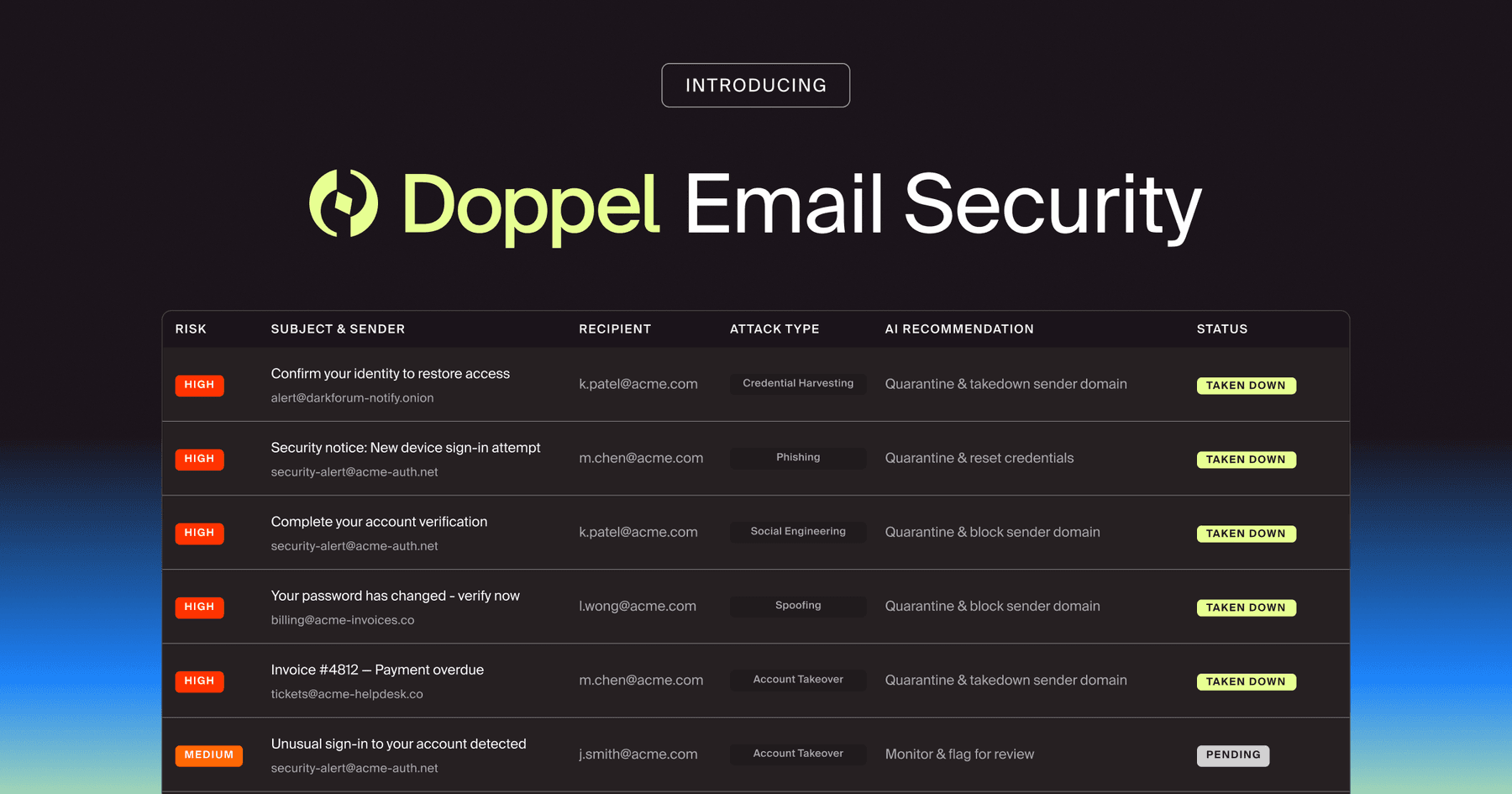
Doppel Email Security is now generally available
The agentic email security solution that empowers you to fight back against social engineering attacks. Detection isn't enough. Disruption is the difference.
Stop playing whack-a-mole with vanity metrics. Learn why tracking malicious state changes via an AI-driven Threat Graph is the only way to eliminate SOC burnout and dismantle multi-channel campaigns before they strike.
For years, digital risk protection vendors have relied on vanity metrics to prove their worth: Quarterly business reviews are filled with charts showcasing thousands of alerts generated, lookalike domains discovered, and parked sites taken down.
But if legacy vendors are removing more individual artifacts than ever, why is social engineering still the primary entry point for 62% (opens in new tab) of corporate breaches?
Attacks aren’t isolated to single-channel tactics anymore. Nowadays, they’re full-scale attack chains coordinated across domains, social profiles, paid advertisements, and the inbox. They establish high-fidelity infrastructure weeks before an attack ever lands, leaving lookalike surfaces dormant until the exact moment of exploitation. Legacy security tools that treat every parked domain as an isolated event don’t stop the campaign at the source.
This post explores why counting standalone artifacts creates a false sense of security, how tracking malicious state changes reveals the true lifecycle of a threat, and why a campaign-centric architecture is the only way to eliminate SOC burnout.
Traditional digital risk protection was built for a different era. Legacy models assume that the security team's primary challenge is visibility—finding every potential copycat asset across the internet.
But this approach leads to a reliance on broad keyword matching that flags thousands of benign or inactive assets, forcing human analysts to spend hours manually sorting through the noise.
When a vendor boasts about executing 10,000 domain takedowns in a single month, they rarely mention the operational reality behind those numbers:
Enterprises can’t triage their way out of an infrastructure scaling problem. True risk reduction comes from understanding when a passive exposure turns into an active, weaponized threat.
Attackers don’t always use a lookalike domain immediately after registration. To bypass reputation filters and signature-based scanning, they might register dozens of lookalike variations and leave them parked for months.
The transition from a dormant asset to an active weapon is called a malicious state change. Security leaders must focus their defenses on these critical pivots:
A domain sitting without an active mail exchange (MX) record is a passive brand risk. The moment an attacker points that domain to an active MX record, the state changes. The domain becomes an active piece of sending infrastructure engineered to launch targeted phishing campaigns directly into employees' inboxes.
An attacker may register a lookalike domain and point it to a blank page or a standard registrar landing screen to avoid early detection filters. A malicious state change occurs when the infrastructure suddenly pulls down a perfect visual copy of an enterprise login portal, a customer helpdesk interface, or an executive's professional profile.
When attackers fail to penetrate an organization via email, they pivot their active campaign infrastructure to alternative channels. Tracking a state change means recognizing when a lookalike brand asset identified on the dark web is suddenly weaponized inside an SMS scam, a Telegram group, or a malicious paid advertisement.
Focusing on these behavioral transitions allows defense systems to separate minor background noise from immediate operational risk.
To protect an organization from multi-channel attacks without growing headcount, teams must shift from an event-based approach to a process-based approach. Instead of evaluating artifacts in isolation, Social Engineering Defense (SED) relies on a continuous intelligence model powered by an AI-driven Threat Graph.
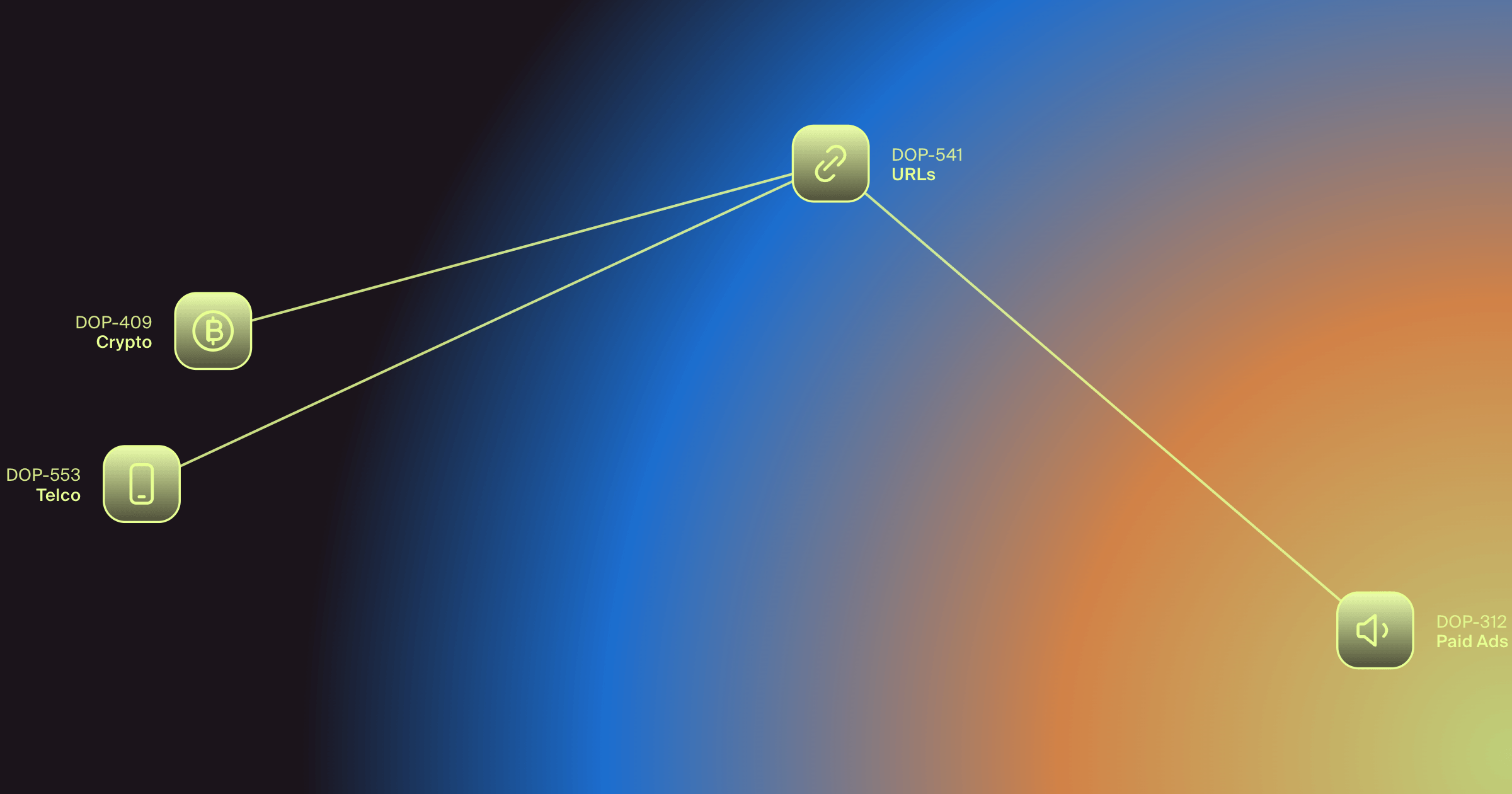
Doppel Threat Graph continuously maps the external attack surface, connecting domains, social handles, phone numbers, and digital assets into a single campaign view.
When a malicious state change occurs anywhere on the graph, the system acts immediately:
Tracking lookalike artifacts alone isn’t a viable defense strategy. Security leaders need clear visibility into campaign behavior and definitive, auditable infrastructure disruption.
By monitoring malicious state changes through a unified intelligence layer, organizations can anticipate attacker behavior, lower adversary return on investment, and turn continuous threat data into a resilient defense posture.
To see how campaign-level intelligence can reduce your team's manual verification workload, request a demo with the Doppel team today.
BLOG
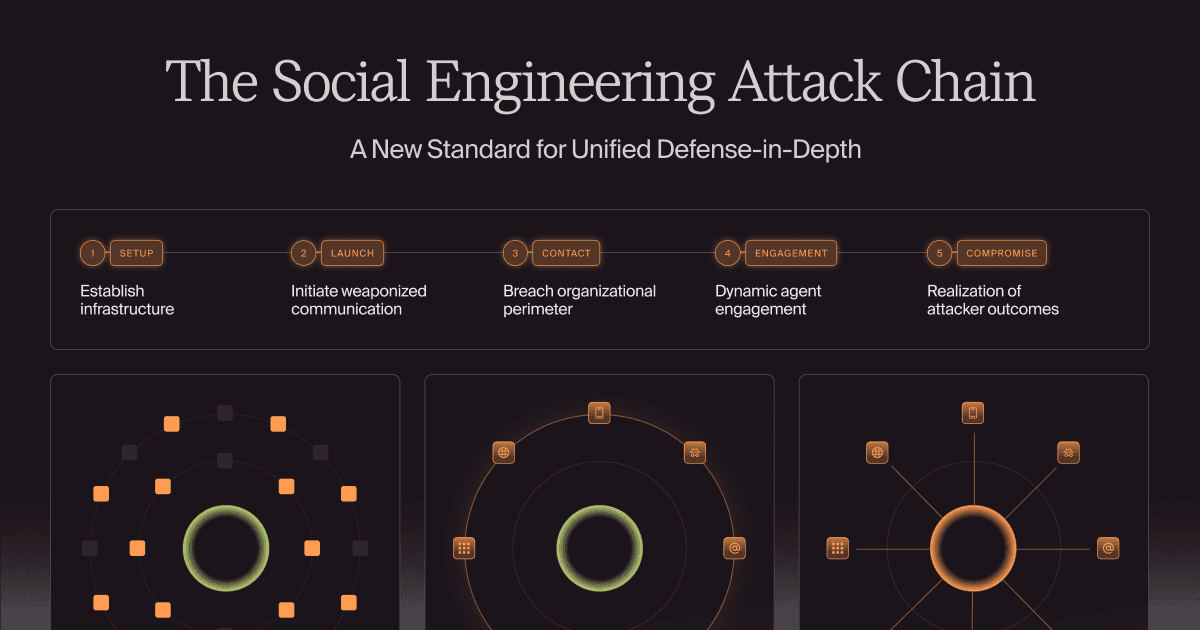
Modern social engineering is a relentless, AI-orchestrated lifecycle. Learn how to map the five-stage attack chain—from setup to contact—and why a unified defense platform is the only way to outpace AI-driven social engineering attacks.



by Bobby Ford, Rahul Madduluri, and Alvin Lin