Remember when phishing was just a single, poorly spelled email from a foreign ‘prince’?
Those days are long gone. The concept of a standalone phishing email is dead. Now, social engineering is a highly coordinated, omni-channel marketing campaign.
By the time a malicious email actually hits an employee’s inbox, the attacker has already done the heavy lifting.
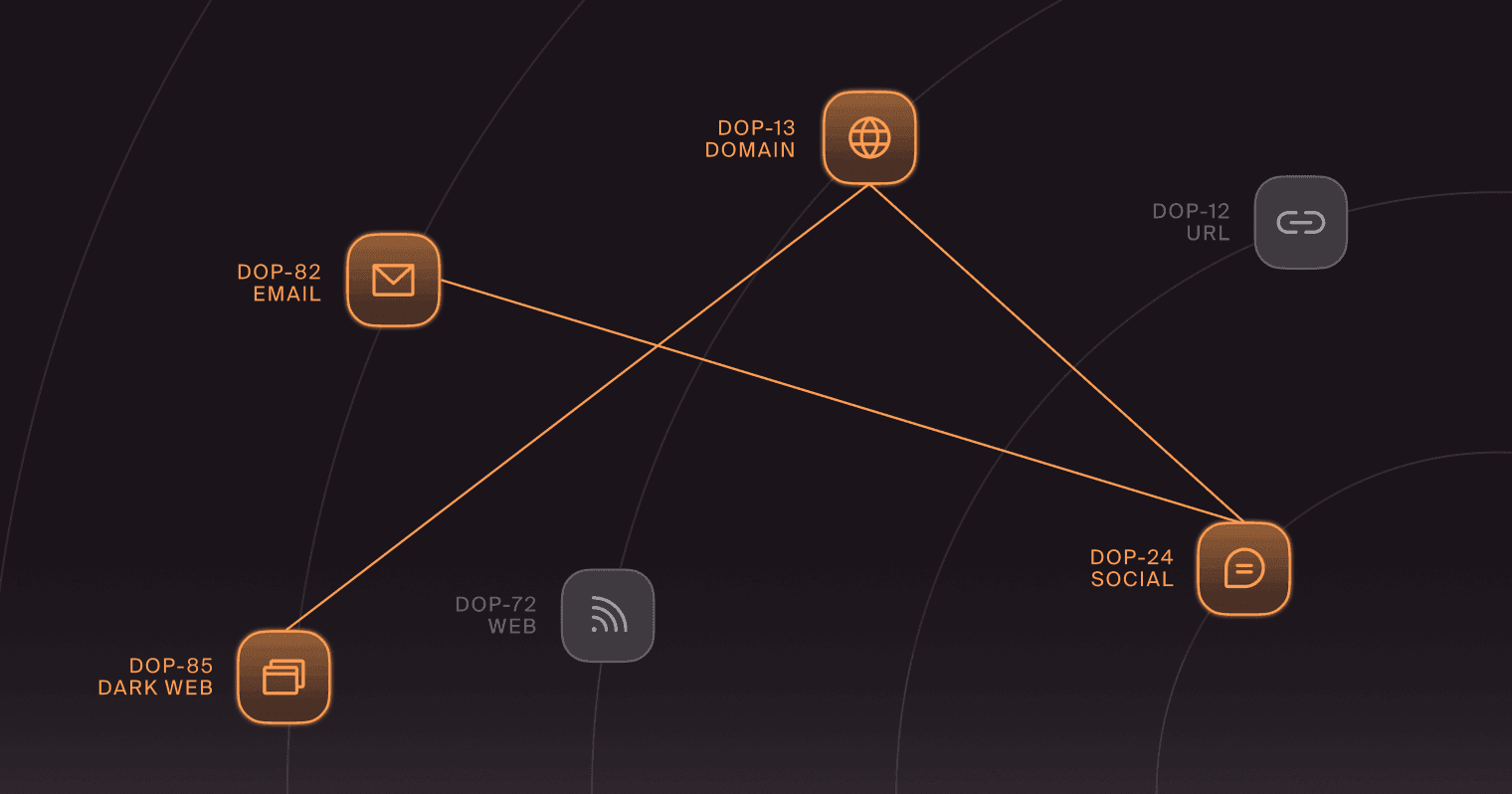
The threat actors registered a lookalike domain. They staged a deepfake LinkedIn profile impersonating your CFO. They set up the entire external routing to seamlessly capture credentials.
That attack infrastructure sat right out in the open for weeks. And your traditional, inbox-only email security tool was totally blind to it.
Recent industry reports (opens in new tab) analyzing the current state of phishing reveal a wild new reality. The vast majority of phishing attacks are now generated entirely by artificial intelligence. And worse, they are rapidly bouncing across communication channels.
Treating email security as an isolated inbox filter is a legacy mistake. In 2026, the digital battlefield requires a defense that stops parsing incoming text and starts actively hunting the attacker's broader external infrastructure.
Economics of ‘Free’ Phishing
Look at the math. Generative AI has completely altered the economics of cybercrime.
In the past, executing a sophisticated, targeted attack took time, money, and highly specialized skills. An attacker had to manually research the target, write emails that actually sounded human, code custom landing pages, and test everything against enterprise spam filters.
Generative AI collapsed that timeline from days to minutes.
Cybercriminal syndicates aren't writing emails anymore. They are just prompting Large Language Models to do it for them. This AI-driven threat alters the battlefield in three brutal ways:
- Infinite Scale at Zero Cost: An automated script instantly spins up countless, hyper-localized variations of a cross-channel lure for exactly zero dollars.
- Omni-Channel Hustle: Threat actors are seamlessly weaving their attacks across SMS (smishing), voice (vishing), and platforms like Microsoft Teams to create surround-sound deception.
- Instant Evasion: AI generates 50 slightly tweaked variations from 50 newly registered domains before you can blink.
You’re now defending a massive, fluid perimeter against an automated machine that never sleeps, relies on zero behavioral baselines, and leaves absolutely no static signatures behind.
Your Legacy Email Filter is Missing the Point
Cybercrime losses in the United States eclipsed $21 billion in 2025 (opens in new tab). And despite all those mandatory compliance training videos, the average user still clicks a phish in under 60 seconds.
The security tools on the market aren't necessarily ‘broken.’ But they’re built to solve a completely different problem.
Over the years, email security has gotten incrementally better at scoring the inbox. The industry evolved from basic block-lists to YARA-based signatures (opens in new tab), and eventually adopted behavioral machine learning (ML). Native tools from massive cloud providers, alongside modern integrated cloud email security (ICES) (opens in new tab) tools, all sit somewhere along that exact evolutionary tree.
They’re highly efficient at analyzing the text right in front of them. They score the message, flag an anomaly, and toss the threat into quarantine.
But here’s the fatal flaw: The campaign stays live.
Because these tools are strictly inbox-only, none of them sees the campaign infrastructure operating behind the email. Your ICES tool quarantines a message, but the attacker's lookalike domain remains fully active on the open web. The threat actor is free to pivot and retarget your organization, vendors, or supply chain with a slightly modified attack.
Legacy Defenses vs Campaign Disruption
If you want to actually win, you need to change the game.
Here’s how legacy tools stack up against a modern, infrastructure-focused defense:
Defensive Capability | Legacy Email Security (SEGs & ICES) | Agentic Campaign Disruption |
Primary Focus | Scoring the message content and sender reputation | Analyzing the external attack infrastructure behind the message |
Detection Engine | Static YARA rules and rigid behavioral ML | Reasoning-based AI agents guided by natural language policies |
Automated Response | Quarantines the individual message in the inbox | Executes machine-speed takedowns of the sending domains and links |
Threat Visibility | Isolated strictly to the corporate email environment | Enriched by a 360-degree threat graph monitoring the broader web |
Impact on Attacker | Minor inconvenience; the attacker just tries again | Destroys sunk costs; forces the attacker to rebuild their entire infrastructure |
Infrastructure Disruption: Burn It Down
Defending an organization requires treating an incoming email as a thread to pull, not a final destination. Look past the body copy and trace the threat straight back to its root.
Instead of crossing your fingers with rigid, blackbox ML models, modern email detection needs to be driven by reasoning-based AI agents. These agents detect novel attacks and zero-days far better than systems that inherently require the attack to already be in their training data.
To truly combat AI-driven phishing, your inbox defense must be continuously fed with external intelligence.
Verdicts cannot just look at the text of the email. They must incorporate attacker infrastructure context and conduct a thorough analysis of DNS registrations, SSL certificates, and multi-channel indicators of compromise.
You have to spot the infrastructure the attacker built to target your vendors before that same infrastructure is turned against your employees.
The future of social engineering defense requires moving from passive detection to active, aggressive disruption.
Where other security vendors built their email security from the inbox out, the next generation of defense has to be built from the campaign in. Every message that hits the inbox must be aggressively tied back to the attacker infrastructure behind it.
This is the philosophy driving Doppel's approach. We recognize that simply detecting a threat in the inbox isn't enough anymore.
When a malicious email gets flagged, traditional tools stop at quarantine. A modern, agentic approach uses automated intelligence to strike back.
By executing machine-speed takedowns on the sending infrastructure and the malicious links behind every phish, you guarantee that the exact same campaign cannot simply pivot and retarget your organization.
When this capability is unified with digital risk protection (DRP), the disruption takes on a whole new level. Takedowns seamlessly extend across lookalike domains, fake social media profiles, and the entire set of impersonation kits that power the overarching campaign.
Defending the Entire Attack Chain
The threat landscape doesn't magically stop at the border of your corporate inbox, which means your defense can no longer afford to live there.
True resilience requires abandoning fragmented, siloed point solutions. It requires an AI-native social engineering defense platform that links external brand monitoring, internal human risk management (HRM), and incoming messaging channels.
When you consolidate these disciplines onto a single intelligence layer, your defense actually compounds.
A live impersonation taken down by digital risk protection today automatically becomes the exact simulation material your people train against tomorrow through human risk management. An employee reporting a phishing attempt seamlessly hardens the detection logic for every other inbox in the company.
The days of relying on a passive inbox filter are officially over. It’s time to hunt the infrastructure, disrupt the campaign, and actually fight back. Get a demo with Doppel to get started.