Security is failing because we asked Ted from accounting to do the impossible. We asked him to be a part-time accountant and a full-time, unpaid linguist.
Every employee in your organization is just like Ted. They’re all expected to:
- Spot a slightly off-kilter favicon.
- Detect a subtle grammatical shift in a Slack message from their ‘boss.’
- Remember a 16-character password.
…All while managing the day-to-day responsibilities of the job they were hired to do.
When Ted, for example, clicks a link at 4:45 PM on a Friday that turns out to be a phishing lure, the industry’s response has been to label him as the “weakest link.”
But this isn’t a Ted problem. This is a systemic infrastructure failure.
The only way to fix it is by transitioning to unified social engineering defense (SED).
Inside the Psychology of the Click
Humans aren’t wired for perpetual hyper-vigilance. In behavioral science, this cognitive overload is known as security fatigue (opens in new tab). When users are bombarded with security warnings, complex authentication flows, and ‘gotcha’ phishing simulations, they become cognitively depleted.
The numbers tell the story of a system under duress:
When a breach occurs, the post-mortem usually points to human error. But if a security architecture relies on a human making the ‘correct’ choice 100% of the time to prevent a total compromise, you’re left with a ticking time bomb, not a security program.
Legacy security awareness training (SAT) is built on a foundation of friction and shame. It treats employees like lab rats in a maze where the walls are constantly moving.
- Siloed Intelligence: Phishing simulation tools rarely talk to digital risk protection (DRP) tools, leaving gaping blind spots.
- Reactive Scenarios: Employees are tested on outdated ‘Nigerian prince’ email scams (opens in new tab), while real attackers use AI to clone the CEO’s voice in real time.
- Cultural Erosion: When an employee fails a simulation, punishing them with more boring video modules creates a culture of fear in which employees are reluctant to report real incidents.
Eliminate System Fatigue with Social Engineering Defense (SED)
In a unified SED framework, the burden of defense switches from your employees to the platform. Doppel, for example, dismantles the attacker’s infrastructure so the employee never sees the lure.
Here’s how an AI-native social engineering defense platform eliminates system fatigue.
#1. Velocity: Machine Speed vs Human Reflex
Attackers use AI to exploit exposures in minutes. If defense relies on an employee noticing a suspicious URL, you’re already lost.
AI-native social engineering defense operates at machine speed, identifying and taking down fraudulent domains and social media accounts before they’re weaponized. This reduces the exposure window by ensuring the majority of threats never reach your employees.
#2. Volume: Real-Time Threat Graph
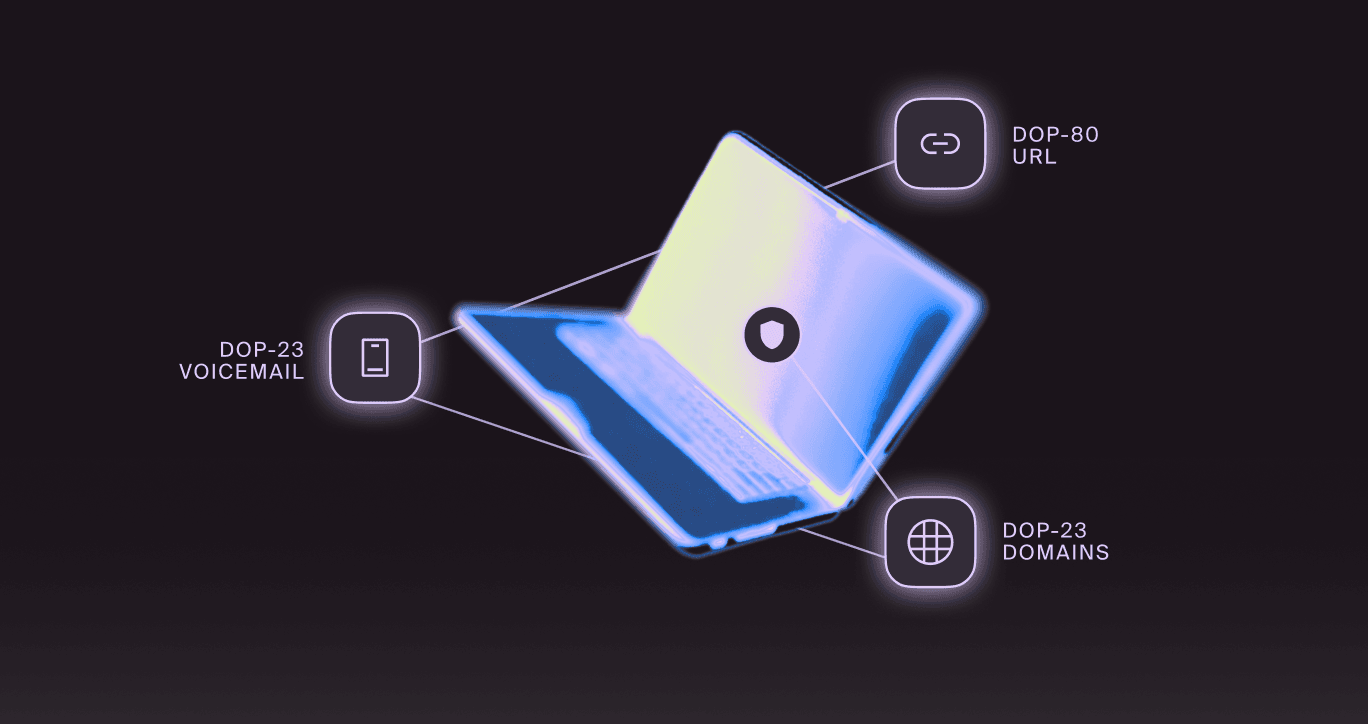
Legacy tools look at alerts in isolation. A unified approach with a SED platform like Doppel, however, uses a real-time threat graph to link disparate signals — a new domain, a suspicious LinkedIn profile, a hijacked WhatsApp number — into a single, cohesive campaign.
By seeing the entire social engineering campaign, multi-channel takedowns can be automated, neutralizing the threat at its core.
#3. Variety: Agentic AI Simulations
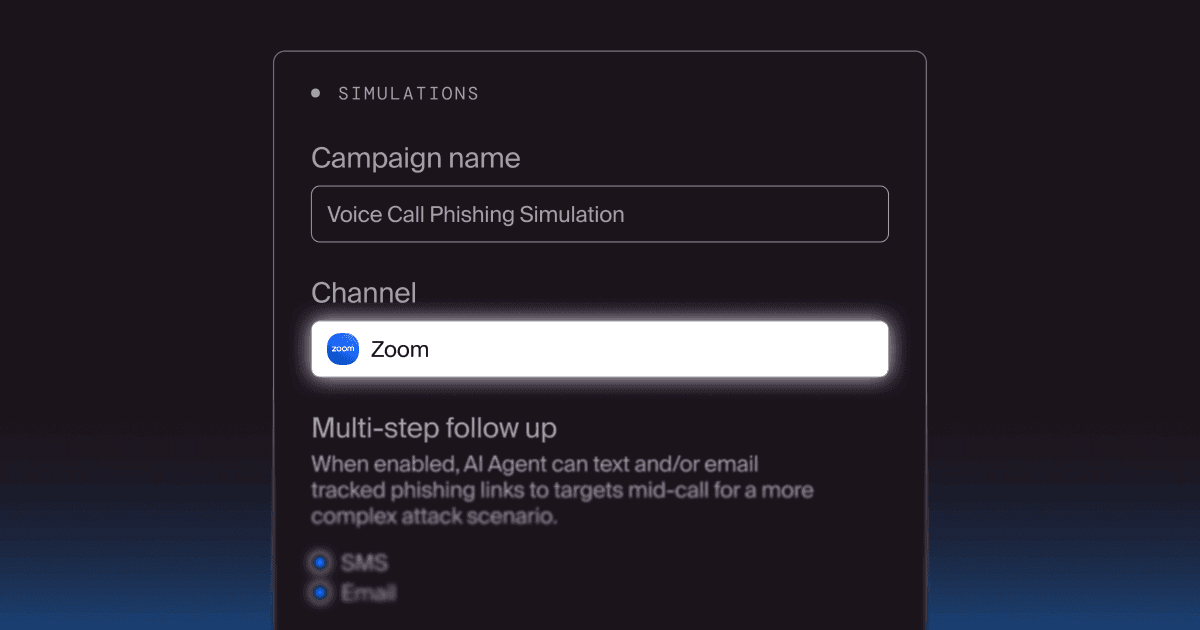
Simulations in 2026 shouldn’t use static templates from 2022. Modern human risk management (HRM) is powered by the same agentic AI that cybercriminals use. This means simulating multi-step, multi-channel attacks that reflect the actual tactics, techniques, and procedures (TTPs) (opens in new tab) used in the real world today.
Removing the Shame: Phishing Simulations as a Distribution Sensor Network
Once you move to a unified social engineering defense model, an employee’s role changes. They’re not a target anymore. Every employee is part of a distributed sensor network.
Organizations encourage a culture of rapid reporting by taking the shame out of the process. If an employee clicks on a simulation, they receive immediate micro-coaching explaining why the attack was sophisticated. It shifts the messaging from “You failed” to “Here’s how you’ll do better.”
This shift in culture has a direct impact on operational ROI:
- Minimizes the number of help desk tickets related to forgotten passwords by reducing multi-factor authentication (MFA) (opens in new tab) fatigue.
- Increases the reporting rate of actual suspicious activity.
- Security becomes a shared mission, not an antagonistic relationship.
Build Resilience, Not Compliance
Don’t blame Ted from accounting, or any other employee. If you can automate the destruction of attacker infrastructure and harden your human perimeter through continuous, AI-led validation, you drastically increase the cost per attack for the adversary.
When upgrading to a unified platform like Doppel, you aren’t just buying another training tool. You’re investing in an AI-native SED architecture that:
- Reduces Alert Fatigue: Doppel’s AI agents handle the high-volume ‘noise’ of phishing, leaving your security team to focus on high-value investigations.
- Quantifies Human Risk: Deep analytics provide a real-time resilience score for your organization, demonstrating from the front lines to the board that your security culture is an asset.
- Closes the Loop: Live thread data from our digital risk protection engine feeds directly into our HRM simulations, ensuring your team is always one step ahead of the next AI-native attacker.
It’s time to build a security architecture that respects the human condition and utilizes AI to fight AI.
Get a demo to see how Doppel’s unified SED platform transforms your employee into a resilient defense layer.