
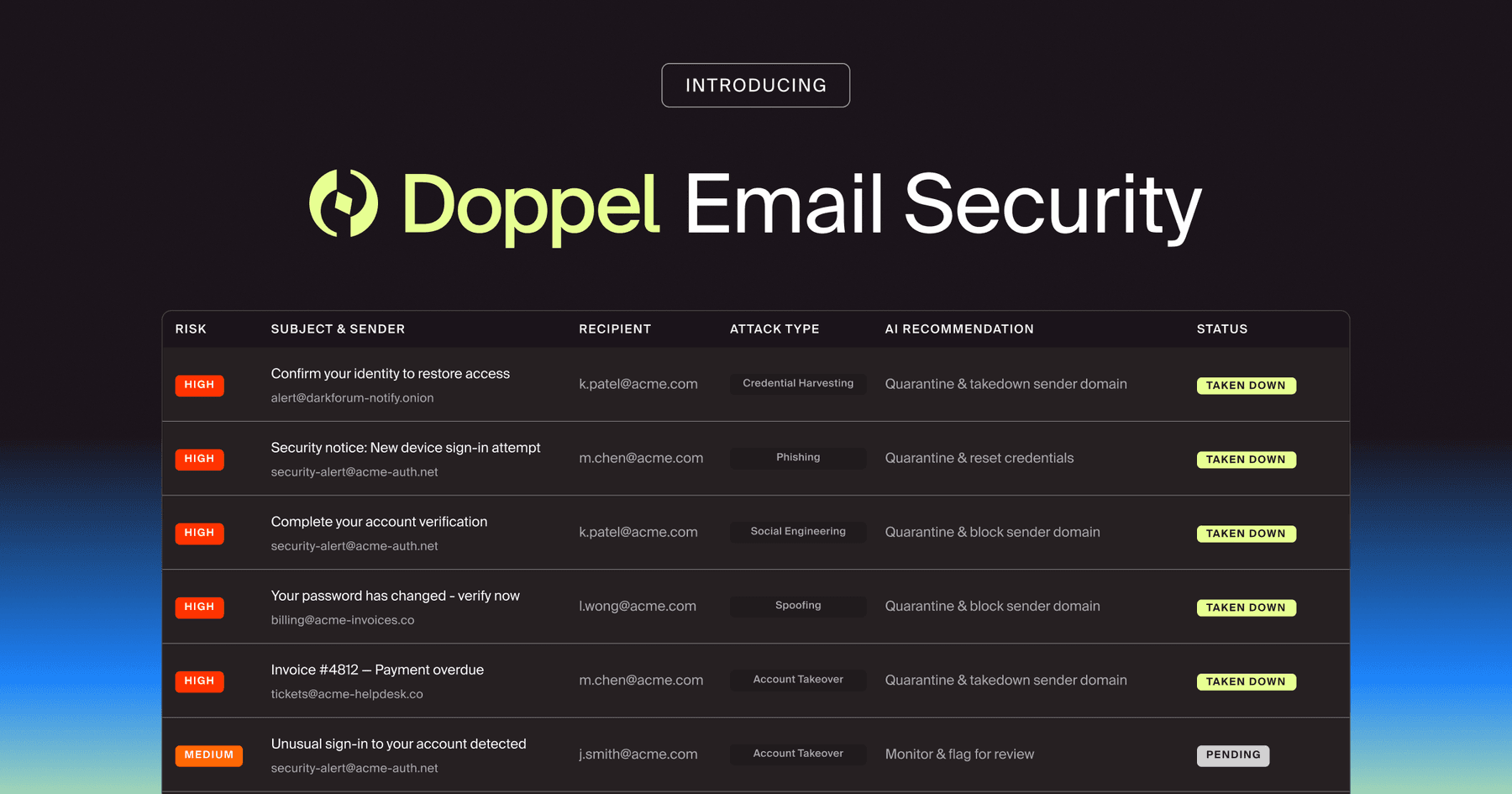
Doppel Email Security is now generally available
The agentic email security solution that empowers you to fight back against social engineering attacks. Detection isn't enough. Disruption is the difference.
Retail and hospitality face unique social engineering threats, from high turnover to help desk vishing. Learn how to secure your front line with human risk management.
Walk into any busy hotel lobby or retail store during a seasonal rush, and you’ll notice that the entire operation runs on human interaction.
Retail and hospitality operate on speed, customer service, and massive, distributed front lines. From the hotel concierge processing VIP upgrades to the retail cashier trying to clear a line of impatient shoppers, the human element is the core of these businesses.
But the human element is the core of the attack surface, too.
In the retail and hospitality industries, employees have been treated as the first (and often last) line of defense against all types of social engineering. Security leaders asked incredibly busy, overwhelmed frontline workers to act as human firewalls. But they’ve been trained through annual videos and predictable phishing email tests.
Over 62% of breaches still involve the human element, according to the 2026 Verizon Data Breach Investigations Report (opens in new tab), so checking a compliance box once a year isn’t enough to stop a motivated cybercriminal from pulling off successful social engineering.
Security leaders in retail and hospitality need to move away from measuring compliance toward measuring and modifying behavior. Adopting AI-native human risk management (HRM) is the only way to secure a highly targeted, highly transient workforce against the realities of social engineering in 2026.
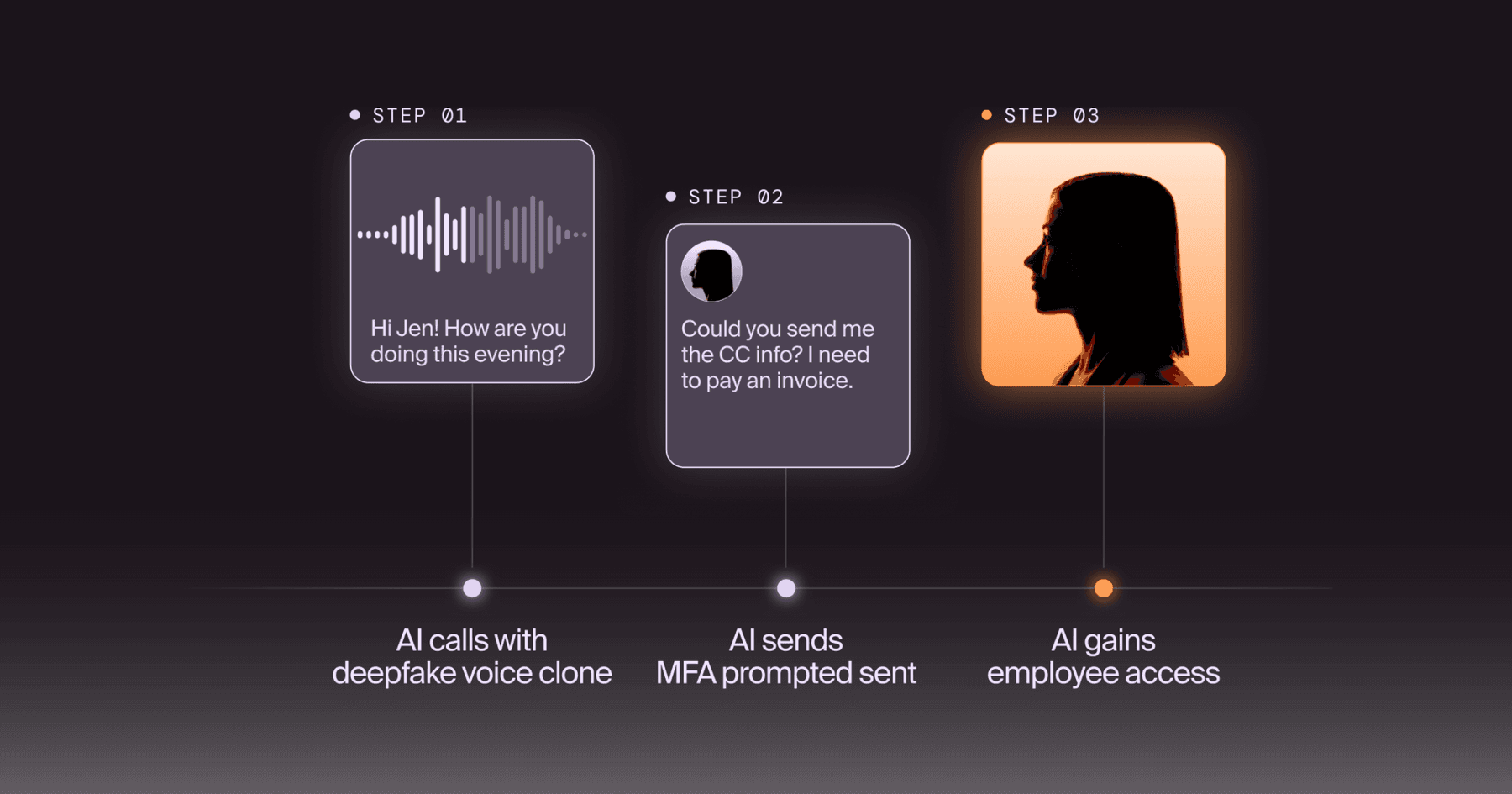
A high-profile breach at one of the nation’s largest hospitality operators wasn’t the result of zero-day exploits or complex code. It came down to a perfectly executed phone call.
In 2026, you’re defending against Scattered Spider-style adversaries (opens in new tab) who use generative AI to conduct hyper-personalized, multi-channel campaigns. They don’t need to hack your infrastructure because they can just manipulate the people running it. That’s why conversational social engineering is massively dangerous.
Here’s the playbook attackers use to bypass millions of dollars in technical security in just a few minutes:
The attackers walked right through the digital front door because the human perimeter collapsed under pressure.
Retail and hospitality brands are disproportionately vulnerable to social engineering because both industries align with cybercriminals’ tactics.
If you’re tasked with defending a retail or hospitality brand, here are the operational realities you face:
To secure the front line, organizations need to migrate away from passive awareness and embrace active risk management.
Here’s how legacy training compares to AI-native human risk management:
Legacy Training | Human Risk Management | |
Testing Channels | Email-only | Email, SMS, voice, video, Zoom, Teams, Telegram, and more |
Simulations | Static templates | Fully custom, threat-informed, and built with agentic AI |
Training Style | Generic video library | Deepfake-driven and custom generative AI content creation |
Intelligence | Siloed | Integrated with digital risk protection and threat graph |
Goal | Low click rate | Behavior change and risk reduction |
To bridge the gap between where legacy vendors leave off and what the industry actually needs, Doppel’s human risk management platform provides an intelligence-backed cycle.
For retail and hospitality leaders, deploying these pillars is the only way to harden a distributed workforce.
Seasonal retail workers don’t have 45 minutes to sit in a back room and watch a poorly acted security video. Training should be instantaneous and highly relevant.
Legacy video libraries are generic and boring. Doppel provides tailored content for every scenario. With our platform, users receive micro-quizzes and coaching the moment they fail a simulation, ensuring the lesson sticks. This just-in-time reinforcement builds immediate muscle memory, forcing the employee to recognize the exact psychological trigger that just tricked them.
You can’t prepare a hotel desk clerk for a high-pressure vishing call by making them read an email. Doppel doesn't use static templates. It uses agentic AI and the threat graph to simulate real-world phishing attacks across channels.
The platform can conduct up to 200,000 deepfake voice calls per week, navigating IVR phone trees to test the resilience of your IT help desk or contact center and give you insight into where protocols break down.
AI agents even engage in back-and-forth exchanges across email, voice, SMS, business communication tools (like Zoom and Microsoft Teams), and Telegram, and chain multiple channels together to emulate actual attacker tactics.
Stop treating your entire workforce as a flat surface. You have to aggregate data across all channels to identify your highest-risk users.
Doppel replaces static spreadsheets with dynamic risk modeling, correlating user behavior, access levels, and threat exposure into a single, actionable score. By pulling deep integrations with your identity provider and SIEM, you can assess risk level based on access. This allows a hospitality CISO to immediately identify whether the finance department handling global wire transfers is routinely failing complex social engineering simulations, enabling targeted intervention before a breach occurs.
The attackers targeting retail and hospitality brands have completely abandoned the old ways of working. They have automated their offense. They are using generative AI to scale their deceptions, and they are aggressively targeting the high-turnover, highly accommodating frontline workforce.
Legacy tools give you a post-breach analysis. You'll learn what happened retroactively, but you won't be able to adapt to the attacker's next move.
Don’t fight an automated, AI-driven syndicate with an annual compliance video. Doppel helps you defend proactively, not after the fact. By migrating to a unified Human Risk Management platform, you stop treating your employees as a liability and start transforming them into an active, resilient extension of your security team.
Ready to protect your retail or hospitality front line? Get a demo with Doppel today to see how our AI-native Human Risk Management platform builds genuine resilience across your entire organization.