A spoofed domain can go live in the morning, followed by fake social outreach and scam ads before the SOC has correlated the first alert. Enterprise security teams in 2026 face attacks that span lookalike domains, fake social profiles, scam ads, and messaging channels. Feed-centric threat intelligence may capture pieces of this activity, one indicator at a time, across disconnected tools, which can make the full campaign harder to see.
Phishing-initiated breaches took an average of 254 days (opens in new tab) to identify and contain in 2025. Reported cybercrime losses reached $16.6 billion (opens in new tab) in 2024, and phishing and spoofing topped the list of reported crime types.
This guide compares five platforms on two dimensions: how each tool collects external signals, and how directly those signals can support a response.
Key takeaways
- Modern social engineering campaigns can operate across domains, social, ads, telco, and messaging apps in parallel, so security teams should evaluate threat intelligence tools on the breadth of channels they monitor and the speed at which signals translate to response.
- The five platforms reflect different operating models: intelligence-delivery tools that hand correlated context to the SOC (Recorded Future, Google Threat Intelligence) and external-defense platforms that pair detection with enforcement, either autonomously (Doppel) or through managed human-analyst services (ZeroFox).
- Tool fit may depend on loss drivers. Intrusion and malware exposure pull teams toward adversary-centric tools, while impersonation, phishing, and executive-targeting losses pull them toward platforms that dismantle attacker infrastructure across multiple channels.
- Teams may improve operational value by shortening the window between first alert and confirmed disruption, which is why correlation depth, channel reach, and the path from intelligence to takedown should be evaluated alongside raw feed volume.
What makes threat intelligence operational?
A threat intelligence tool collects, processes, and delivers information about the threats targeting an organization. Outputs range from raw indicator feeds that power SIEM rules to full platforms that score risk, attribute activity to named actors, and trigger response workflows.
Three properties can help teams evaluate threat intelligence tools in 2026 from the rest: collection breadth, correlation depth, and a direct path from intelligence to enforcement. Together, influence whether a platform produces actionable campaign views or adds another stream of uncorrelated indicators to an already overloaded SOC.
- A collection that watches the channels that attackers use. Enterprise exposure now extends beyond web and dark web text sources into domains, social platforms, paid ads, messaging apps, telco, app stores, and other external surfaces. A tool that monitors only a narrow slice of that environment may provide an incomplete picture.
- Correlation assembles isolated signals into named campaigns. A spoofed domain, a fake LinkedIn profile, and a scam ad running against the same brand become one campaign view in an operational intelligence platform. Correlation can turn indicator volume into campaign-level visibility that an analyst can act on.
- A direct path from intelligence to enforcement. Many teams still struggle to turn quality intelligence into action. In industrial and operational environments, only 14% of organizations (opens in new tab) felt fully prepared for emerging threats. Some tools are designed to help close that gap through native enforcement or tight automation into existing response workflows.
Strategic, operational, and tactical intelligence serve different decisions: strategic briefs guide leadership risk planning, operational intelligence drives campaign analysis and incident response, and tactical indicators feed detection engineering. The labels matter less than matching the platform's priority to the decisions your team makes most often.
1. Doppel
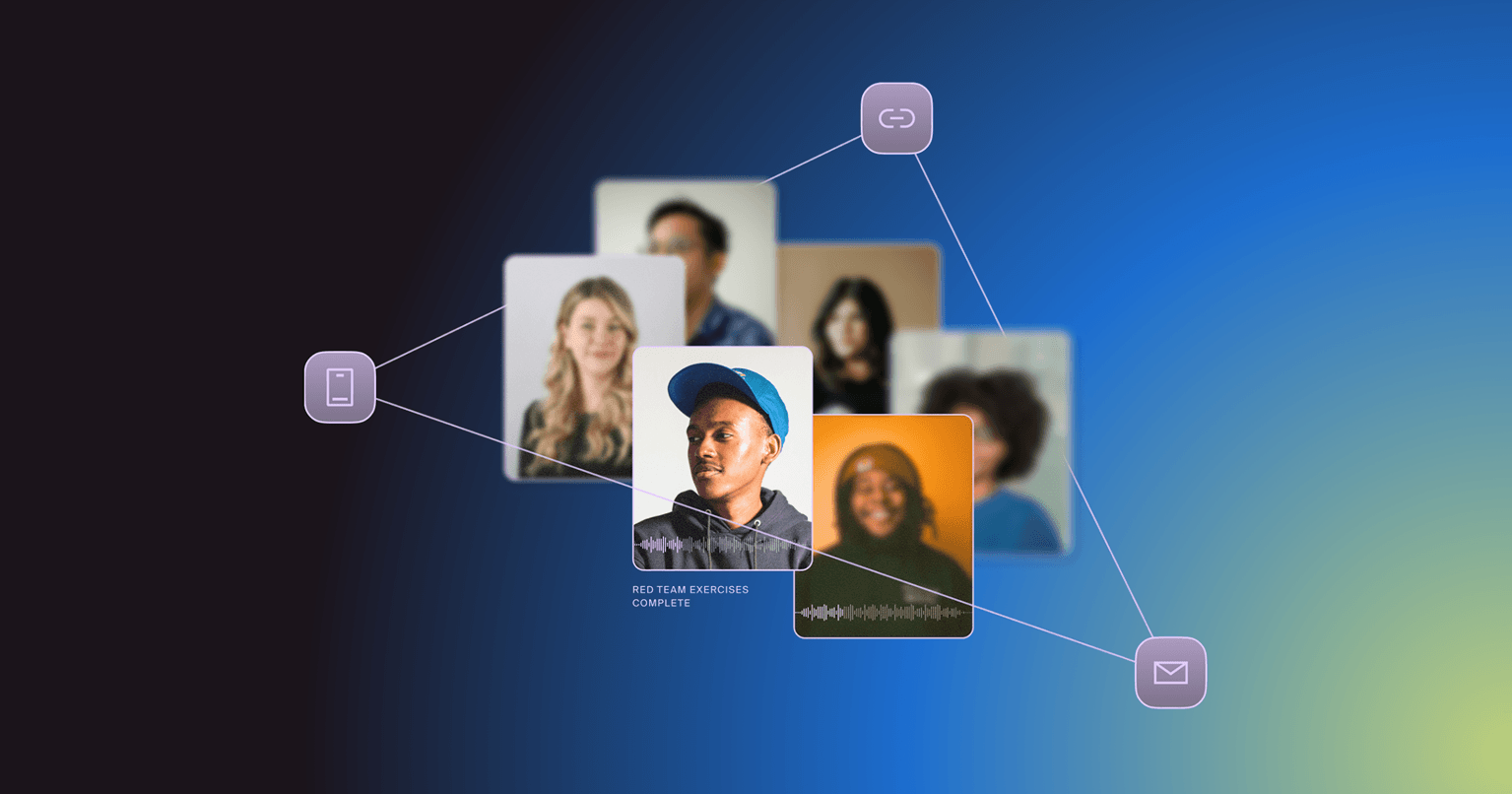
Doppel is an AI-native Social Engineering Defense platform that detects, correlates, and dismantles attack infrastructure across domains, social media, paid ads, messaging, telco, app stores, and the dark web. The Doppel Threat Graph links spoofed domains, fake profiles, scam ads, and malicious phone numbers into a single interactive map of the attacker's full infrastructure, enabling teams to investigate and disrupt coordinated attacks - not isolated indicators.
Threat Graph Insights overlays an AI-generated investigative narrative on each campaign, describing its structure, the platforms it spans, the threat actor’s objectives, and the techniques used in attempting to achieve them. Autonomous enforcement supports enforcement workflows across registrars, social networks, ad platforms, and telco providers, and detected campaigns can be used to inform employee phishing simulations, connecting external defense with internal readiness.
Key Features
- Multi-channel detection across domains, social platforms, paid ads, telco, app stores, and the dark web.
- Campaign-level correlation through the Doppel Threat Graph, with AI-generated narrative summaries via Threat Graph Insights.
- Autonomous enforcement that enables bulk actioning, with eligible alerts routed to the appropriate registrar, platform, ad network, or telco enforcement workflow
- Threat-to-simulation workflow that can turn detected campaigns into employee phishing simulations.
Pros
- Intelligence originates from live attacker infrastructure targeting your brand, so insights can map to assets eligible for action through the platform and can act on the same day. The closed-loop architecture can use detected campaigns to inform employee simulations that use real attacker tactics as training exercises.
- Detection and enforcement run on one defense platform, with agentic AI supporting autonomous campaign disruption workflows while complex escalations route to analyst review. Coordinated submission across providers can include relevant telco, messaging, and domain components of a campaign.
- Channel reach extends to telco, paid ads, app stores, Telegram, and WhatsApp. Financial Services campaigns may combine ads, messaging apps, phishing sites, and private channels in coordinated funnels.
Cons
- Built around the social engineering attack surface. Teams needing vulnerability intelligence, geopolitical risk analysis, or malware reverse-engineering feeds will pair Doppel with a broader intelligence platform.
Pricing
- Custom pricing; contact sales.
Who is Doppel best for?
Enterprise security teams whose loss drivers are impersonation, phishing, and executive-targeted social engineering, and who want intelligence that connects directly into takedowns of attacker infrastructure on the same platform.
2. Recorded Future
Recorded Future is a threat intelligence platform that collects from the open web, dark web, and technical sources and links indicators, actors, and attacker infrastructure in its Intelligence Graph. Mastercard acquired (opens in new tab) the platform in 2024. Its product modules cover areas such as vulnerability, identity, geopolitical, payment fraud, and brand intelligence, with real-time indicator scoring and pre-built integrations into major SIEM and SOAR platforms.
Key Features
- Broad collection across the open web, dark web, and technical sources.
- Intelligence Graph linking indicators, actors, and attacker infrastructure.
- Product modules spanning vulnerability, identity, geopolitical, payment fraud, and brand intelligence.
- Pre-built integrations into major SIEM and SOAR platforms.
Pros
- Collection breadth spans multiple intelligence domains, including vulnerability, identity, intelligence to geopolitical risk, and payment fraud.
- Historical depth in the Intelligence Graph lets analysts trace an indicator back through years of actor and infrastructure context, which supports both tactical investigations and strategic trend analysis.
- Modular intelligence capabilities let teams adopt coverage areas over time and integrate through a well-documented API.
Cons
- Fundamentally an intelligence-delivery platform, not an enforcement platform. Only the Brand Intelligence module includes takedown. Every other module hands you a scored indicator and stops there, leaving enforcement to the customer's own workflows or SOAR integration.
- Coverage is sold as separate modules (opens in new tab). Vulnerability, identity, geopolitical, payment fraud, and brand intelligence are each individually licensed (opens in new tab). Full coverage means buying, configuring, and maintaining multiple modules rather than one unified platform, and gaps between modules are the customer's to manage.
Pricing
- Recorded Future does not publish tier names or pricing details. Engagements are quote-based through sales.
Who is Recorded Future best for?
Mature SOCs with dedicated intelligence analysts who want one platform to feed scored intelligence across many security domains. The Payment Fraud Intelligence module adds particular value for financial services teams after the Mastercard acquisition.
3. Palo Alto Networks Unit 42
Palo Alto Networks Unit 42 is the company's threat intelligence and incident response practice. It tracks named nation-state and eCrime groups and pairs that research with WildFire automated malware analysis. Unit 42 threat intelligence integrates with Palo Alto Networks' Cortex platform, bringing threat actor, campaign, and indicator context into security operations and investigation workflows, while Cortex Xpanse extends coverage to the external attack surface.
Unit 42 maps adversary TTPs to the MITRE ATT&CK framework (opens in new tab), helping analysts understand how threat actors operate and connect observed behaviors to known techniques.
Key Features
- Adversary tracking across named nation-state and eCrime groups.
- Automated malware analysis through WildFire.
- Threat intelligence enriched into Cortex XDR and XSIAM investigation workflows.
- MITRE ATT&CK mapping of observed adversary TTPs.
Pros
- Cortex enriches detections with Unit 42 attribution and indicator verdicts inside the console, and ATT&CK-mapped playbooks surface actor TTPs within investigation workflows, so analysts get actor context without switching tools.
- The intelligence is grounded in Unit 42's frontline incident-response engagements, so reporting can help security leaders see which named actors target their industry and map the observed TTP chain observed in real intrusions.
- WildFire produces actionable indicators from submitted samples through automated malware analysis at cloud scale.
Cons
- Outside Cortex XDR or XSIAM, it functions as a standalone indicator feed without the enrichment and attribution context that makes it worthwhile. Teams not already on Cortex are effectively evaluating a second platform to get value from the first.
- Brand impersonation, monitoring, and takedown across social media, ads, and messaging channels require capabilities beyond the Unit 42 intelligence offering. Unit 42's lens stops at the network and endpoint perimeter, so external-facing threats fall entirely outside its scope.
Pricing
- Palo Alto Networks does not publish Unit 42 threat intelligence or Cortex pricing publicly. Engagements are quote-based through sales.
Who is Palo Alto Networks Unit 42 best for?
Palo Alto Networks customers who want intelligence fused with their SecOps platform in a single console, particularly teams already running Cortex XDR or XSIAM. The platform is a strong fit when the primary threat model centers on intrusion, malware, and actor attribution.
4. Google Threat Intelligence
Google Threat Intelligence (GTI) brings together Mandiant threat activity insights, VirusTotal capabilities, and other Google sources in a single platform. Gemini-powered agents in Google Threat Intelligence automate malware analysis and reverse engineering while helping analysts accelerate threat hunting and investigation.
Threat intelligence and custom summaries help organizations understand the actors and active campaigns most relevant to their industry, region, and threat landscape, and native integration with Google Security Operations feeds enriched IOCs and detection rules directly into the security workflow.
Key Features
- Combined Mandiant, VirusTotal, and Google threat intelligence sources.
- Gemini-powered agents for malware analysis and threat hunting.
- Custom threat reports tied to an organization's risk profile.
- Native integration with Google Security Operations.
Pros
- Attribution depth draws on Mandiant's direct incident-response engagements, and finished intelligence reports add campaign detail rooted in observed breach behavior.
- The VirusTotal corpus gives analysts file-level and infrastructure context through crowdsourced detection results.
- Gemini-powered agents extend analyst capacity by automating malware reverse-engineering and threat hunting tasks.
Cons
- GTI produces attribution and investigation output only. Takedown of scam ads, fake social profiles, or spoofed messaging accounts requires a separate vendor or a manual process, since the platform stops at intelligence and hands the customer nothing to act with.
- Mandiant and GTI capabilities are gated behind Google Security Operations tiers and add-ons. The depth of intelligence a customer actually gets depends on which license they buy, not just which product name is on the contract.
Pricing
- Google does not publish pricing publicly for Google Threat Intelligence; customers should confirm current packaging and pricing with Google.
Who is Google Threat Intelligence best for?
Enterprises with mature SOCs that need authoritative attribution and breach-informed context, particularly organizations already in the Google Cloud ecosystem, where native integration with Google Security Operations delivers the most value.
5. ZeroFox
The ZeroFox External Cybersecurity Platform monitors social media, surface web, deep web, and dark web sources for brand impersonation, executive threats, and phishing infrastructure.
It pairs automated detection with human analyst validation and provides AI-driven alert triage, managed takedown services across social networks and hosting providers, and executive protection modules covering digital threat vectors.
A dedicated cyber threat intelligence suite rounds out the platform: teams can search correlated actor, campaign, and IOC data through an intelligence search portal, route curated intel feeds and analyst-produced briefs into their security stack, and draw on dark web collection gathered by covert operatives inside closed forums and encrypted channels.
Key features
- External monitoring across social media, surface web, deep web, and dark web.
- Managed takedown services across social networks and hosting providers.
- Executive protection modules for digital threat vectors.
- Threat intelligence search, curated intel feeds, and analyst-produced briefs that integrate into existing security stacks.
Pros
- Combines external monitoring with managed takedowns in one subscription across social networks, domains, app stores, and hosting providers.
- Executive protection coverage extends past brand accounts to named individuals.
- Human analyst validation, including HUMINT operations in restricted forums, is designed to reduce false-positive triage burden on the customer's team.
Cons
- Intelligence breadth centers on the external attack surface. ZeroFox does not offer vulnerability research, geopolitical analysis, or malware reverse-engineering. Pair it with a dedicated tool for those areas.
- Takedown volume is capped by package tier. Higher-volume enforcement needs require a costlier plan, not something included by default.
- Human-in-the-loop validation and managed takedown workflows insert manual review time between detection and enforcement. This creates a structural dependency on analyst throughput that runs counter to the speed the market increasingly expects from automated, AI-native platforms.
Pricing
- ZeroFox does not publish pricing figures. Customers should confirm current packaging and pricing with ZeroFox.
Who is ZeroFox best for?
Organizations whose exposure concentrates in social media impersonation and executive threats and who want a managed-service relationship with human analyst validation. Teams with high takedown volume should confirm included volumes, response commitments, and enforcement performance during evaluation.
Start by mapping loss history to channel exposure, then decide how much of the response loop the vendor must handle.
- Profile your loss drivers by pulling the last twelve months of incidents and categorizing them. Intrusion and malware events point toward adversary-centric tools like Recorded Future. Impersonation, phishing, and fraud losses point toward Doppel or ZeroFox.
- Map collection coverage to your exposure. List the channels where attackers have hit or spoofed your organization. Have each vendor demonstrate live detections against your brand during evaluation to identify blind spots.
- Trace the path from intelligence to action. For each shortlisted tool, walk one real detection through to resolution. How long does the attacker's infrastructure stay live? Measure time from the first alert to the confirmed disruption instead of time to ticket creation. The tools that compress that window most aggressively may provide greater value for teams prioritizing disruption speed.
- Weigh analyst burden against reporting value. Ask how much tuning, triage, and feed management each platform demands from your team, and check that its reporting reaches your audiences, from SOC dashboards to board-level summaries, without manual translation.
These steps highlight the platforms that shorten the path from detection to disruption.
Close the gap between intelligence and action
Threat intelligence can create operational value by shortening the time between detecting a campaign and dismantling it. Doppel is designed to shorten that distance by correlating multi-channel signals into campaigns through the Threat Graph and supporting action against the attacker infrastructure behind them.
Enforcement outcomes can inform detection, and every detected campaign can be used to create employee simulations based on the exact tactics targeting your brand.
Request a Demo to see how the platform can support your own brand.