For over a decade, digital risk protection has been built around detecting and removing external threats: phishing domains, fake apps, and impersonation accounts, to name a few.
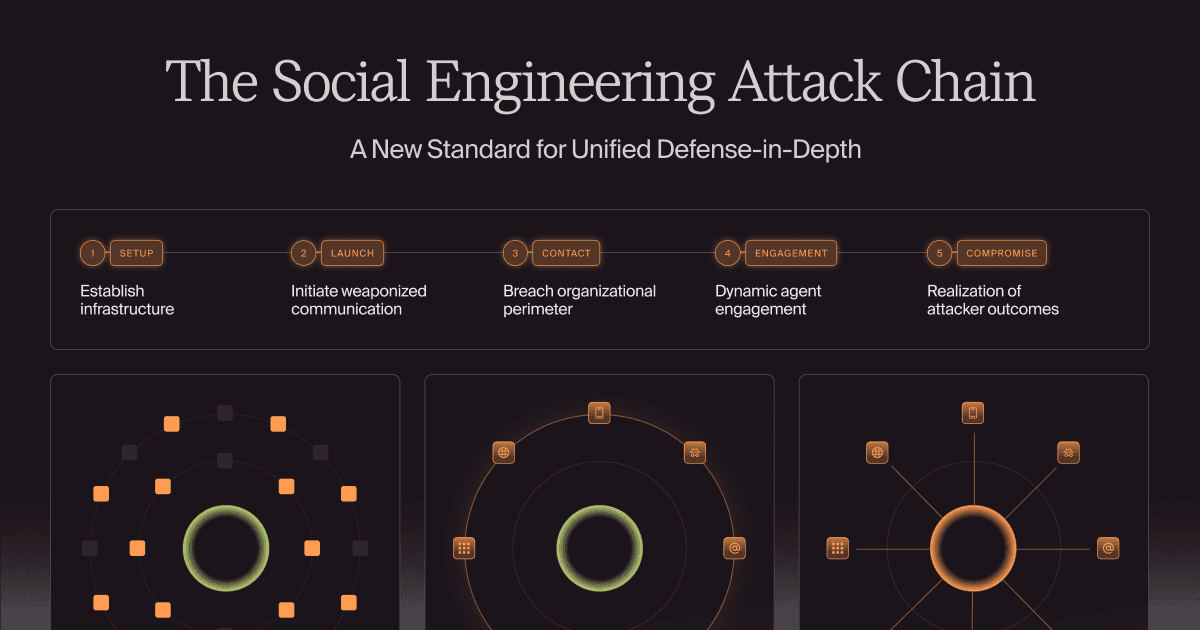
But attackers no longer operate in isolated channels or rely on static infrastructure. They run coordinated, multi-surface campaigns designed to exploit human trust, moving from reconnaissance to impersonation to engagement across platforms like social media, messaging apps, and domains.
Nearly 68% of breaches now involve the human element, and AI has made impersonation faster, cheaper, and more scalable. What used to be single-channel phishing attempts are now full-scale deception campaigns.
Legacy DRP tools weren’t built for this. They generate alerts and rely on manual takedowns, treating each artifact as a separate incident.
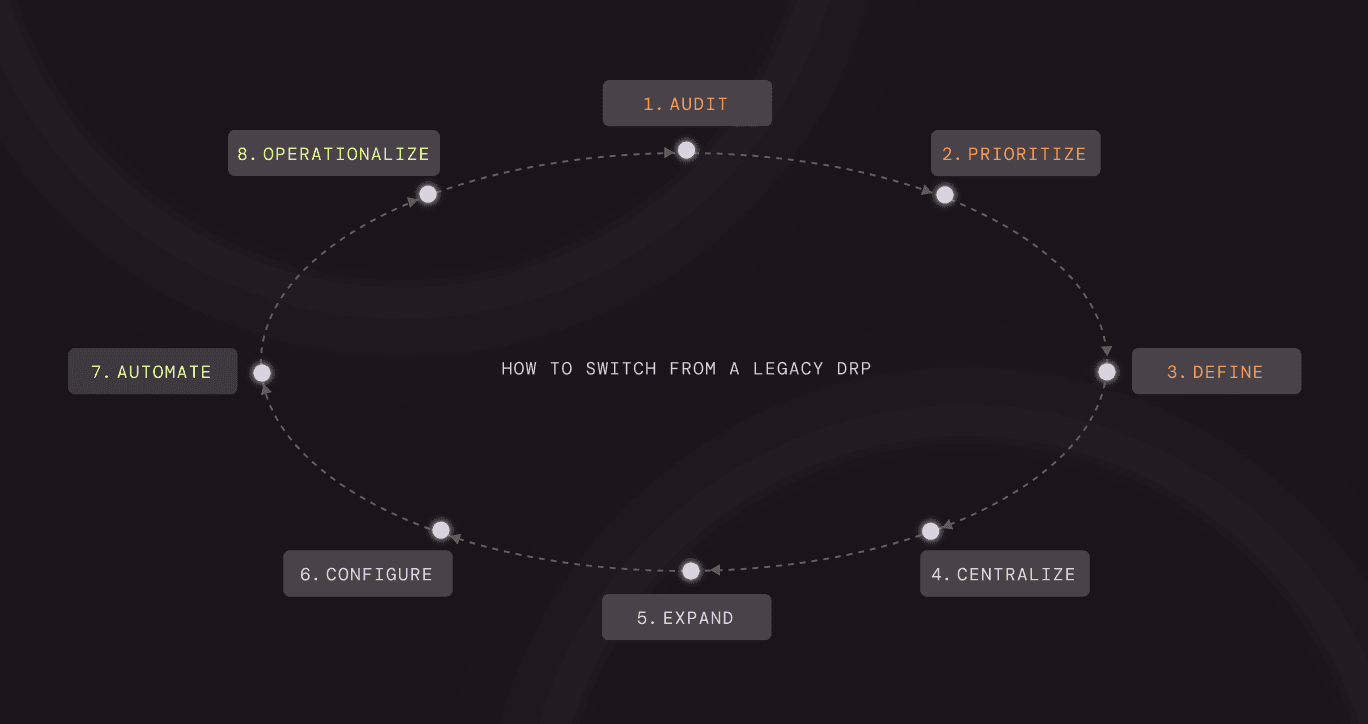
Switching to modern social engineering defense isn’t just a vendor change, it’s an operational shift. Here’s how to make that transition.
Step 1: Audit your current DRP coverage and gaps
Start by pressure-testing what your current program actually delivers in practice, not what was promised.
Pull real data:
- A sample of recent alerts and incidents
- Detection vs takedown/threat removal timelines
- Channels where threats were missed or discovered manually
- Volume of alerts vs actions taken
Then ask:
- Are we seeing full attacks, or just fragments?
- Where are we relying on users (employees/customers) to report threats?
- How much of this workflow is manual?
This step usually surfaces the core problem: generating signals, but not resolving campaigns.
Document these gaps clearly. They will become your migration requirements.
Step 2: Map and prioritize your real-world attack surface
Your attack surface isn’t defined by your tool; it’s defined by how attackers target you.
Build a simple but explicit map:
- High-risk individuals:executives & executive assistants, finance & accounts payable, HR, recruiting, IT admins
- Brand assets: domains, products, subsidiaries
- Channels: where employees and customers actually engage
- Geographies: regions with higher fraud or impersonation activity
Then operationalize it:
- Prioritize which identities require continuous monitoring
- Define what qualifies as high-risk impersonation or exposure
- Establish escalation paths for executive and brand threats
This gives you a risk-prioritized model of your external exposure, which should directly inform how you configure your new platform.
Step 3: Define what “success” looks like beyond alerts
If you don’t redefine success, you’ll recreate the same problems with a new vendor.
Move away from metrics such as simply alert volume.
And define metrics like:
- Time to disrupt a campaign (not just detect it)
- Reduction in repeat impersonation attempts
- Decrease in inbound phishing/scam reports over time
- % of threats automatically actioned vs manually triaged
Also, define qualitative success:
- Do analysts understand attacks more quickly?
- Can leadership see clear risk reduction?
These benchmarks will guide both rollout and long-term evaluation.
Step 4: Centralize threat intake and workflows
This is where migrations often fail, not because of detection, but because of fragmentation.
You want all external threat signals flowing into one system.
Consolidate:
- Phishing inboxes
- Customer support tickets related to scams
- Existing DRP alerts (during transition period)
- Domain/social monitoring feeds
Integrate into:
- Your SOAR/SIEM (for visibility and auditability)
- Case management systems if applicable
- Your Threat Intelligence Platform (TIP)
The goal is to create a single intake and triage layer so you’re not stitching together context manually across tools.
Step 5: Expand coverage across high-risk and emerging channels
Now align coverage to where attackers actually operate.
Prioritize:
- Social platforms (LinkedIn, Twitter (X), Instagram, etc.)
- Messaging channels (WhatsApp, Telegram)
- Domains, apps, paid ads
- Dark web and fringe communities
Then validate:
- How quickly can coverage for new, emerging channels be added
- Whether coverage is continuous or reactive
- Whether signals demonstrate complete campaigns vs siloed alerts
You’re not just filling gaps; you’re eliminating places attackers can pivot.
This is the core shift from legacy DRP.
Instead of reviewing alerts individually, configure your system to:
- Group related signals (domains, profiles, ads, reports)
- Identify shared infrastructure across threats
- Surface activity as campaigns, not isolated events
The operational impact is this:
- Analysts investigate campaigns, not alerts
- Noise drops significantly
- Prioritization becomes risk-driven, not volume-driven
This is what breaks the whac-a-mole cycle, shifting from reacting to individual artifacts to dismantling the campaigns behind them.
Step 7: Automate enforcement and takedown workflows
Detection without action doesn’t reduce risk.
Replace manual workflows with defined automation:
- Auto-enforce high-confidence threats (phishing domains, clear impersonation)
- Route edge cases for analyst validation
- Validate your new platform integrates with platforms, registrars, and providers for faster takedowns
Establish:
- SLOs measured in hours or days, not weeks
- Clear escalation paths
- Full record of enforcement requests
The goal is to eliminate ticket queues and move to real-time, automated disruption.
Step 8: Turn reports and user signals into an active defense layer
Most organizations underutilize one of their best data sources: inbound reports.
Instead of treating phishing emails or scam reports as tickets:
- Automatically ingest and parse them
- Extract indicators (domains, links, phone numbers)
- Correlate them to existing campaigns
- Trigger immediate enforcement where applicable
This transforms employees and customers into a distributed network, feeding directly into and teaching detection and disruption workflows. The same real-world attack data can also drive simulation campaigns, training employees on the exact tactics they’re seeing and creating a continuous feedback loop between reporting, awareness, and resilience.
Step 9: Operationalize a continuous protection & disruption loop
Once live, the goal is continuous improvement, not static coverage.
Establish regular review cycles:
- What campaigns were detected and disrupted?
- Where did attackers gain most traction or reappear?
- Which channels are increasing in activity?
Feed that back into:
- Detection tuning
- Channel expansion
- Identity (brand and executive) prioritization
Track long-term trends:
- Time-to-disruption
- Repeat attacker behavior
- Reduction in inbound reports
Over time, this creates compounding impact: faster response, fewer successful attacks, and lower operational load.
Switching Vendors is Easy. Changing the Model is What Matters
Most organizations think they’re simply upgrading a tool.
In reality, they’re replacing a model: moving from fragmented monitoring and manual response to unified, campaign-level disruption.
The result? Less noise, faster action, complete campaign visibility, and measurable risk reduction.
If you’re curious to see how your organization can benefit from the change, click here to book a demo. We’ll help you detect, correlate, and automate the takedown of sophisticated campaigns across every surface.