AI tools can now create realistic audio and video (opens in new tab) that impersonates a real person convincingly enough to pass on a live video call or a phone line a colleague would swear was real. One believable fake can authorize a fraudulent wire transfer or push someone to surrender the credentials MFA protects, and the attacker can hold that access for weeks.
In one documented 2024 incident (opens in new tab), a finance employee at an engineering firm joined a video conference where every participant, including the CFO, looked and sounded like a colleague he recognized, and approved multiple transfers totaling a major loss before anyone confirmed the request was real.
Visual, audio, and technical signals still help, but high-stakes requests need independent verification once the eye and ear no longer suffice.
Key Takeaways
- Visual tells in deepfake video cluster around the eyes, edges, lighting, and lip-sync, and they show up more reliably in motion than in still frames.
- Audio tells in voice clones include flat prosody, missing breaths, emotionally inert delivery, and unnaturally clean silence between words.
- Technical and contextual signals (metadata anomalies, provenance gaps, unexpected channels, and urgency) are more durable than media-quality cues because they reflect constraints the attacker cannot easily escape.
- Red flags fade with every model release and real-time fakes leave no time to inspect, so out-of-band verification on a separate trusted channel is the control that holds.
What Is a Deepfake and How Is It Generated?
AI generates synthetic media (opens in new tab) to pass as a specific real person. The way these models build that media, piece by piece, leaves behind artifacts. Understanding the mechanism is what lets you predict where a fake breaks down.
A deepfake is AI-generated audio, video, or imagery built to pass as a specific real person. Attackers assemble it from whatever public material they can find: earnings calls, LinkedIn videos, and conference recordings all feed voice-cloning and face-swap models. The same public footage that builds an executive's brand becomes the training data that impersonates them.
Synthetic video powers fake conference calls and impersonated leadership messages. Cloned voice drives the vishing calls that pressure finance teams and help desks. AI-generated images fabricate identity documents and fake profiles, sometimes with staged evidence around them.
Real attacks rarely stay in one form: a 2024 attempt against WPP (opens in new tab), an advertising conglomerate, paired a cloned voice with a fake WhatsApp account and YouTube footage inside a single Microsoft Teams meeting.
Generation Leaves Behind Artifacts You Can Learn to See and Hear
Face-swap deepfakes train auto-encoders to reconstruct faces (opens in new tab), and the upsampling stages (opens in new tab) of that pipeline leave detectable traces in specific regions of the face. Voice clones pass text or source audio through an acoustic model and a vocoder, and that synthesis stage (opens in new tab) leaves its own spectral artifacts behind. The mechanism dictates the tell, so knowing how a fake is built tells you where to look.
How to Detect Visual Red Flags in Deepfake Video and Images
Visual deepfakes break down in the details; a generative model still renders inconsistently. The eyes, the edges, the lighting, and the lip movements a real face produces without effort are where the seams show. Each of these holds up better in a still image than in motion, so moving video gives you more to work with.
1. Eyes, Blinking, and Gaze Often Break First
The eyes are the first place many deepfakes fail. Blinking stays one of the strongest signs of a real person, and synthetic faces often get the micro-movements (opens in new tab) wrong: rapid or mechanical blinking, long stretches with no blink, and eyes that don't track naturally.
Corneal reflections add another check. In a real face, both eyes catch the same light, so their specular highlights (opens in new tab) match in shape and position, while synthesized faces often show mismatched highlights between the two eyes. Irregular pupil shapes and asymmetric irises round out the category.
2. Edges Around the Hair and Face Blur or Flicker
The boundary where a face meets everything around it is where face-swaps fray. Watch for edge distortions (opens in new tab), blending inconsistencies, and unnatural transitions along the jawline, hairline, and ears, which fast motion makes easier to see.
Hair is a related giveaway: models often render it with visible artifacts (opens in new tab) a real camera would not produce.
3. Lighting and Shadows Don't Match the Rest of the Scene
Generative models struggle to match a face to the light in the scene around it. Look for lighting and shadow inconsistencies (opens in new tab) where illumination shifts unevenly across the face, or shadows fall the wrong way for the environment.
Overly smooth skin and inconsistent facial textures are companion signals, the kind that register as off before you can say why.
4. Lip Movements Drift Out of Sync With the Words
Lip-sync is one of the last things deepfake models get right. Matching mouth shapes to spoken sounds, the phoneme-viseme mismatch (opens in new tab), is hard to reproduce cleanly. Watch for lip edges that flicker or blur and mouth movements that lag or lead the audio.
How to Detect Audio Red Flags in Voice Clones
Cloned voices reproduce a person's timbre convincingly but still miss the human texture of real speech. Rhythm, breathing, emotion, and the sound of the room are things a person produces without thinking and a model has to manufacture. Modern synthesis has weakened the older cues listeners were taught to expect, so treat audio red flags as supporting signals.
1. Rhythm and Pacing Sound Flat or Mechanical
Prosody, the pitch, duration, and pacing (opens in new tab) of speech, is a primary axis separating real from synthetic voice. Text-to-speech systems handle common words well but stumble on rare or out-of-domain terms (opens in new tab), and natural-sounding pitch remains an open research problem.
Speech pace and accent still surface tells (opens in new tab), though modern systems no longer reliably produce the robotic cadence older detection advice relied on.
2. Breaths and Natural Mouth Sounds Go Missing
Voice models lack the breathing patterns a real speaker produces, and that absence is a tell. Unnatural pauses (opens in new tab) weigh heavily in how people judge fake audio, because natural breathing carries acoustic signatures models struggle to reproduce.
Listen for missing breaths and absent mouth sounds in sentences that would normally force a speaker to inhale.
3. Emotion Stays Flat When the Moment Calls for More
Synthetic voices often fall flat on emotion. The expressive cues a human ear catches (opens in new tab) naturally—stress, frustration, warmth—are exactly what generated speech tends to flatten. A request that should carry feeling but lands inert is worth a second look, especially when the content is urgent.
4. Background Noise Sounds Too Clean or Cuts In and Out
The space around a voice can give it away. Generated pipelines leave silence-floor artifacts (opens in new tab): the silent stretches of synthetic audio can drop to literal zero, while a real recording keeps the low-level ambient noise of its environment. Telephony muddies this by adding channel artifacts that make synthetic speech harder to separate from ordinary line noise.
Background that sounds unnaturally clean, or cuts in and out, strengthens suspicion alongside other tells.
How to Detect Technical and Contextual Red Flags
When the media itself looks and sounds clean, the fake surfaces in the layer around it: how attackers built the file, what provenance standards can attest, the channel the request arrives on, and the pressure riding along with it. These signals are more durable than media-quality tells because they reflect constraints the attacker cannot easily escape.
1. Metadata and File History Don't Hold Up
File-level forensics give you something to check when the visible media holds up. Investigators flag anomalous EXIF data (opens in new tab), compression and codec inconsistencies, and timestamps that don't line up across creation and modification records. These checks help, but treat them as one input, since attackers strip or alter metadata.
2. Content-Provenance Standards Flag Synthetic Origin
Provenance standards try to attest where a file came from at the source. The C2PA standard records an asset's history in a cryptographically bound manifest (opens in new tab) that logs when a creator made the content and whether an AI tool touched it, so provenance metadata, when present, can mark media as AI-generated.
The limits matter: C2PA offers little protection (opens in new tab) once an attacker strips the manifest entirely, and conforming validators are not required to run revoked-certificate checks (opens in new tab), which can let a compromised signing key pass undetected. Provenance establishes where a file came from; confirming that the event in it really happened takes separate verification.
3. The Request Lands on an Unexpected Channel or Device
A request that arrives on a channel or device the real person never uses is a signal in itself. In a documented 2024 attempt against Ferrari, the ask came from an unfamiliar number (opens in new tab), which the targeted executive flagged from prior training. Messages from unknown numbers, or requests to switch communication methods (opens in new tab), warrant verification before anyone acts.
Forcing the requester onto a separate channel (opens in new tab) makes them prove identity outside the channel they chose, which strips away the control they were counting on.
4. Urgency, Secrecy, and Off-Process Asks Signal a Setup
Urgency, demands for secrecy, unusual payment instructions, and pressure to skip approval steps mark a social engineering attempt no matter how real the person looks or sounds. Deepfakes weaponize urgency because an urgent ask in a CEO's voice bypasses the skepticism (opens in new tab) an email from a stranger would trigger.
Treat urgency itself as a reason for more scrutiny, and require out-of-band verification for high-risk requests (opens in new tab) involving funds, credentials, or privileged access.
Why Red Flags Alone Won't Catch Every Deepfake
Every tell in this guide fades as models improve, real-time fakes leave little time to inspect, and manual screening buckles under attack volume. Detection buys time; verification closes the gap.
1. The Visible and Audible Tells Fade With Every Model Release
The artifacts above lose reliability with each new model. Advanced GANs have already smoothed out earlier inconsistencies (opens in new tab), and researchers increasingly treat detection alone as a losing long-term bet (opens in new tab). That trajectory pushes defenders toward provenance, watermarking, and authenticated capture as more durable defenses.
2. Real-Time Video and Voice Fakes Leave No Time to Inspect
Live attacks collapse the inspection window. When a deepfake CFO is talking on a video call or leaning on someone over the phone, there is no chance to run forensic analysis on the stream. People are unreliable here: listeners perform near chance (opens in new tab) at spotting synthetic speech, and live pressure shrinks the time available to push back on the request.
3. Manual Review Can't Match the Volume or Speed of Real Attacks
Manual screening also collapses at enterprise scale. 62% of organizations (opens in new tab) reported a deepfake attack tied to social engineering or automated-process abuse in the 12 months prior to mid-2025, and reported cybercrime losses hit $16.6 billion (opens in new tab) in 2024. No analyst team can triage impersonation at that volume by hand.
4. A Separate, Trusted Channel Confirms the Request Is Real
Out-of-band verification is the control that holds regardless of media quality. Because the check runs on a separate channel (opens in new tab), a team confirms a video-call instruction by calling a known number (opens in new tab) from its own directory, independent of the request. Code words agreed in advance between an executive and key finance staff add a layer that sits outside the cloned media entirely.
That reflex to stop and verify only holds up if teams drill it under realistic pressure, not just document it.
How Doppel Detects and Dismantles Deepfake Campaigns Across Every Channel
A deepfake call rarely arrives alone. Behind it sits the staging infrastructure: the spoofed domain, the fake WhatsApp account, the lookalike profile, and the source footage attackers scraped to build the clone. Doppel is the AI-native Social Engineering Defense platform that unifies Digital Risk Protection and Human Risk Management, and it works the full attacker footprint behind a campaign, not just the call itself.
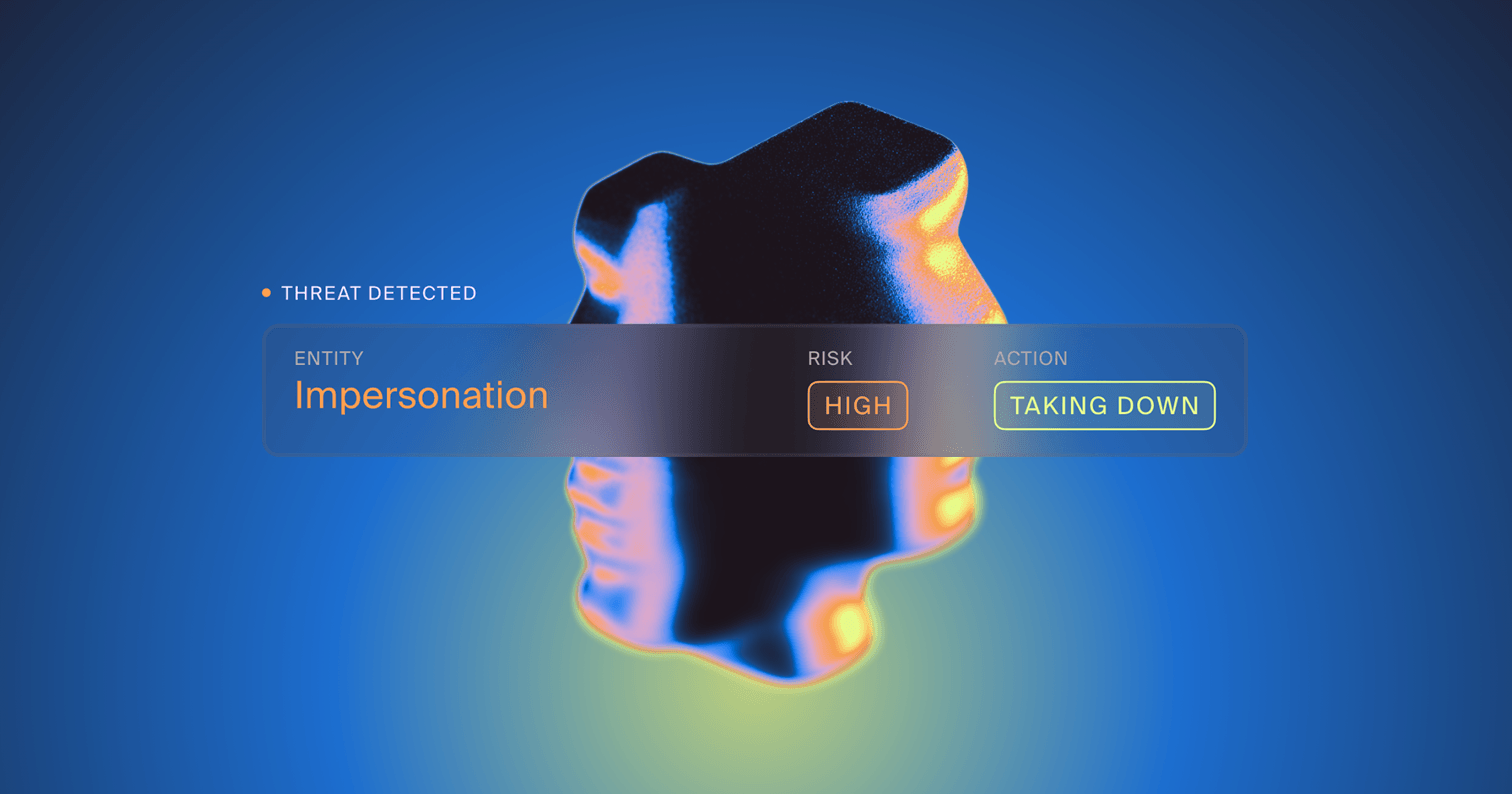
The platform detects synthetic impersonation across social, ads, messaging, and telco channels, then correlates the domains, profiles, and phone numbers behind a campaign through the Doppel Threat Graph into a single view. When it surfaces an impersonation, its agentic AI prioritizes and executes takedowns across registrars, social platforms, telcos, and ad networks at once, so analysts spend their time on the escalations that need human judgment.
Telcos are the leg most legacy takedown workflows forget, which leaves the WhatsApp and SMS routes of a deepfake campaign live; Doppel's direct carrier relationships bring that leg down in the same action.
Doppel also works upstream of the deepfake itself. Executive Protection treats every named leader as a protected digital asset, removing exposed PII from data-broker sites, watching the dark web for leaked credentials, and surfacing dormant impersonation accounts and family-level exposure before attackers can stitch them into a pretext.
That cuts the source footage and personal detail a convincing clone needs, attacking the very problem this guide opened with: public material becoming training data.
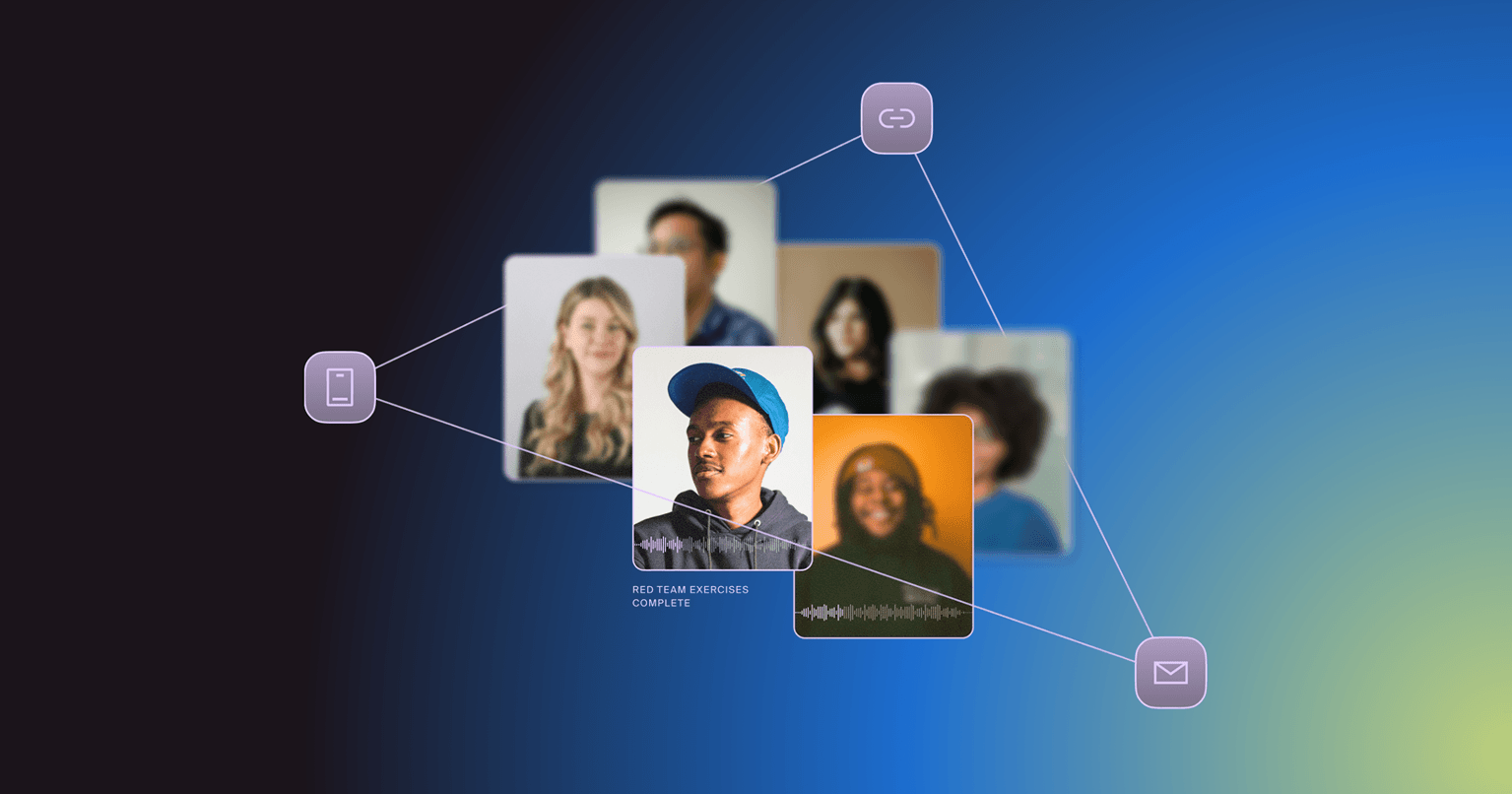
The loop then closes inside the organization. Doppel converts the real attacks it finds into live Dynamic Simulation campaigns, including AI agents that join scheduled Microsoft Teams and Zoom meetings with cloned voices and pre-staged calendar invites, the same multi-participant video-call pattern this guide opened with. Voice-call analytics score every interaction line by line, from refused to deflected to submitted, against the organization's own verification protocols, so teams see exactly where the reflex held and where it broke.
Doppel's threat intelligence brief put indexed attacker activity against financial services and fintech brands at nearly three times the broader market baseline in early April 2026, a velocity no manual review can match.
Build Detection That Stays Ahead of the Fakes
Synthetic media keeps closing the gap with reality, and the visual and audio tells that work today will keep fading with every model release. The teams that stay ahead build verification into every high-stakes workflow and meet AI-generated impersonation with detection that runs at machine speed across every channel. The detect-and-dismantle model makes an attacker's infrastructure too costly to keep rebuilding, which helps move a brand off the target list.
Request a demo to see how Doppel dismantles deepfake brand attacks before they reach your customers.