A lot of teams still treat vishing like a call-center nuisance. That's a mistake. When attackers impersonate a trusted brand over the phone, the damage spreads far beyond one fraudulent conversation. Customers hand over account details. Employees bypass normal controls. Fraud teams get flooded. Support teams inherit the fallout. And the brand takes the reputational hit for a scam it didn't initiate.
That's why vishing brand impersonation belongs in the same conversation as phishing, fake domains, spoofed social accounts, and customer-targeted scam infrastructure. The phone call is only one part of the attack. The bigger issue is that an attacker has adopted your identity, borrowed your credibility, and used both to drive a human decision that benefits them. For teams focused on brand protection, fraud prevention, and human risk, that changes how the problem should be handled.
Summary
Vishing brand impersonation is not just a fraud operations issue. It is a brand abuse issue with direct human risk consequences. Attackers use trusted company names, spoofed caller IDs, fake support workflows, cloned sites, SMS lures, and other cross-channel scam infrastructure to push customers or employees into unsafe actions. Security awareness still matters, but awareness alone is not enough when attackers control the narrative and surround the phone call with convincing brand signals. Effective defense requires early detection, infrastructure mapping, coordinated disruption, enforcement, and simulations that reflect how these scams actually unfold.
What Is Vishing Brand Impersonation?
Vishing brand impersonation, also called voice phishing, is a phone-based social engineering attack in which someone pretends to represent a real company to manipulate a target. These scams are increasingly part of broader cross-channel brand impersonation campaigns, where attackers combine spoofed calls, phishing pages, fake domains, and social accounts to reinforce the deception. The goal may be to steal credentials, one-time passcodes, payment details, account information, or access to a legitimate account or workflow.
Sometimes the attacker calls first. Sometimes the victim is pushed into the call by a text message, a fake invoice, a malicious search result or ad, or a callback prompt tied to a fraudulent support flow. Either way, the voice interaction is where the pressure peaks. The attacker sounds credible, urgent, and familiar enough to push the victim past skepticism.
That matters because the brand does most of the work for them. If a victim believes the caller is from your bank, retail company, software vendor, or help desk, the attacker doesn't need a perfect script. They need just enough legitimacy to get the next piece of information or the next action.
Why Is Vishing a Brand Impersonation Problem, Not Just a Call Fraud Problem?
Because the scam succeeds by weaponizing brand trust. The phone call is just the delivery mechanism. The real asset being abused is your brand identity.
That distinction matters operationally. If you frame vishing as a call-center fraud issue, the response usually stays narrow. Teams focus on customer warnings, agent training, scripted responses, and post-incident support. Those are useful, but they don't address the broader attack chain. They don't identify the spoofed assets. They don't map the campaign's infrastructure. They don't reduce repeat exposure.
Once you frame vishing as brand impersonation, the response gets sharper. You start asking better questions. Where is the attacker sourcing phone numbers? What domains or pages support the call script? Are fake ads, SMS lures, or cloned login pages part of the same operation? Which customer segments are being targeted? Which brand signals are being copied over and over?
Those questions pull the issue out of a single queue and into a cross-functional workflow that security, fraud, brand protection, customer support, and other customer-facing teams can actually act on.
How Do Vishing Campaigns Actually Work?
Most successful vishing campaigns do not begin and end with a random phone call. They work because the attacker creates a believable environment around the call.
Pretext Comes First
The attacker chooses a role that the target already recognizes. That might be fraud prevention, account recovery, billing, technical support, delivery verification, or identity verification. The pretext only needs to feel plausible enough to lower resistance.
Infrastructure Supports the Story
Many campaigns use more than a phone number. The caller may reference a recent text message, a support ticket, a spoofed support page, a search result, a QR code, or a fake verification step. That means there is often related infrastructure to uncover across web, messaging, and social channels, not just a single voice interaction.
Urgency and Authority Close the Gap
The caller creates a sense of urgency, confusion, or fear. That's what pushes the victim to read out a code, reset a password, approve a push notification, install remote access software, or share account details they would normally protect.
Real Examples of Vishing Brand Impersonation
Vishing attacks succeed because they mimic familiar support workflows. The caller does not need a complex script. They only need a believable role and enough brand context to push the victim toward the next step.
Fraud Department Callback Scam
A customer receives a text message claiming suspicious activity on their account. The message instructs them to call a phone number immediately.
When they call, a scammer posing as the company’s fraud department asks the customer to verify their identity and read back a one-time passcode sent to their phone. The code is actually an authentication code for the real account login, giving the attacker access.
Fake Technical Support Call
An employee receives a call from someone claiming to be an internal IT support representative. The caller says a security alert requires urgent verification.
The attacker asks the employee to approve a push notification or install remote access software so the “support team” can investigate the issue. In reality, the attacker gains direct access to the employee’s device.
Account Recovery Impersonation
The attacker calls a customer claiming their account is locked and must be verified immediately.
To “restore access,” the caller asks the victim to confirm personal information or reset their password through a fake support page connected to the scam.
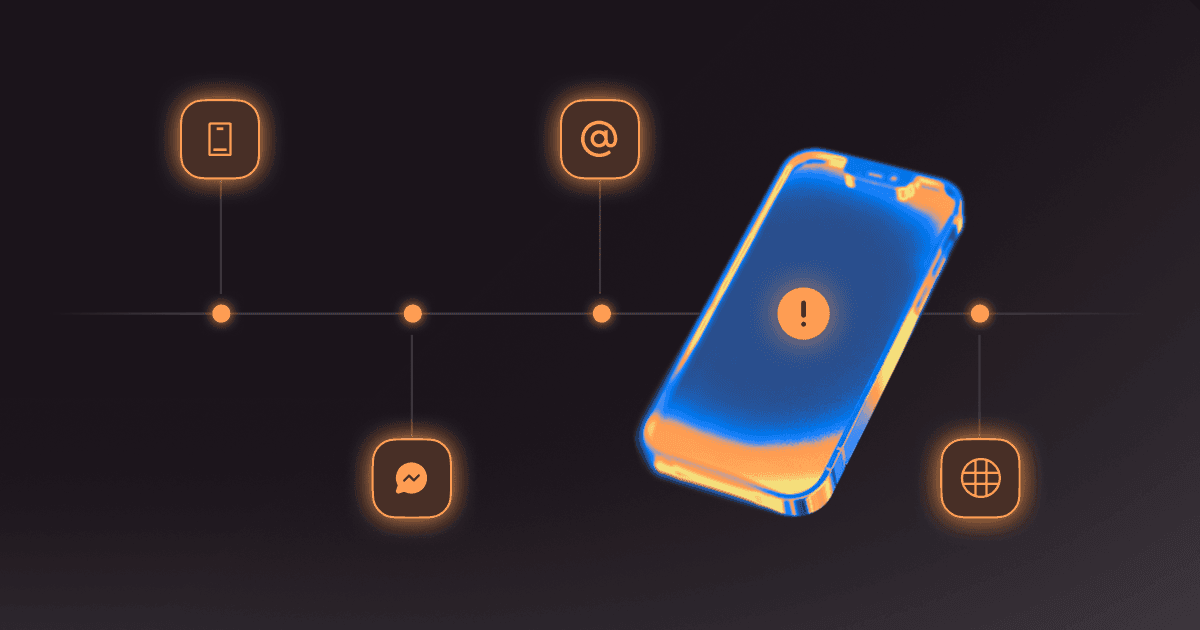
Many of these attacks combine multiple channels. The victim may see a spoofed website, receive a text message, or interact with a fake support account before the phone call ever happens.
Why Do Human Risk Teams Need to Care about External Scam Infrastructure?
Because human behavior does not happen in a vacuum. People make bad decisions in environments controlled by attackers.
A team can run polished simulations and annual awareness campaigns and still miss the real issue if it isn't looking at how attackers are impersonating the brand in public. Human risk is easier to reduce when internal training and response workflows are informed by external threat intelligence. That means understanding the lures, scripts, channels, and emotional triggers that are actually being used against your customers and employees.
Halfway through this work, the internal and external sides of the problem should start connecting. A team reviewing customer impersonation fraud should also examine how those scams move across channels. A team focused on awareness should also recognize phone impersonation scams as a brand abuse problem that requires both education and external disruption.
What Are the Real Consequences of Vishing Brand Impersonation?
The first consequence is obvious. People lose money, credentials, or access. The less obvious consequence is that the victim often blames the brand rather than the attacker.
That changes the business impact. Support volume climbs. Fraud claims increase. Reputation takes a hit in public channels. Internal teams waste time investigating symptoms rather than addressing the root cause. In some cases, employees exposed to repeated impersonation campaigns begin to mistrust legitimate outreach, which creates its own operational drag.
There is also a compounding effect. Once a brand becomes known as a useful impersonation theme, attackers tend to reuse it. They refine scripts, change numbers, rotate pages, and keep going until something interrupts the economics of the scam.
How Can Security and Brand Teams Detect Vishing Earlier?
They detect it earlier by treating phone scams like part of a broader impersonation ecosystem.
Platforms such as Doppel that monitor impersonation across domains, messaging channels, and social platforms make it easier to connect these signals, detect coordinated scam campaigns earlier, and disrupt brand impersonation infrastructure:
Watch for Cross-Channel Patterns
A vishing campaign often leaves traces elsewhere. Look for fake domains, landing pages, social accounts, ads, SMS messages, and callback prompts that reinforce the same brand narrative.
Track Repeated Brand Signals
Attackers tend to reuse certain phrases, logos, workflows, account alerts, and support language. Those patterns can reveal linked activity across campaigns that look disconnected at first.
Use Customer, Support, and Fraud Signals as Intelligence
Complaint data, support tickets, fraud reports, call notes, and escalation patterns are not just operational noise. They are threat intelligence. When clusters appear, they should trigger an investigation into the broader impersonation campaign, not just a one-off response.
Teams that already think in terms of impersonation attack response plans are usually in a better position here because they are already set up to connect public exposure to internal action.
Why Aren't Awareness and Simulations Enough on Their Own?
Because attackers are getting better at realism, timing, and multi-step deception. Awareness can help people slow down, but it does not remove the fake assets, interrupt the impersonation flow, or disrupt the infrastructure keeping the scam alive.
That is where many programs fall short. They measure whether users completed training or passed a simulation, then assume the risk is under control. But vishing brand impersonation is an active threat problem. If the fake pages, impersonation accounts, lures, and related infrastructure remain live, the organization remains exposed.
Simulations matter most when they reflect real attacker behavior. They should not feel like generic security theater. They should help teams understand how brand trust is manipulated, how quickly people escalate trust under pressure, and where the organization is most easily exploited.
Running realistic vibe phishing simulations helps organizations test how employees respond to social engineering pressure across email, SMS, and voice scenarios.
Programs that combine real threat intelligence with phishing and vishing exercises help teams build stronger response habits. Doppel’s phishing simulation platform helps organizations test real-world social engineering scenarios across multiple channels.
That is also why human risk management (HRM) needs to be grounded in the reality of external threats. Otherwise, the company is optimizing for completion rates, while attackers are optimizing for conversions.
How Do Mapping, Disruption, and Enforcement Change the Equation?
They reduce the attacker’s operational space. That is the point.
Infrastructure Mapping Reveals the Full Scam Surface
Instead of treating each complaint as a one-off, mapping helps connect domains, pages, impersonating profiles, callback lures, ads, and other supporting assets into a campaign view. That improves prioritization and speeds response.
Disruption Removes or Weakens Public-Facing Scam Assets
Fake sites, fraudulent pages, impersonating social profiles, deceptive ads, and other scam assets should not be allowed to linger while teams debate ownership. Removal, where possible, combined with escalation across relevant providers and platforms, directly reduces attacker reach.
Enforcement Raises the Cost of Reuse
Attackers count on disposable infrastructure and slow coordination. A faster enforcement loop makes repeat impersonation harder and reduces the shelf life of a successful scam flow.
This is where brand protection becomes operational, not theoretical. A mature program is not just telling people what to watch for. It is actively shrinking the scam surface.
What Should an Effective Response Program Include?
It should include clear ownership, shared signals, and action paths that work across teams.
Brand protection should be able to surface live impersonation activity. Fraud teams should be able to connect that activity to victim outcomes. Security should understand the identity and access implications. Customer-facing teams should know what to say, what to collect, and where to escalate. Legal, trust, and enforcement stakeholders should be involved when they can materially support disruption, escalation, or removal.
A strong program also distinguishes between education and disruption. Both matter. But they are not interchangeable. Teaching people to recognize scams is useful. Making the scam harder to run is better.
As programs mature, platforms that combine brand monitoring, scam detection, investigation workflows, and human risk capabilities become increasingly valuable, as they help teams move from fragmented signals to coordinated action across external exposure and internal response.
Key Indicators of Vishing Brand Impersonation
Common warning signs include:
- Unexpected calls claiming urgent account issues
- Requests for one-time passcodes or verification codes
- Pressure to bypass normal security processes
- Instructions to install remote access software
- Caller IDs that appear legitimate but route to fraudulent call centers
Key Takeaways
- Vishing brand impersonation is a brand abuse problem with direct human risk and fraud consequences.
- The phone call is often only one part of a broader cross-channel impersonation campaign.
- Awareness alone does not stop active scam infrastructure from reaching customers or employees.
- Mapping, disruption, and enforcement are critical to reducing repeat exposure.
- Human risk programs are stronger when they are informed by real external impersonation activity.
Stop Treating Vishing Like a Side Issue
Vishing is not a side channel. It is one of the clearest examples of how attackers turn brand trust into a weapon.
If your organization is only responding after the calls start coming in, it is already behind. The better approach is to detect broader impersonation campaigns earlier, map the infrastructure supporting them, disrupt scam assets, and feed those lessons back into simulations and the human risk strategy to reinforce employee awareness through realistic simulations. That is how teams stop treating vishing as a support problem and start handling it like the brand impersonation threat it is.
Doppel helps security, fraud, and brand protection teams detect cross-channel impersonation earlier, connect external scam signals with internal response workflows, and reduce human risk before fraud spreads.
To see how Doppel helps teams detect cross-channel impersonation earlier, connect external signals to internal response, and disrupt scams before they spread, explore Doppel’s approach to brand protection and human risk management.