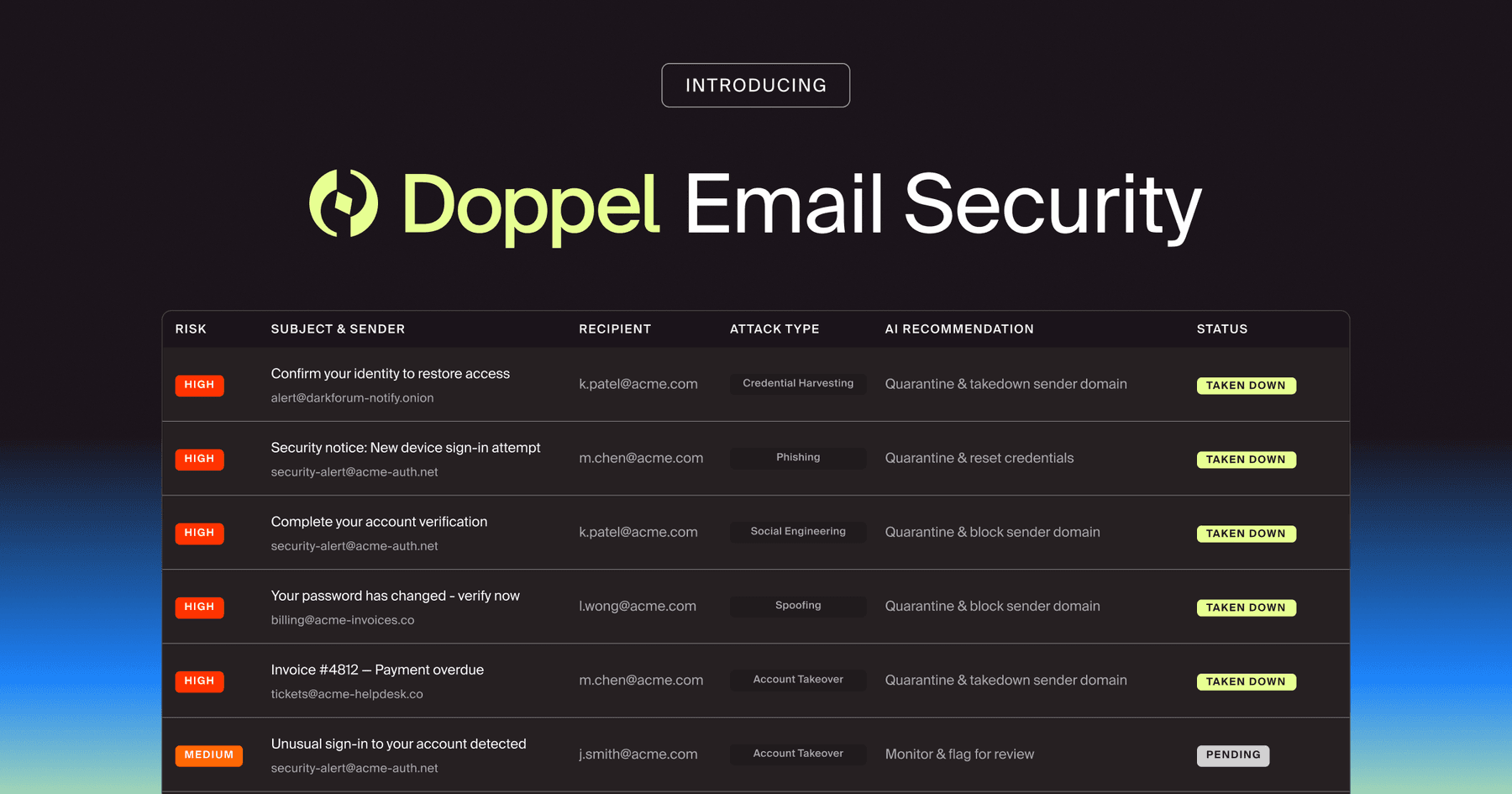
Doppel Email Security is now generally available
The agentic email security solution that empowers you to fight back against social engineering attacks. Detection isn't enough. Disruption is the difference.
Doppel called the social engineering threat before the market had words for it: velocity, volume, and variety.
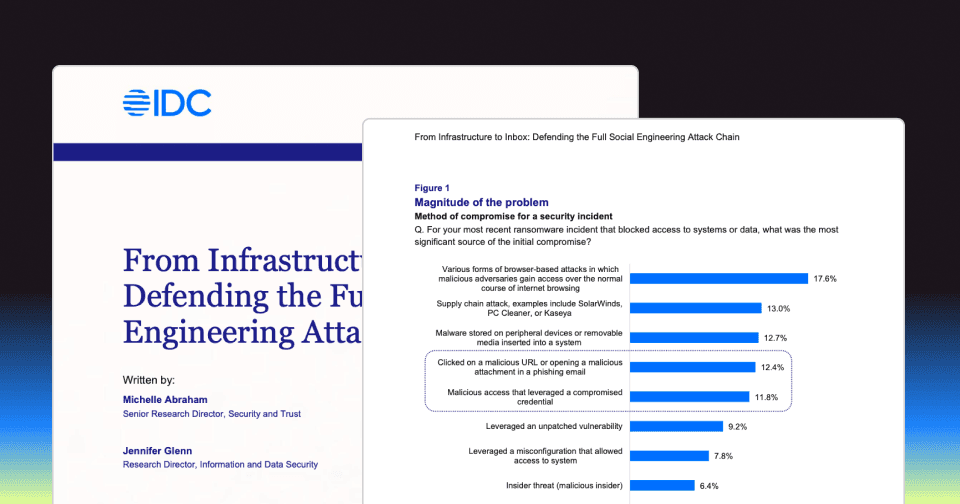
A new IDC Spotlight, sponsored by Doppel, From Infrastructure to Inbox: Defending the Full Social Engineering Attack Chain, now reaches the same conclusion in the same words: defenders need to match attacker velocity, volume, and variety by dismantling the infrastructure behind the operation, not chasing individual messages. When an analyst firm arrives at the language a vendor coined, that’s a category taking shape.
The picture IDC draws is stark. Attackers no longer work one channel at a time. AI lets them coordinate campaigns across email, SMS, voice, and social media with consistent messaging and no canned responses. The grammar mistakes and visual tells that employees and filters were trained to catch are gone. Voice cloning takes seconds of audio. Phishing infrastructure spins up in minutes from a single prompt.
And the costs are no longer abstract. The IDC Spotlight cites survey data showing that social engineering accounts for up to 24% of ransomware incidents, and FBI figures put cyber-enabled fraud losses at $17.7 billion in 2025, with business email compromise second only to investment fraud.
The research grounds this in attacks you already know: a vished help desk that ended in one of the most public casino breaches in history. An outsourced IT desk and a SIM swap. A $25 million wire transfer authorized on a video call where every executive on screen was a deepfake. Different channels, different entry points, same playbook.
To us, the IDC’s Spotlight's sharpest observation is structural. Most organizations buy messaging security, digital risk protection, and human risk management as three separate products from three separate vendors. Each tool sees its own slice. None sees the campaign.
IDC puts it plainly: When a phishing email is reported and removed, the solution addresses one message, not the thousands or millions more the attacker will send from the same infrastructure. The attack chain stays intact. Only the symptom got treated.
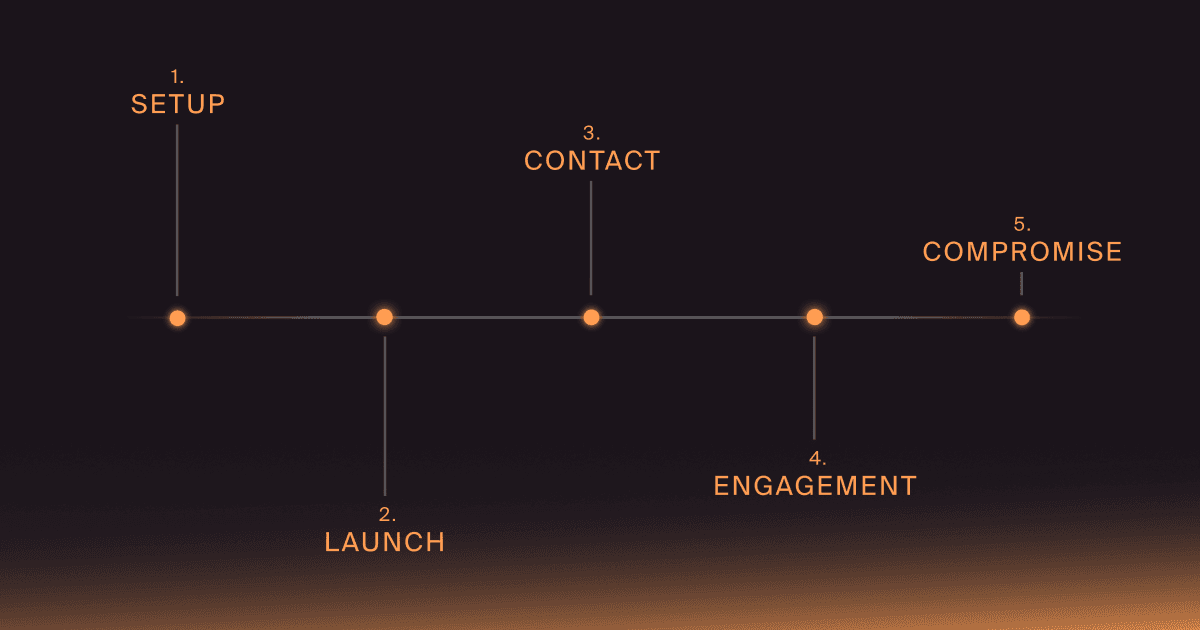
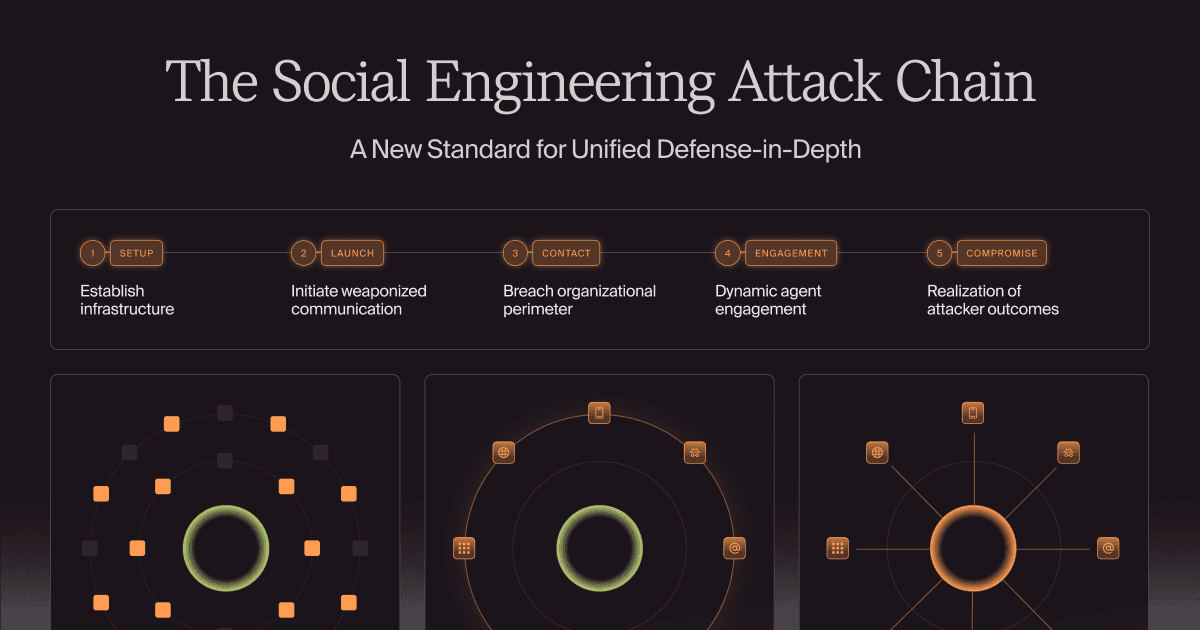
Traditional kill chain models track malicious code. But in social engineering, as the IDC Spotlight notes, the payload is a conversation. That is why the IDC's Spotlight walks through the social engineering attack chain, the five-stage framework Doppel developed to map how these attacks unfold: set up the infrastructure, launch the communication, contact the target, engage the victim, compromise.
Every stage is an opportunity to break the chain:
We believe the IDC Spotlight's conclusion looks forward, and it should get your attention: The trend is moving toward agent-to-agent interaction, where attack messages are generated, delivered, and even answered with no human on either side. That is the fight Doppel is built for, and it is why social engineering defense stands as its own category.
Click here to read the full analysis, including the IDC Spotlight
profile of how Doppel defends across the entire chain.
BLOG
Modern social engineering is a relentless, AI-orchestrated lifecycle. Learn how to map the five-stage attack chain—from setup to contact—and why a unified defense platform is the only way to outpace AI-driven social engineering attacks.



by Bobby Ford, Rahul Madduluri, and Alvin Lin