We spend millions of dollars and thousands of hours training our employees to be hyper-vigilant, beg them to scrutinize their inboxes, and reward them for clicking the "Report Phish" button.
But what actually happens when they do?
For the majority of organizations, that highly dangerous, user-reported email drops straight into a shared IT abuse inbox. It enters a digital black hole.
While the well-meaning employee waits for a response, their ticket sits completely untouched in a manual triage backlog for hours. Or worse, over a long holiday weekend, for days.
This is the catastrophic flaw in modern email defense. While your SOC is grinding through a chronologically sorted ticketing queue, the threat actor isn’t taking a coffee break. They’re actively moving laterally, using the exact same phishing lure to harvest credentials from dozens of other employees who didn't bother to report the email.
The traditional abuse inbox is a massive operational bottleneck that grants threat actors their single most valuable asset: dwell time.
It’s time to stop managing backlogs and start dismantling social engineering campaigns. By deploying agentic AI for phishing triage, security teams completely eliminate the manual queue, transforming a passive ticketing black hole into an autonomous, active sensor grid.
Let’s discuss exactly how agentic AI burns the backlog and changes the math of email security.
Why Manual Phishing Triage is Failing in 2026
Cybercriminal syndicates have fully embraced generative AI and automation. They launch thousands of hyper-personalized, context-aware phishing emails in fractions of a second.
Security teams are attempting to combat this automated onslaught by having Tier 1 analysts manually click through a shared inbox.
But the math doesn’t work. Here’s why the manual phishing triage model is structurally failing modern security teams:
- Overwhelming Ticket Volume: SOC analysts are drowning in user-reported emails, and a massive percentage of the abuse inbox is completely benign. Analysts spend half their day analyzing legitimate marketing newsletters, spam, and internal HR announcements (false positives) rather than hunting actual threats.
- Context Switching Slowdown: Investigating a single phishing email is an exhausting, fragmented process. To triage a single ticket, an analyst manually switches between the email client, external URL scanners, open-source threat intelligence feeds, the corporate SIEM, and the ticketing dashboard. This friction destroys productivity and leads to analyst burnout.
- Speed Disconnect: The attacker operates at machine speed using automated scripts. The defense relies on a human analyst working through a ticketing queue based on the email's submission time.
- Cultural Damage: When an employee takes the time to report a threat and hears absolutely nothing back for five days, they stop reporting threats. Manual backlogs actively destroy the security culture you are paying to build by punishing vigilance with radio silence.
From Passive Queue to Active Sensor Grid
Historically, security teams have viewed user-reported phishing as a chore — a messy, noisy inbox that someone has to clean up before they can get back to ‘real’ security work.
The reality is that user reporting is a goldmine of threat intelligence. Your employees are on the absolute front lines. They are seeing zero-day social engineering lures, deepfake vishing attempts, and hyper-targeted business email compromise (BEC) campaigns before your legacy security gateways even know they exist.
But intelligence expires rapidly. It’s only valuable if it can be actioned instantly.
When you remove the human bottleneck from the triage process, every single employee in your organization effectively becomes a real-time, active sensor on your perimeter.
If a single employee in the finance department spots a novel, zero-day phishing lure, that intelligence shouldn't sit in a queue. It should be used to inoculate the entire organization instantly.
This is the concept of the active sensor grid, and it’s only possible when you introduce agentic AI to the workflow.
How Agentic Phishing Triage Works
To actually eradicate the bottleneck, you need an autonomous system capable of reasoning, investigating, and executing complex takedowns.
Here’s the operational workflow of how Doppel’s agentic AI handles phishing triage.
1. Autonomous Ingestion & Parsing
The absolute second an employee hits the "Report" button, a Doppel AI agent picks up the ticket.
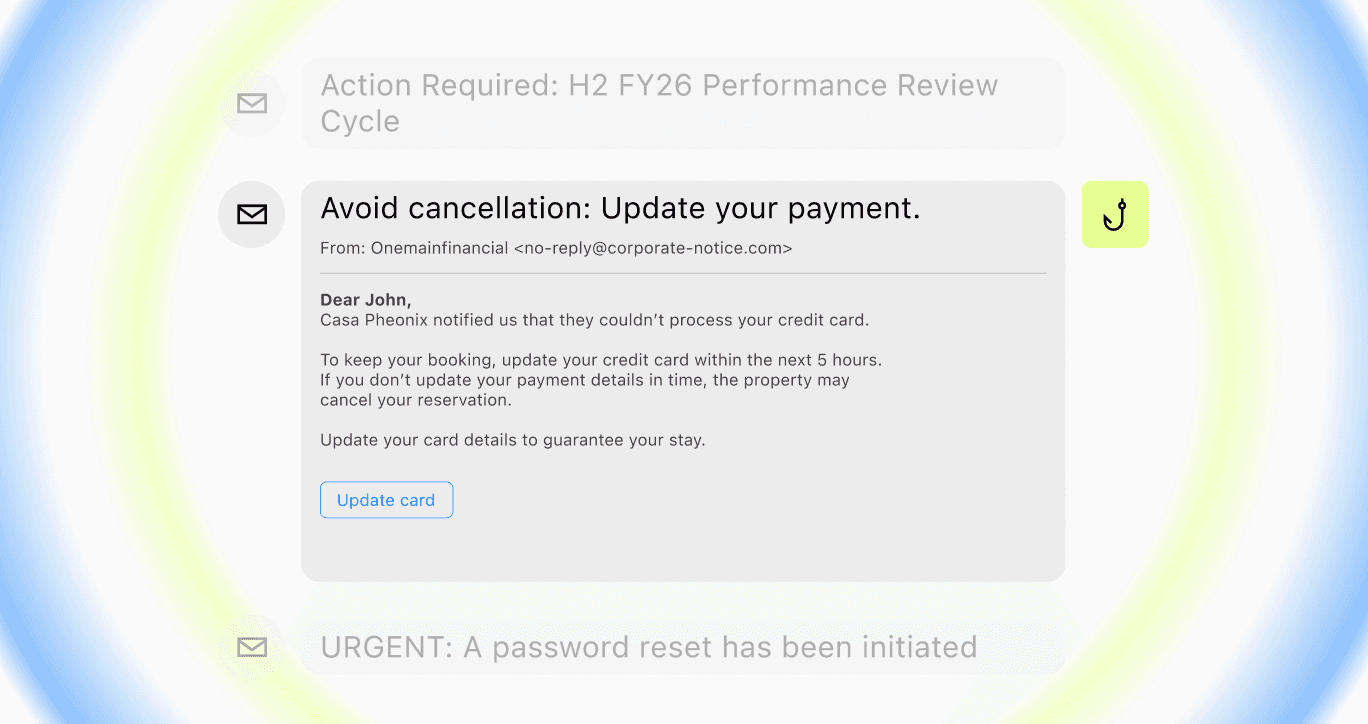
The agent reads the email natively. It doesn't rely on rigid regex rules. Instead, it uses natural language processing to understand the message's actual intent, urgency, and context.
Doppel immediately distinguishes between a high-pressure wire transfer request and a benign marketing newsletter, completely eliminating false positives in the human workflow.
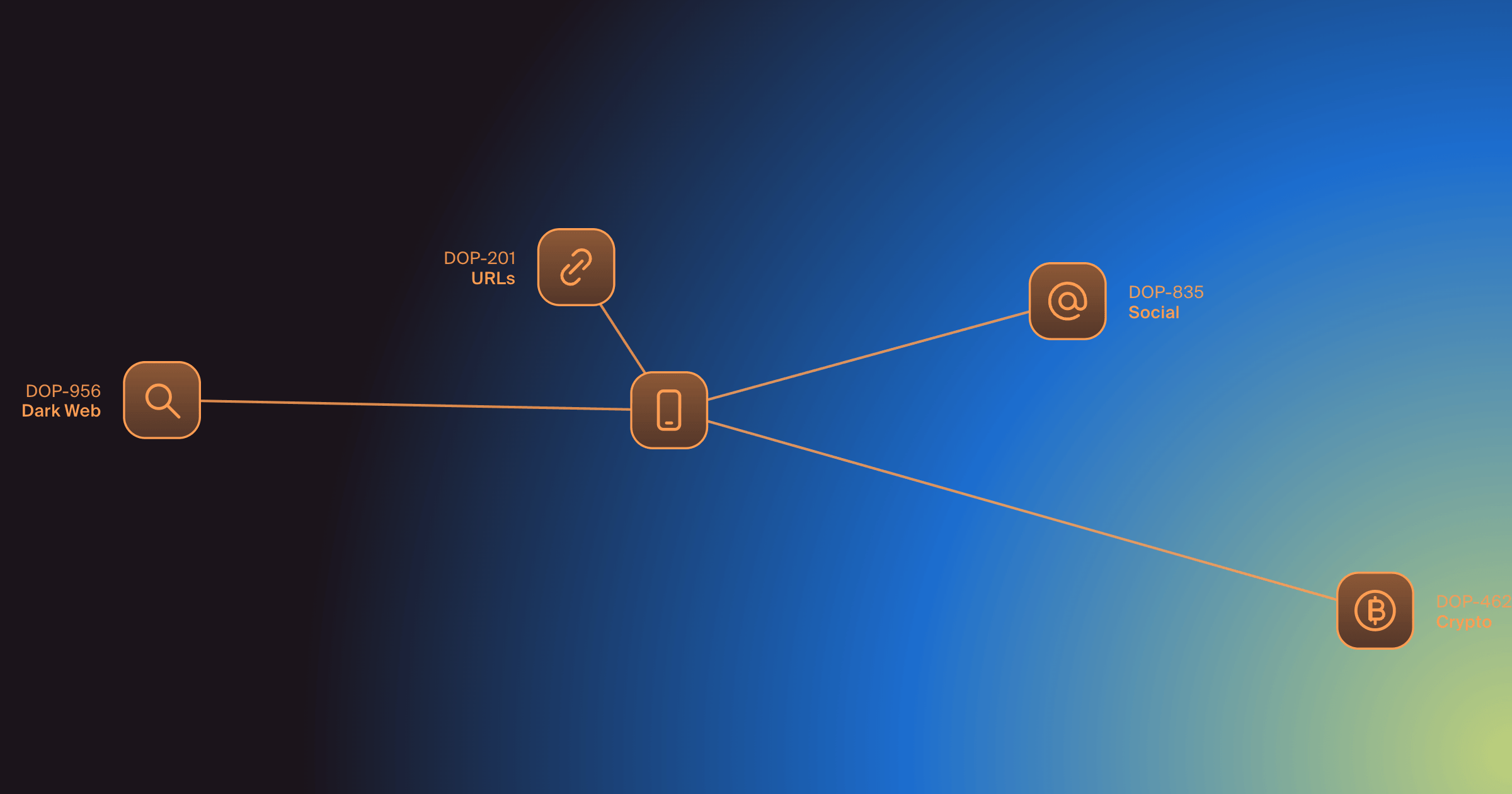
Without requiring any human sorting, the AI agent autonomously strips out all indicators of compromise (IOCs) (opens in new tab). It pulls the sender domains, embedded URLs, malicious attachments, and complex routing headers.
It then instantly cross-references these IOCs against the global Doppel Threat Graph, enriching the data with external intelligence in milliseconds.
3. Machine-Speed Takedown
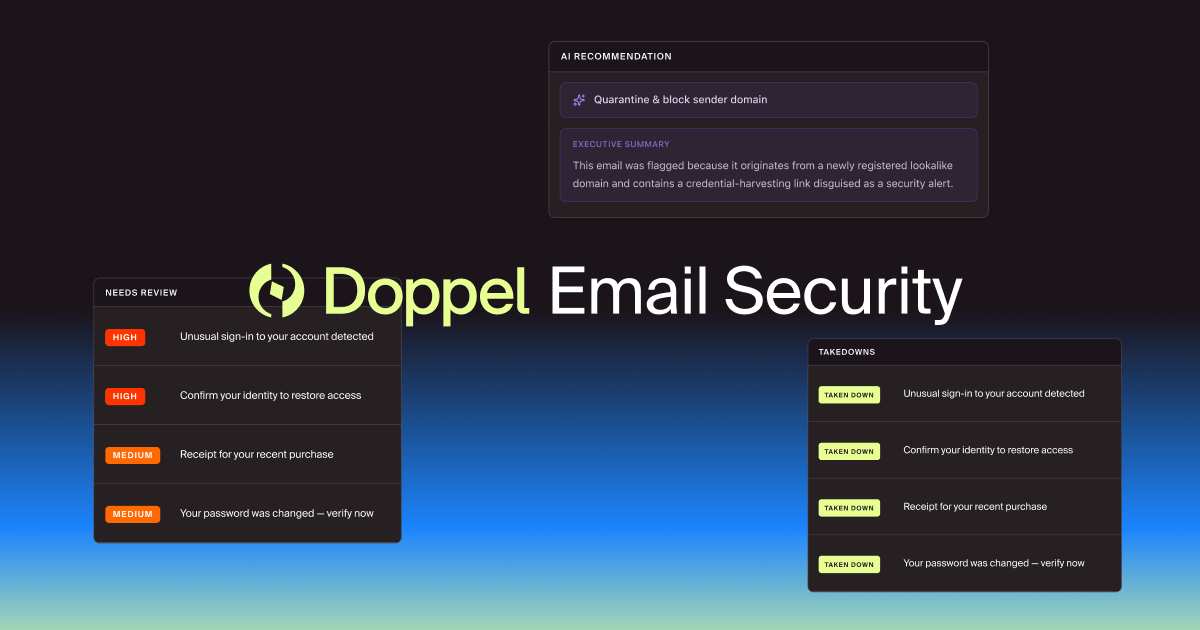
This is where agentic AI leaves legacy tools behind. If the threat is verified, the agent doesn’t just quietly quarantine the email and close the ticket. It executes a multi-channel takedown.
The agent traces the threat back to its source and strikes the attacker's registrar and hosting infrastructure. It neutralizes the campaign globally, ensuring the attacker cannot simply pivot and target another employee.
4. Closed-Loop Feedback
Within seconds of the initial report, the AI agent automatically replies to the employee who reported it. It sends a plain-English confirmation that the threat was verified and neutralized.
This immediate, positive reinforcement rewards their vigilance, validates their effort, and builds an incredibly strong security culture.
Operational ROI of Agentic Phishing Triage
Moving away from a manual ticketing queue isn't just about making your analysts happier; it is a strategic business decision with massive return on investment (ROI).
When you deploy agentic AI to handle phishing triage, you fundamentally alter the economics and efficacy of your SOC. Here’s the hard business value for security leaders:
- Zero Dwell Time: By reducing triage time from days to seconds, you completely eliminate the window of opportunity for attackers. They don’t have the luxury of harvesting credentials from other employees while your SOC is busy eating lunch.
- Curing Alert Fatigue: Your highly paid security engineers did not go to school to sort through spam emails. Agentic phishing triage frees your Tier 1 and Tier 2 analysts from mind-numbing ticket grinding. It allows them to focus their energy on strategic, proactive threat hunting and complex incident response.
- Compound Defense: A phishing email reported by a single user instantly becomes the intelligence fuel used to burn down an attacker's external domains and social media infrastructure, protecting your brand reputation globally.
- Scalability Without Headcount: An agentic sensor grid scales infinitely, handling ten tickets or ten thousand tickets with the exact same machine-speed efficiency, requiring zero additional headcount.
Automating Takedowns for Social Engineering Defense
As long as your organization relies on a manual abuse inbox, you’re voluntarily giving the adversary the upper hand. You’re letting critical threat intelligence sit and age in a black hole while your network remains exposed.
This is why Doppel built agentic phishing triage into the platform's core.
We believe that your security team should be managing investigations, not managing backlogs. Doppel’s AI-native agents seamlessly connect internal human risk with external threat infrastructure. By autonomously parsing user reports, matching them against our global threat graph, and executing machine-speed takedowns, we transform your passive ticketing queue into an aggressive, active defense mechanism.
Stop making your employees wait for security, and stop forcing your analysts to grind through spam.
Ready to eliminate the abuse inbox bottleneck for good? See how Doppel’s agentic AI automates phishing triage, executes multi-channel takedowns, and turns your workforce into an active sensor grid.