Every employee knows the exact feeling.
You’re in the middle of deep work, trying to finalize a massive project or close out the quarter. Suddenly, an automated notification aggressively pops up on your screen, dominating your attention.
“Reminder: Mandatory Monthly Security Awareness Training is due in 48 hours.”
Somewhere, deep in the halls of your company, dozens, hundreds, or even thousands of employees simultaneously let out an exhausted groan. They pause their real work, close their active spreadsheets, and log into a clunky, third-party learning portal that looks like it was designed in 2012.
They press "Play" on a poorly acted, horribly animated video about the dangers of using "password123."
And then, they do what every single employee does: They immediately mute the tab, drag it to their second monitor, and go right back to answering emails until the video finally finishes playing.
Legacy security awareness training (SAT) platforms built massive, multi-billion-dollar empires on this exact model. They sold security leaders on a very comforting, yet incredibly dangerous illusion: If you force your employees to watch generic video modules on a set monthly schedule, your organization is magically secure.
This is a broken strategy.
Treating security awareness as a scheduled, static calendar event doesn’t generate security. It generates significant employee resentment.
To defend against modern, highly motivated, and AI-driven adversaries, security training should be an immediate, dynamic response to the real-world threats actively targeting your brand.
Here is why the era of mandatory monthly security videos is officially over, and how responsive human risk management (HRM) actually builds true corporate resilience.
Resentment Engine: Why Legacy Security Awareness Training is Broken
Traditional security awareness training is built almost entirely around the concept of compliance, rather than actual resilience.
Organizations buy these massive, bloated video libraries for one primary reason. They need to hand a spreadsheet to their cyber insurance auditor at the end of the year and confidently state, "Look, 99% of our employees completed their required training."
But what did those employees actually learn from that muted tab? Nothing.
When you force an employee to watch a generic, 45-minute video module that has absolutely nothing to do with their actual daily workflow, you are not building behavioral muscle memory. You’re actively building compliance fatigue.
This rigid, top-down approach completely fractures the relationship between the security team and the rest of the business. It frames the SOC as an annoying corporate hall monitor, rather than a strategic business partner.
Now you’ve created a toxic dynamic where employees view security protocols as a frustrating bureaucratic hurdle they have to jump over, rather than a critical defense function they’re actively participating in.
If your training program makes your employees roll their eyes, it's fundamentally broken. You’re training your workforce to ignore security, which is the exact opposite of the desired outcome.
Static Defense Doesn’t Hold Up Against Dynamic Threats
Beyond the psychological damage that the legacy SAT inflicts on corporate culture, there’s a glaring technical flaw in the calendar-event model.
Attackers don’t wait for your Q3 training cycle to launch a new campaign.
The cybercrime landscape has been completely upended by generative AI and automation. Threat actors are no longer relying on generic, misspelled emails from foreign princes. They are deploying hyper-personalized, multi-channel social engineering attacks at machine speed.
They use AI voice clones to bypass the IT helpdesk. They hijack corporate QR code infrastructure. They spin up flawless lookalike domains and credential harvesting sites in a matter of seconds.
The tactics a modern threat actor uses today look absolutely nothing like those featured in a static training video recorded, edited, and uploaded to a legacy vendor's content library two years ago.
There is a massive, highly exploitable timeline disconnect.
If your employee training material does not directly mirror the exact threats currently landing in their inbox or hitting their mobile devices this very week, the training is functionally useless.
You cannot prepare an IT helpdesk agent to survive a live, high-pressure deepfake vishing call from a Scattered Spider (opens in new tab) affiliate by making them watch an outdated cartoon about physical tailgating. A static defense will always fail against a dynamic, adaptive threat.
Legacy Security Awareness Training vs Responsive Human Risk Management: Comparison
Completely abandon the calendar invite. Modern defense architectures require a radical shift from passive consumption to active, contextual intervention.
Here’s how the legacy training model compares to an AI-native, responsive approach:
| | Legacy Security Awareness Training (SAT) | Responsive Human Risk Management (HRM) |
Trigger | An arbitrary, scheduled date on the corporate calendar | A real-world behavioral failure or an active, verified external threat |
Content | Generic, pre-recorded video libraries used by thousands of companies | Hyper-specific, dynamically generated simulations unique to your brand and real-world threats |
Employee Experience | Frustrating, irrelevant, and viewed as a waste of valuable time | Contextual, immediate, and directly tied to their daily workflow |
Delivery Timeline | Delivered months after an employee makes a risky decision | Delivered instantly at the exact point of a simulated failure |
Strategic Goal | Checking a compliance box for auditors and cyber insurance | Building genuine behavioral muscle memory and reducing risk velocity |
Closing the Loop: What Responsive Human Risk Management Looks Like
So, if we’re deleting the monthly calendar invite and throwing out the generic video libraries, what exactly replaces them?
You replace the calendar event with a closed-loop intelligence cycle. Security awareness should become an automated, immediate response mechanism.
Here are the three core mechanics of a responsive human risk management strategy.
1. Threat-to-Sim Workflow
Instead of pulling from a stale, static library of videos, a modern HRM platform must ingest live threat intelligence.
Imagine a sophisticated threat actor spins up a highly convincing typosquatted domain impersonating your brand on a Monday morning. They plan to use it to target your employees and your customers later that week.
A legacy training platform has absolutely no idea this domain exists.
A responsive HRM platform detects an external threat immediately. It flags the newly registered domain and automatically converts that live, real-world intelligence into a safe, internal simulation.
By Tuesday morning, your employees are being actively tested against the exact typosquatted domain and messaging tactics the attacker just built.
You’re closing the loop. You are training your workforce on tomorrow's attack, today. This guarantees that your training is always perfectly calibrated to the actual threat environment surrounding your brand.
2. Micro-Coaching at the Point of Failure
When an employee clicks on a malicious link or fails a verification protocol, the worst thing a security team can do is wait a few weeks to assign them a remedial 45-minute video course.
By the time the employee finally sits down to watch the video, they’ve forgotten the context of the mistake. They don’t remember what email they clicked, what mood they were in, or why they fell for the lure.
Responsive training requires just-in-time intervention.
The exact second an employee fails a safe simulation, the system should intervene immediately. It should deliver a hyper-targeted, 30-second micro-coaching module directly in their workflow.
It tells them exactly what they clicked, why it was dangerous, and the specific psychological trigger (like artificial urgency, authority bias, or fear) the attacker used to trick them.
This immediate, frictionless feedback loop is how you build actual behavioral muscle memory. It corrects the action in the exact moment the brain is receptive to the lesson, without destroying the employee's productivity for the afternoon.
3. Role-Specific, Multi-Channel Context
A cashier at a retail store doesn’t need the same security training as a DevOps engineer with root access to the production environment.
A legacy, one-size-fits-all video insults both of their intelligence.
Responsive HRM abandons the broad brush entirely. It delivers role-specific context based on the individual user's actual access and risk profile.
The finance team needs active simulations regarding deepfake wire transfer requests and compromised vendor invoices. The IT help desk needs to experience live, simulated vishing (voice phishing) calls that attempt to pressure them into bypassing multi-factor authentication (MFA) (opens in new tab).
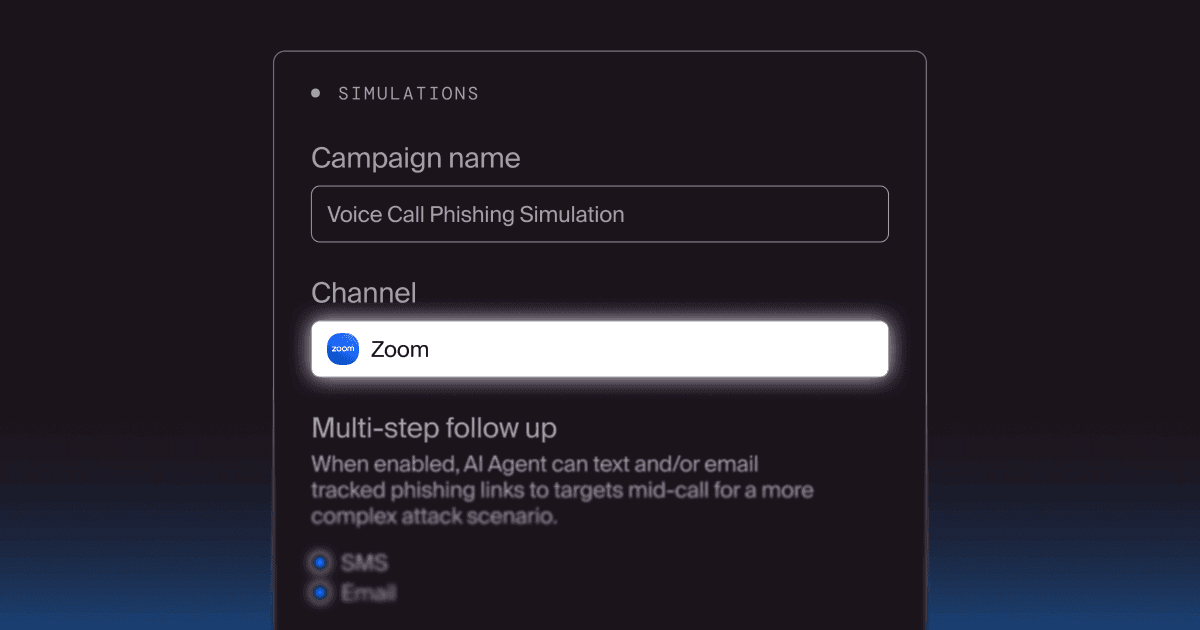
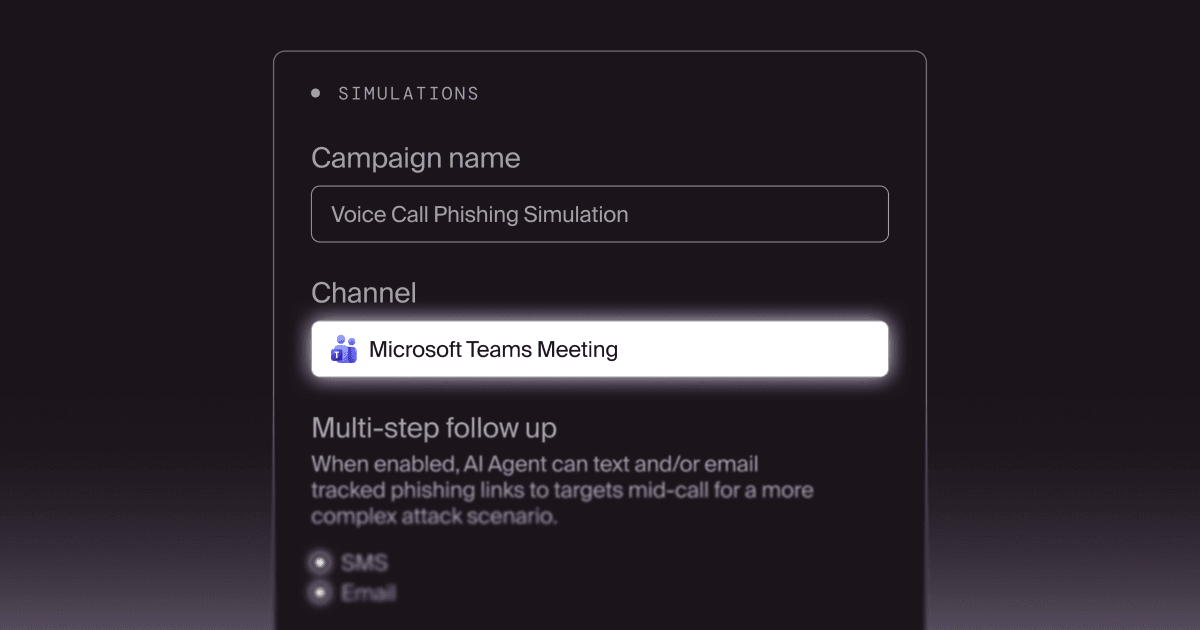
These simulations cannot be limited to the email inbox. The modern workforce lives in Slack, Microsoft Teams, Zoom, and SMS. Your training should respond to the channels your employees actually use to communicate.
If you’re only simulating email phishing, you’re leaving massive doors wide open for attackers to exploit.
Automating Security Awareness Training with Doppel
As long as you treat security training as a static administrative chore, your employees will treat it the same way. The threat landscape is moving far too fast to rely on pre-recorded video libraries and scheduled lectures.
Doppel engineered a completely different approach to human risk management.
The social engineering defense platform treats human risk as a dynamic, solvable engineering problem. Doppel’s AI-native architecture completely closes the loop between external threat intelligence and internal employee resilience.
Because it integrates digital risk protection directly with human risk management, the platform never guesses what attackers might do next. Doppel actively monitors the external threat graph, and when we detect a new campaign targeting your brand, Doppel’s agentic AI instantly translates that real-world intelligence into hyper-realistic, multi-channel simulations.
Doppel delivers Monday’s threat as Tuesday’s training.
Replace resentment with empowerment, and deliver just-in-time micro-coaching at the exact point of failure, ensuring your employees learn the critical lesson instantly without disrupting their entire workday.
The attackers are responding to your defenses in real time. Now, it’s time your security awareness program did the exact same thing.
Ready to cancel the calendar invite and stop relying on stale video libraries? Experience Doppel to see how our agentic AI-native social engineering defense platform turns real-world threats into immediate behavioral resilience.