

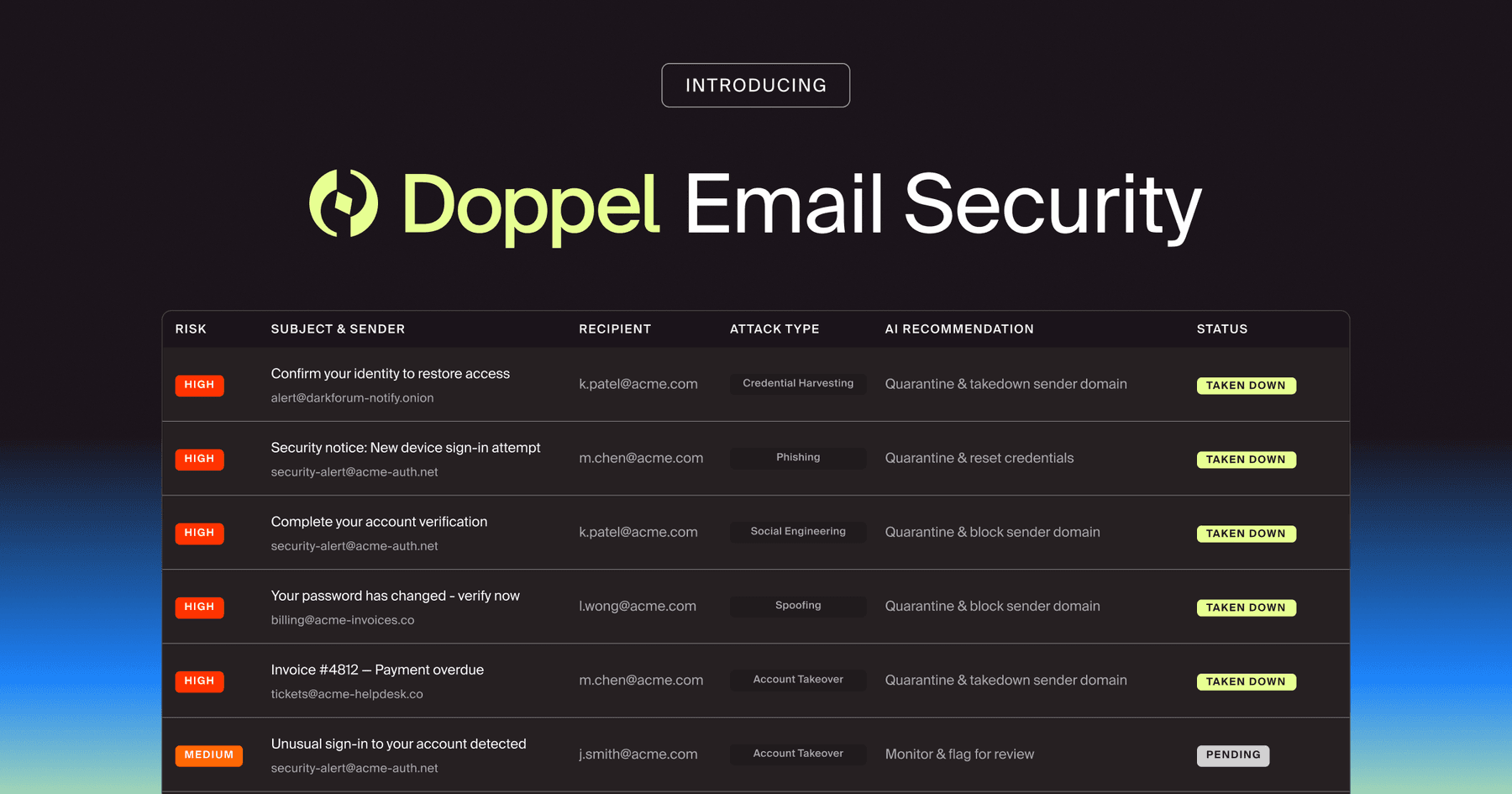
Doppel Email Security is now generally available
The agentic email security solution that empowers you to fight back against social engineering attacks. Detection isn't enough. Disruption is the difference.
Explore the AI-native philosophy driving Doppel: automating the middle layers to elevate builders and context owners to direct autonomous loops.


by Kevin Tian and Rahul Madduluri

When we started building Doppel, our mission was clear: protect the world from social engineering attacks every day. We knew that human trust had become the primary attack surface, so we built an AI-native platform that could dismantle attacker infrastructure at AI speed.
But over the last year, we’ve seen an even more profound shift in AI. For the first time in human history, the tools exist for the recursive self-improvement of AI models and autonomous agents. AI is now nearly or fully capable of executing a large number of core business processes autonomously and effectively.
This forced us to ask a hard question: If we have the industry's leading AI-native defense platform for our customers, what does it mean for Doppel the company to be truly AI-native?
The answer isn’t just about the software we ship. It requires rethinking and rebuilding our processes and systems from the ground up, so we can move 10 times faster and thrive in an AI-first world.
Today, we want to share the core philosophy guiding this evolution at Doppel and how we’ll lead the charge to show what a truly AI-native company can be.
To defeat an adversary operating at machine speed, we need to reject outdated operational playbooks to ensure that we’re moving just as fast, across every department.
We govern our architecture, our engineering, and our platform by three principles:
We can write about our philosophy all day, but to actually live it means tracking scoped, high-impact AI initiatives across every single function of the company to build momentum.
The legacy model of cybersecurity (and business operations as a whole) is siloed, reactive, and inefficient. We broke that model for our customers by launching the industry's first unified Social Engineering Defense (SED) platform.
Now, we are breaking that model internally.
The AI world rewards speed, autonomy, and ruthless efficiency. We see Doppel as a trailblazer in what it looks like to be AI-native as a platform and a company.

BLOG
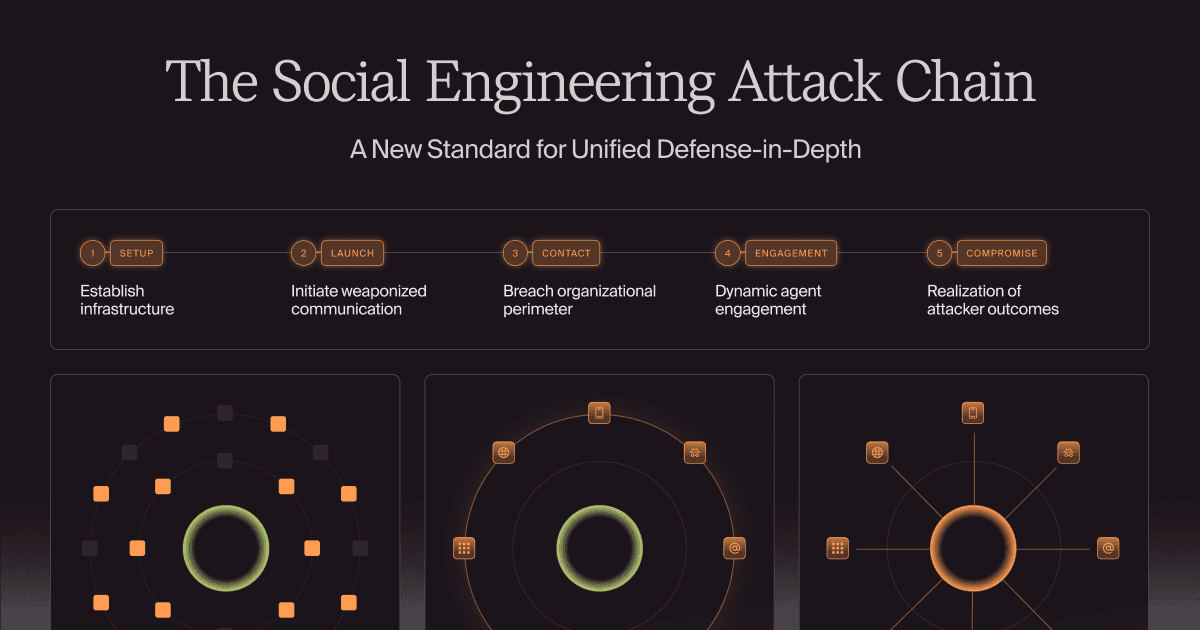
Modern social engineering is a relentless, AI-orchestrated lifecycle. Learn how to map the five-stage attack chain—from setup to contact—and why a unified defense platform is the only way to outpace AI-driven social engineering attacks.


by Bobby Ford, Rahul Madduluri, and Alvin Lin