Spear phishing is a phishing attack built for one person. Instead of blasting a generic lure to thousands of inboxes, the attacker studies a single target, their role, their reporting line, the vendors they pay, the deadlines they work against, then writes a message that fits neatly inside that person's working day. A request that names the right project, the right colleague, and the right deadline gives the recipient little reason to doubt it.
That precision is what makes spear phishing so costly. Breaches that start with phishing take an average of 254 days (opens in new tab) to identify and contain, long enough for the credentials, the funds, or a foothold in the network to be gone before anyone connects the dots. Spear phishing pairs AI-augmented reconnaissance that makes every lure more convincing with multi-channel delivery that routes those lures around the controls most organizations rely on. This article breaks down how a spear-phishing attack unfolds, why high-volume phishing defenses miss it, and what a modern defense requires.
Key Takeaways
- Spear phishing is a social engineering campaign aimed at a specific individual inside an organization.
- A spear-phishing campaign moves through five stages: reconnaissance, weaponization, delivery, persuasion, and execution.
- Secure email gateways and generic awareness training miss spear phishing because they screen for volume patterns and known-bad indicators, so precision lures, trusted-sender abuse, and non-email channels slip straight through.
- Effective defense takes three capabilities working together: visibility into attacker infrastructure before delivery, multi-channel simulations drawn from live attacks, and a closed loop that turns each external detection into the next employee simulation.
What Is a Spear Phishing Attack?
A spear phishing attack is a precision-targeted social engineering campaign aimed at one person and built on enough research about that person that the message reads as a routine, legitimate request. The defining trait is specificity. The attacker references a real project, a real colleague, a real vendor relationship, or a real deadline, so the message fits inside the recipient's working reality and earns trust by default.
Spear Phishing Spans Email, SMS, Social, and Voice Channels
A spear-phishing campaign rarely stays on one channel. The same attacker now reaches a target through voice phishing, LinkedIn messages, Microsoft Teams impersonation, and WhatsApp lures, and in many campaigns, those channels now carry more weight than email. Attackers switch channels inside a single campaign on purpose, using each hop to make the next contact look more legitimate and to land where the target is least guarded.
How a Spear Phishing Attack Unfolds
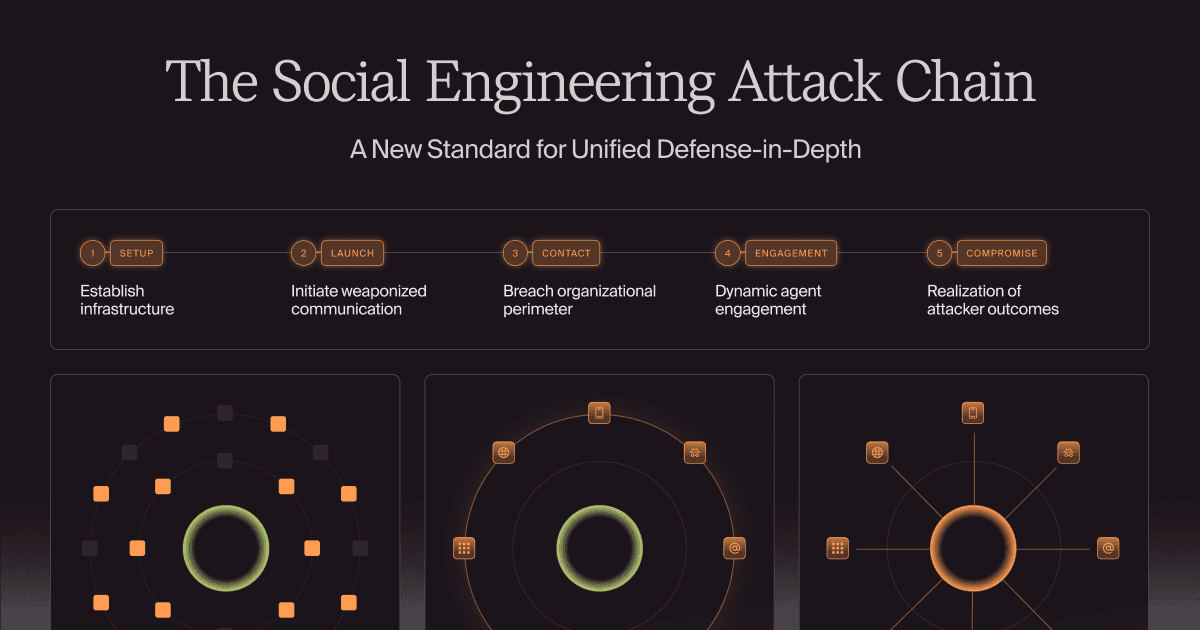
A spear-phishing campaign moves through five stages: reconnaissance, weaponization, delivery, persuasion, and execution. Each stage is multi-stage (opens in new tab) by design, and each one leaves signals that defenders can act on if they have visibility into the right channels.
Stage 1: Reconnaissance Builds the Target Profile
A spear-phishing campaign starts with research. Attackers pick targets by role, privilege, and access to money or sensitive systems, and finance, IT, executive, and support staff show up again and again in documented targeting patterns (opens in new tab). They profile those targets from publicly available information (opens in new tab) like LinkedIn, public speaking engagements, and social media videos.
Most of this profiling now runs on AI. Threat actors increasingly use AI to make reconnaissance and social engineering (opens in new tab) faster and more believable: a short public audio clip (opens in new tab) becomes voice-cloning material, a job posting leaks the tech stack, and a conference recording surfaces internal project names. Because none of this touches enterprise infrastructure, it generates almost no alerts inside the target's security tools.
Stage 2: Weaponization Stands Up the Infrastructure
That reconnaissance feeds the infrastructure attackers build to impersonate trusted brands and people: typosquatting domains, fake social profiles, cloned landing pages, and spoofed email addresses. Threat actors often host phishing domains (opens in new tab) on free services for short stretches during an active campaign, keeping costs low and footprints short-lived.
Phishing-as-a-service kits now proxy real login pages in real time, capturing session tokens even after MFA. Most of this activity happens outside the target organization's line of sight, which is what makes early detection so hard.
Stage 3: Delivery Puts the Lure in Front of the Target
With the infrastructure staged, the lure goes out on whatever channel best fits the target's habits and slips past their controls. Attackers can flood an inbox to create urgency, then send the real payload through a Microsoft Teams message while impersonating helpdesk personnel (opens in new tab).
Other campaigns skip email entirely. Some run vishing campaigns against a major CRM platform's customers that lead to data theft and extortion months later. In one documented incident, a finance employee approved a large transfer after a deepfake video scam featuring a cloned CFO.
Stage 4: Persuasion Exploits Authority and Urgency
Delivery only pays off if the target acts, so the lure is engineered to short-circuit scrutiny. Attackers borrow authority by impersonating a CFO, a senior executive, or the IT helpdesk, then manufacture urgency with a deadline the target already believes in: a quarter-end close, a wire cutoff, a deal under embargo.
The two levers reinforce each other. A message that looks like it comes from the right person, about the right deal, with no time to verify, leaves the target reacting instead of checking. By the time anything feels off, the click has usually already happened.
Stage 5: Execution Converts Trust Into Access
The final stage turns that trust into a payout. Business email compromise scams caused $2.77 billion (opens in new tab) in reported losses in 2024 across 21,442 complaints. Credential theft is the other common objective: attackers capture a login, then use those stolen credentials to move laterally as a legitimate user.
Attackers also abuse OAuth grants and steal tokens or token-signing certificates to reach cloud resources (opens in new tab) without ever touching a password.
Why Legacy Anti-Phishing Solutions Often Miss Spear Phishing
Spear phishing slips past the defenses most organizations rely on because those defenses were scoped for high-volume phishing. Three gaps stand out: secure email gateways score for volume, technical controls only see what reaches the inbox, and outdated awareness training drills the wrong lures.
Secure Email Gateways Score for Volume Patterns
Secure email gateways were engineered to catch known-bad infrastructure: blocklisted addresses, flagged domains, and malicious payloads. A precision spear-phishing email targeting a finance executive can carry no attachment, no link, and no sender domain with prior history, which leaves a signature-based system with almost nothing to score.
The problem deepens when the message authenticates correctly. In many engagements where phishing drove initial access, attackers used compromised trusted accounts (opens in new tab) or business-partner accounts, so the messages passed authentication and carried full trusted-sender status.
Technical Controls Can't See the Infrastructure Behind the Lure
Even when controls work as designed, they only see what reaches the inbox. A valuable detection window opens earlier, during reconnaissance and weaponization, when attackers register lookalike domains, issue TLS certificates, and stand up cloned landing pages. Certificate transparency logs, passive DNS anomalies, and newly registered domains with active MX records are all observable signals of a campaign in preparation.
Most enterprise security stacks have no visibility into that pre-delivery layer. A gateway that trusts Google, Microsoft, and Dropbox infrastructure also faces a hard tradeoff when attackers deliver content through those same platforms, because blocking them aggressively generates false positives that disrupt legitimate work.
Outdated Security Awareness Training Drills Generic Lures
Generic awareness training prepares employees for the wrong attack. In many programs, most employees pass any given simulation, so they receive no remediation (opens in new tab) that cycle, and completion metrics measure participation rather than behavioral change.
Generic templates do little to prepare a user for a lure that references their actual CFO, their actual vendor, and their actual deadline. Training that never resembles the live attack cannot build the instinct to catch it.
What Effective Spear Phishing Defense Requires
Stopping spear phishing takes three capabilities working together: visibility into the attacker infrastructure standing up against your people before the lure ships, simulations built from the lures attackers are actually running, and a closed loop that connects the two. Legacy tools handle these separately, if at all.
- See the infrastructure being built, then dismantle it. Detecting lookalike domains, cloned landing pages, spoofed social profiles, and fraudulent paid ads during the attacker's staging phase is the first half of the job. Taking that infrastructure down before delivery is the second. A new domain permutation of your brand with an MX record and a freshly issued TLS certificate is an observable signal, and acting on it before the lure ships collapses the attacker's timeline and return on investment.
- Train employees on the lures attackers are running this week. AI- and OSINT-enabled spear-phishing exercises reduce employee vulnerability more than conventional simulations. Simulations derived from live threat intelligence and delivered across the channels attackers actually use, including voice, SMS, Microsoft Teams, and messaging apps, build recognition that generic email-only tests never will.
- Close the loop between external detection and internal training. Threat intelligence and the security awareness training program too often live in separate teams, with separate tools and separate reports.
Treated as one system, each capability strengthens the next. A closed loop makes every real-world attack targeting your brand inform the next simulation your employees see, so detection and training stop drifting apart.
How Doppel Disrupts Spear Phishing
Doppel, the AI-native Social Engineering Defense (SED) platform, unifies Digital Risk Protection and Human Risk Management on one intelligence architecture to deliver all three: visibility into attacker infrastructure, simulations drawn from live attacks, and a closed loop between them.
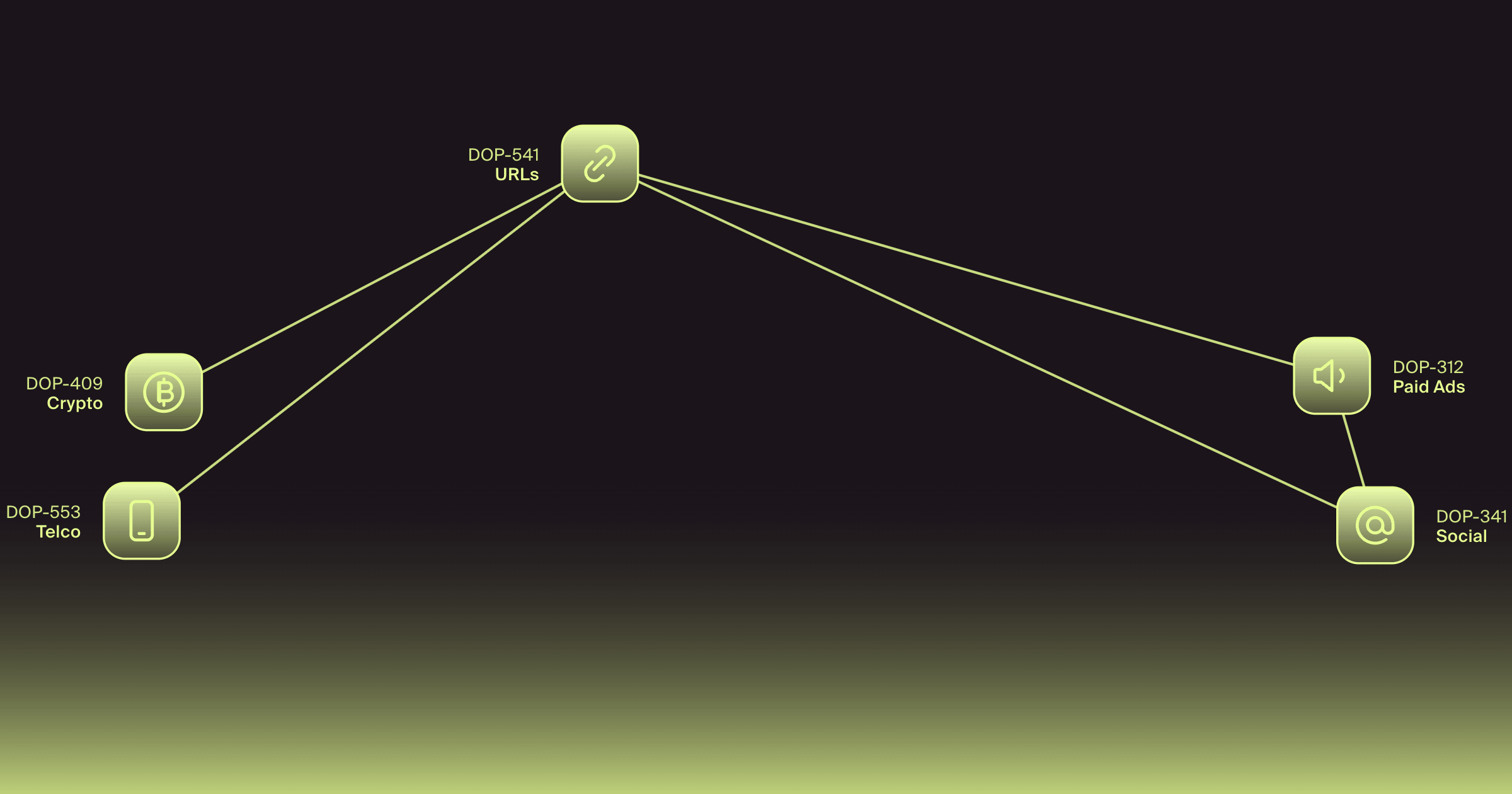
The Doppel Threat Graph continuously ingests signals across domains, social media, paid ads, messaging apps, telco, and the dark web, correlating isolated indicators into campaign-level views of attacker infrastructure. Doppel's agentic AI then prioritizes and executes takedowns against that infrastructure at scale.
The platform runs the same playbook that attackers do. Recon AI agents ingest job postings, conference announcements, and public filings exactly as a threat actor would, so the simulations that reach employees draw on the same public material a real lure would use.
On the takedown side, Doppel enforces at the campaign level rather than asset-by-asset, acting across registrars, hosts, social platforms, ad networks, and telco providers in a single coordinated action. The telco leg is the one most legacy takedown workflows leave behind, which is what keeps the SMS and WhatsApp side of a multi-channel campaign live long after the lookalike domain comes down.
The closed loop is the structural difference. Doppel clones the lure copy, landing-page visuals, and infrastructure pattern from a live campaign into a safe, controlled simulation. If attackers target an executive today, the same tactics can run as an org-wide simulation tomorrow across email, voice, SMS, and Microsoft Teams. Most breaches still turn on a person, with 60% of breaches (opens in new tab) involving a human element, which is exactly why the infrastructure layer and the human layer have to be defended as one problem rather than two.
Become Too Costly to Attack
Spear phishing succeeds when reconnaissance is cheap, infrastructure is disposable, and employees have never seen the lure before. The defenders who pull ahead treat it as a single infrastructure and human-resilience problem: detect the attacker's staging activity before delivery, dismantle the infrastructure behind it, and train employees against the exact tactics being used on them, all in one continuous loop.
When the cost of targeting your organization consistently exceeds the return, attackers move on. That is what it means to become too costly to attack.
Request a Demo to see how Doppel detects and dismantles spear-phishing infrastructure across every channel and converts live threats into simulations that build real employee resilience.