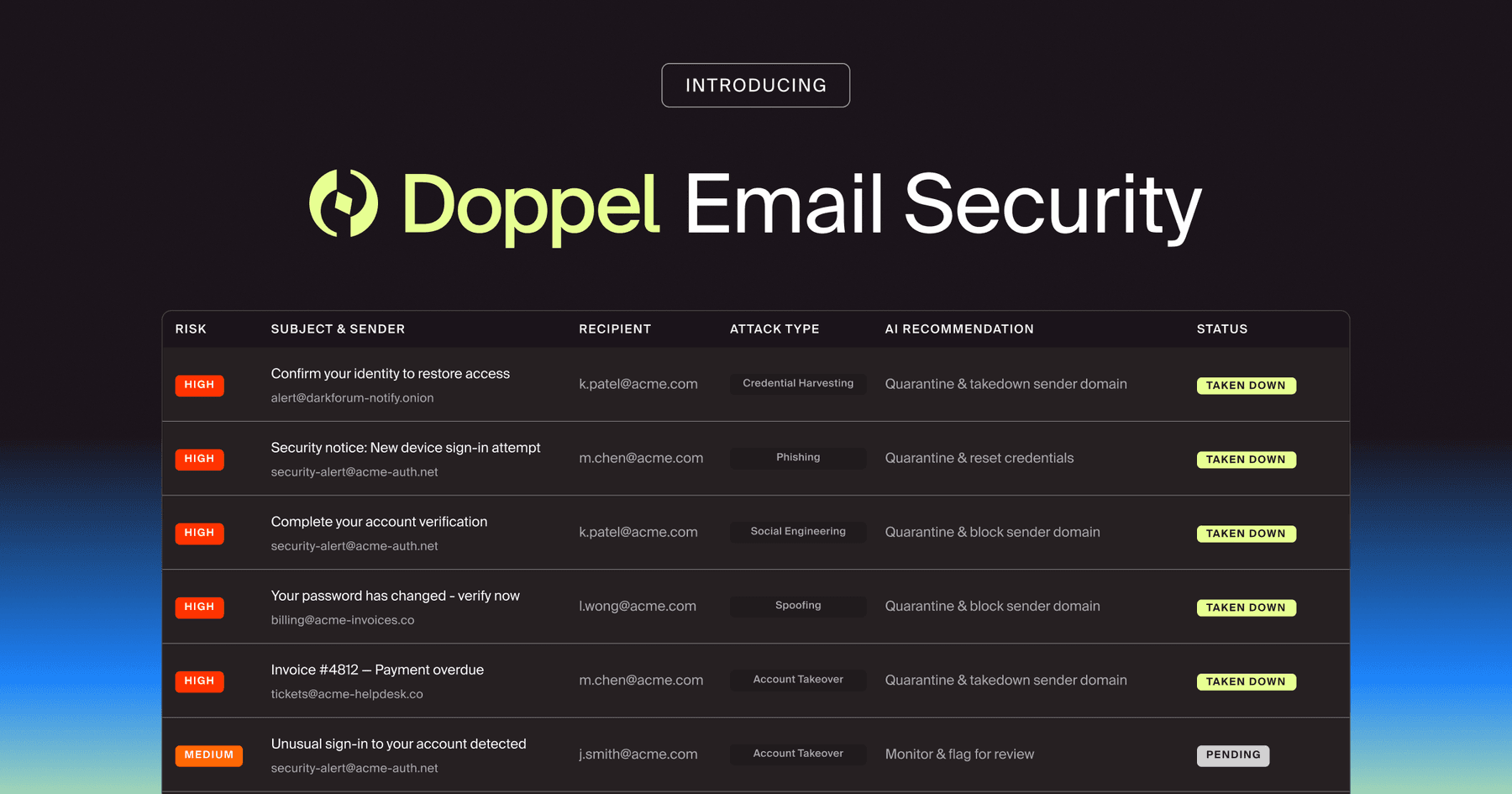
Doppel Email Security is now generally available
The agentic email security solution that empowers you to fight back against social engineering attacks. Detection isn't enough. Disruption is the difference.
The average phishing domain lasts less than 24 hours. See how to move beyond legacy SAT and build human resilience by converting real-world, AI-native attacks into high-fidelity training.
The average lifecycle of a modern phishing domain is less than 24 hours.
By the time a security vendor whitelists a threat or includes it in a monthly report, the attacker has already changed course, registered three new domains, and successfully breached a perimeter.
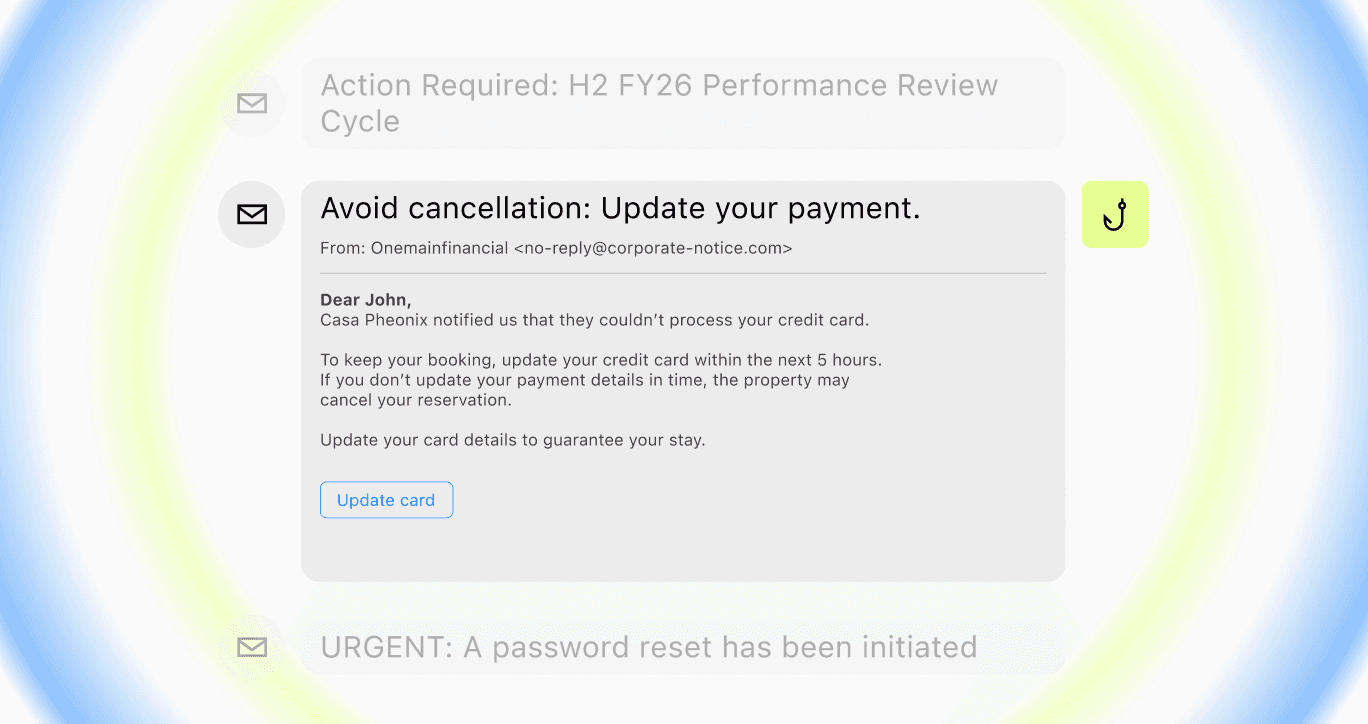
If your security awareness training (SAT) relies on static templates from three years ago (like the classic "Your Password Has Expired" or "Package Delayed" emails), you’re just giving your employees a false sense of security.
The gap between detection and education is where the adversary lives. To close it, you need a workflow that converts a live Monday-morning threat into a Tuesday-morning simulation. Here’s how.
Most organizations suffer from a disconnect between their SOC and their training platform.
This siloed model creates several critical vulnerabilities:
You need to do more than just take down bad domains. You need to use those live attacks to harden your workforce.
Want to use your adversary’s playbook against them?
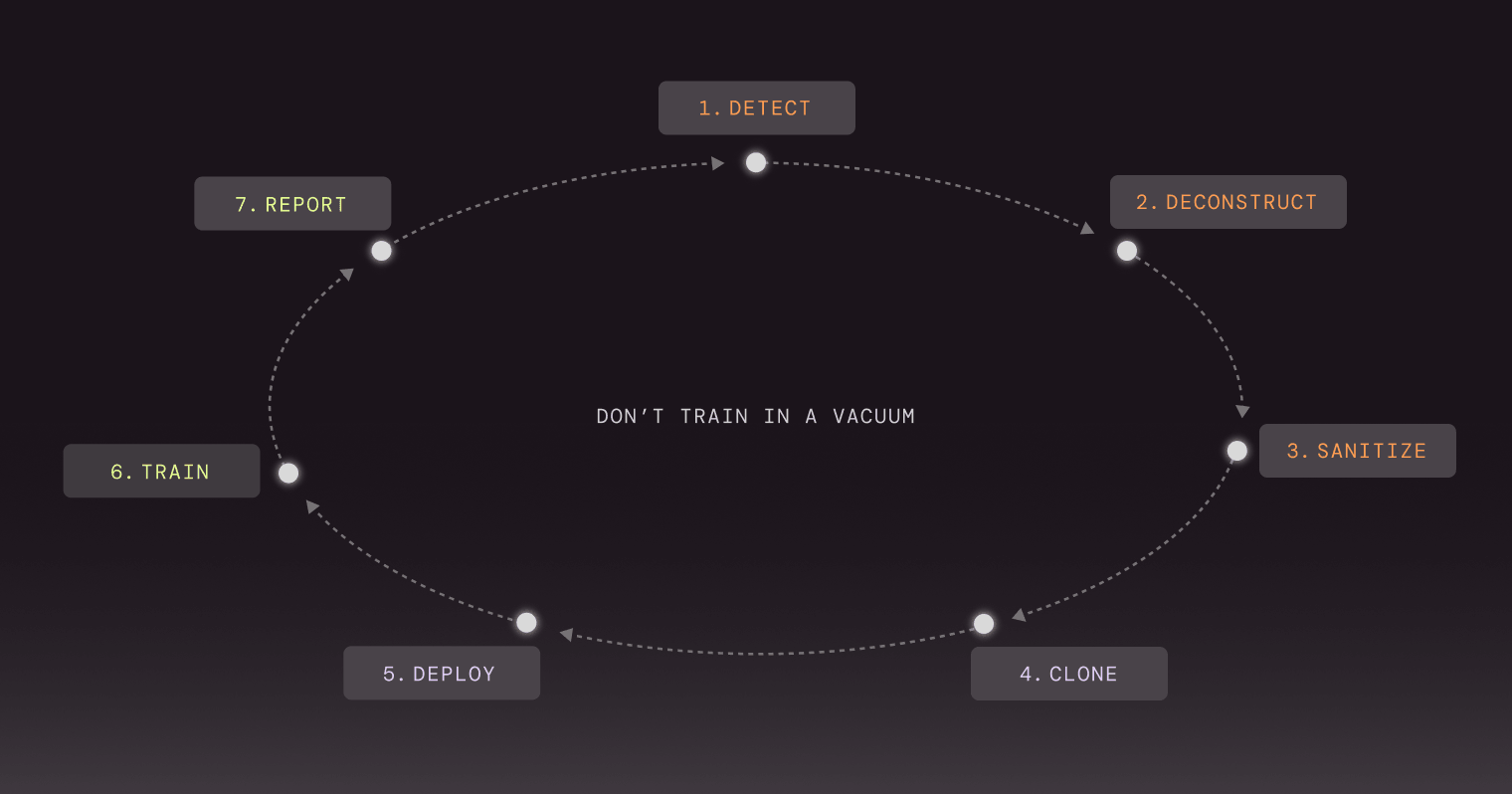
Doppel does that with its Threat Cloning capability, turning one day’s threat into the next day’s learnings.
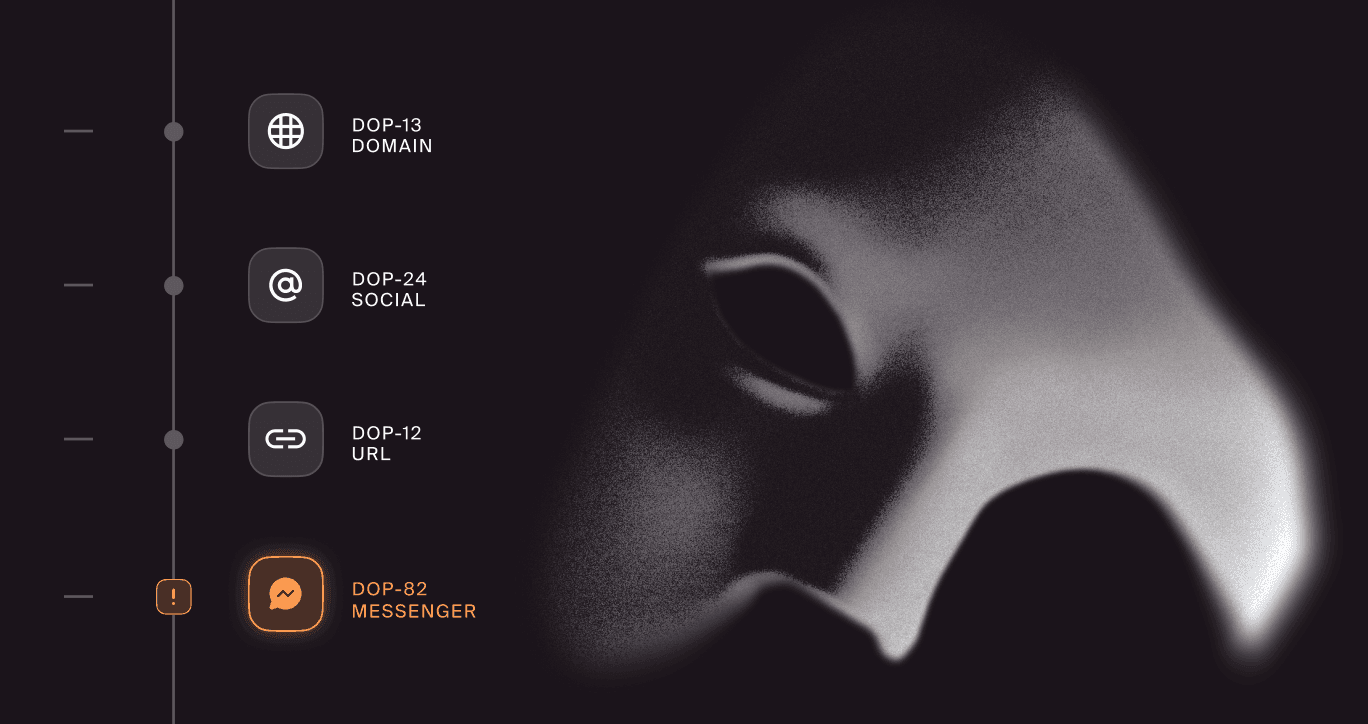
Here’s the timeline:
Traditional vendors lack the integration between threat intelligence and human risk management. Doppel provides a unified loop that disrupts the economics for the attacker.
1. High-Fidelity Vibe Phishing
Legacy simulations focus on bad grammar and suspicious links. Modern threats focus on vibes: the tone of voice, the specific internal project mentioned, and the urgency of the request.
Doppel clones these exact nuances, so your team experiences the real thing in a safe environment.
2. Multi-Channel Muscle Memory
Attackers don't stay in the inbox. They move from email to SMS to Slack.
The legacy model tests you with one email once a month (maybe).
Doppel takes you through a multi-step simulation. An employee receives a cloned LinkedIn message, followed by an "urgent" follow-up SMS. This builds the muscle memory to verify requests across platforms.
3. Immediate ROI for SecOps
When a live threat becomes a simulation, your SOC sees a dramatic increase in reporting accuracy.
Employees aren't just reporting spam. Instead, they’re reporting the specific, active campaign your team is currently fighting in the wild.
Generative AI has dropped the cost of a high-fidelity attack to nearly $0. But the risks for you (and the costs associated) are anything but 0.
Your defense must be as dynamic as the threat. While legacy training is reactive, manual, and disconnected, unified Social Engineering Defense (SED) is proactive, automated, and integrated.
It treats every live threat as a data point to improve human resilience.
If your simulation templates haven't changed in six months, you aren't defending. You're just waiting.
Ready to turn your organization's greatest vulnerability into its strongest defense? Schedule a demo today.