
Doppel Email Security is now generally available
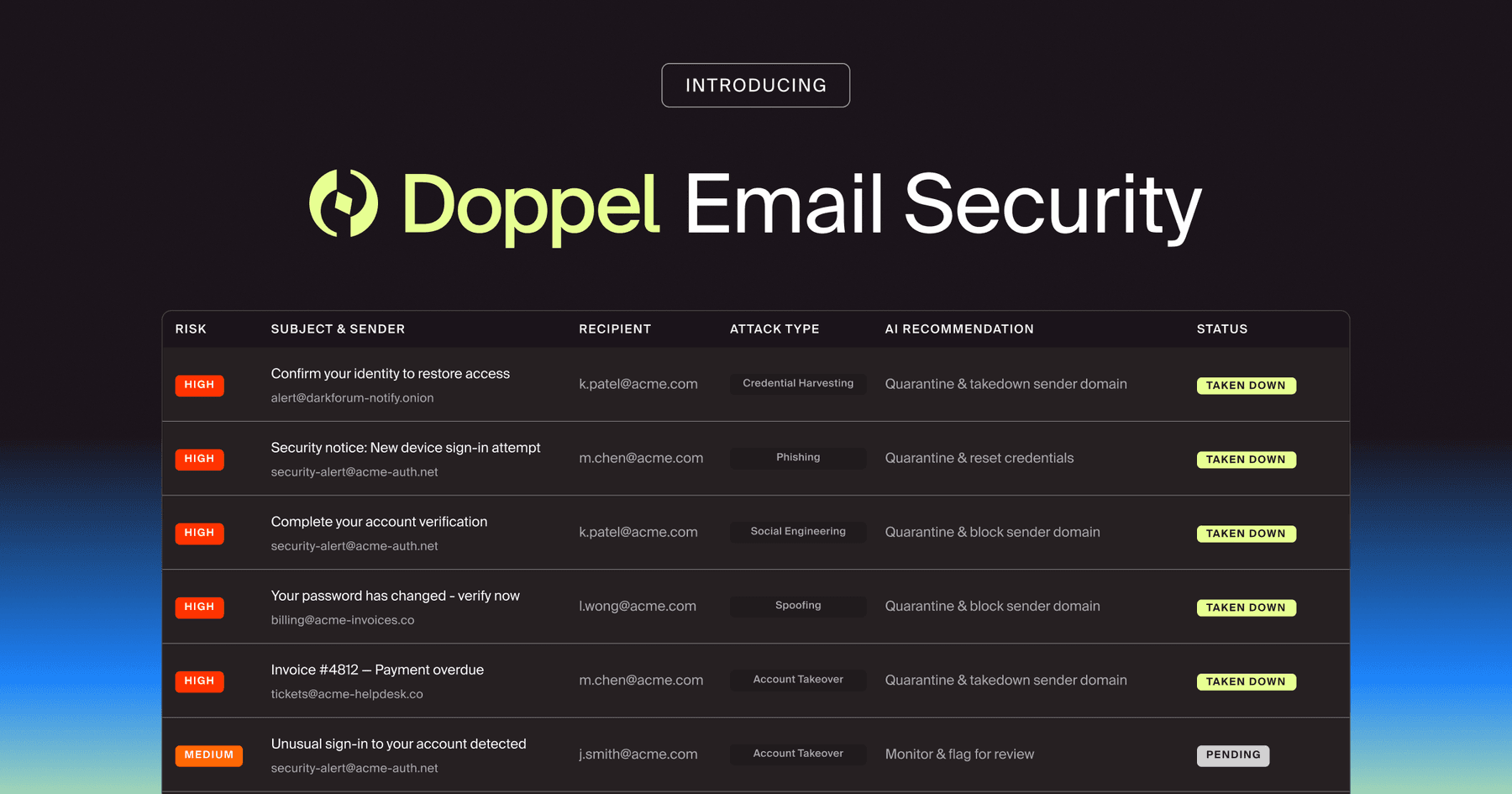
The agentic email security solution that empowers you to fight back against social engineering attacks. Detection isn't enough. Disruption is the difference.
Regulatory shifts mean personal liability for the C-suite. Learn how deepfakes are driving out-of-band security and how Doppel trains the inner circle.
Being a C-suite executive used to come with a predictable set of perks and headaches. You got the stock options, the premium travel, and the corner office. In exchange, you sat through tedious board meetings and took the hit if revenue dipped.
But thanks to regulatory shifts in 2026, the job description has changed.
When a major cyber breach occurs, specifically one where a financial controller is tricked into wiring millions to a fraudulent account, regulators and shareholders aren’t just fining the company. They’re coming after the executives personally.
Generative AI deepfakes have destroyed visual and verbal trust, so handing your executive team a PDF on password safety isn’t a defensible security strategy.
To protect their own necks and their company's assets, executives are being forced to adopt strict, out-of-band verification protocols for high-value approvals. Here’s why the stakes have never been higher, and how top organizations are hardening their inner circles to survive the deepfake era.
Corporate leadership viewed cybersecurity as an IT problem for many years. If a breach happened, the CISO took the fall, the company paid a fine, and the board moved on.
That playbook has been shredded. Regulatory bodies and activist shareholders are changing the rules of engagement, holding the C-suite and the board of directors personally accountable for negligence.
Here’s why corporate leaders are suddenly feeling the pressure:
When millions of dollars leave the building because a VP of finance thought they were talking to the CEO, "I recognized his voice on the phone" doesn't hold up in court. Companies are terrified, and they’re scrambling to implement operational safeguards that actually work in real-time, high-stress environments.
Why are these extreme new regulatory pressures happening right now? Because the fundamental nature of corporate communication has been compromised.
We’ve long relied on a basic rule: Seeing is believing. If you hop on a Zoom call and see your boss' face and hear your boss' voice, you trust that you’re talking to your boss.
That rule doesn’t hold up in 2026.
Threat syndicates don’t need to hack your email server to send a poorly spelled phishing message. They just need a three-second audio clip of your CEO speaking on a public podcast and a few high-resolution headshots from the corporate website. With a few hundred dollars of cloud computing power, they can launch a hyper-realistic deepfake on a live video or audio call.
But here’s the catch: The attackers rarely target the executives directly.
Threat actors know that CEOs and managing partners are difficult to reach, so they target the people who hold the keys to the kingdom: The inner circle.
Attackers use the cloned VIP to pressure this inner circle into bypassing standard controls. The fake CEO calls the VP of finance on a Friday afternoon, perfectly mimicking their tone, demanding an urgent, off-the-books wire transfer to close a "confidential acquisition."
When you can’t trust the face on your screen or the voice on the phone, the speed of business grinds to a halt.
You can’t run a company if your finance team has to question reality every time the CEO calls them.
To bridge this trust deficit and satisfy new regulatory requirements, security teams are implementing strict out-of-band verification protocols.
Out-of-band verification means that if you receive a high-stakes request on Channel A, you need to verify it using Channel B.
If the CEO asks for a multi-million dollar wire transfer on a live Zoom call (Channel A), the VP of finance can’t just say "yes" and execute the trade. They need to initiate a verification challenge through a completely separate, secure channel, like sending a message via an encrypted Signal group chat to a registered corporate device (Channel B).
The most secure organizations are issuing daily rotating trust codes.
When a high-level executive logs in for the day, they receive a secure PIN or a specific duress word through an encrypted application. If the CEO on the video call demands a massive data export but doesn't know today's trust code, the IT admin immediately kills the request.
Here’s a look at how standard executive protocols are shifting to survive the deepfake era:
Approval scenario | Legacy executive protocol | Out-of-band protocol |
High-value wire transfer | Verbal approval over a standard phone or video call | The requester must provide a daily rotating trust code via a secondary, encrypted channel |
Urgent data access | An email from the CEO demanding immediate, bypass-level access | The IT admin pushes an MFA prompt directly to the CEO's registered hardware key |
Off-hours strategy shift | A frantic late-night WhatsApp message from a board member | The receiver initiates a reciprocal, verified challenge-response on a separate corporate platform |
Implementing out-of-band verification sounds great in a boardroom strategy session. The reality of executing it in the wild is messy.
The biggest issue is the velocity problem. You can’t mandate out-of-band protocols, hand an executive assistant a new policy manual, and expect them to flawlessly challenge their boss during a chaotic, high-stress Friday afternoon deal closing.
Unpracticed security slows down business velocity. If an employee feels awkward demanding a trust code from the CEO, they won't do it. They’ll bypass the protocol to avoid friction, and that is exactly the moment the attacker strikes.
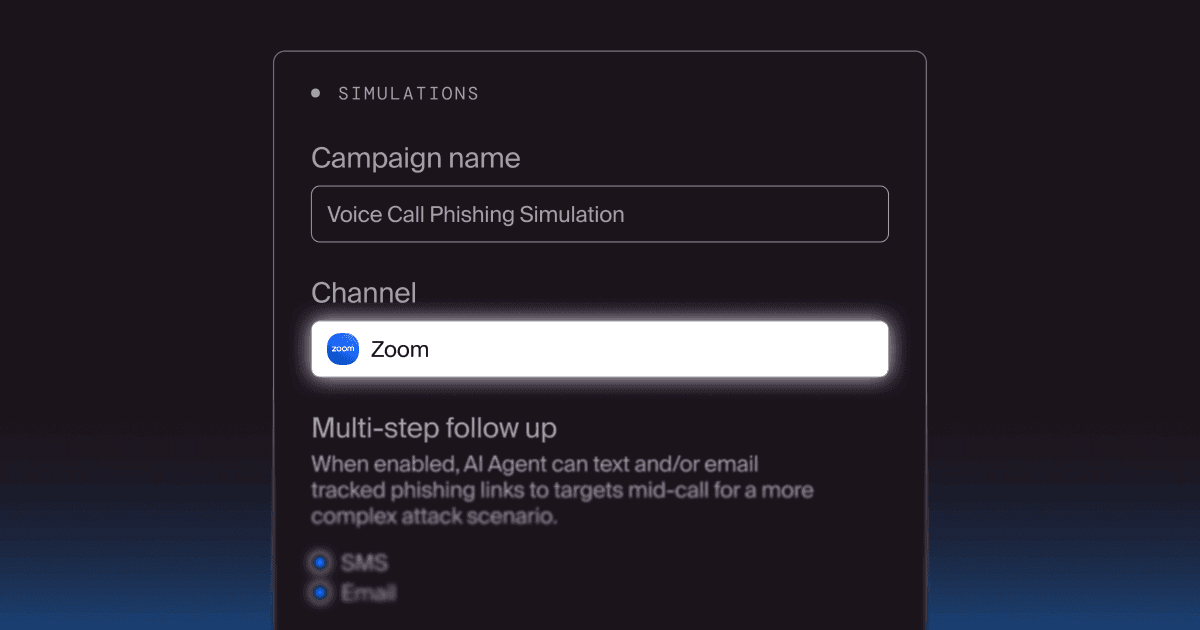
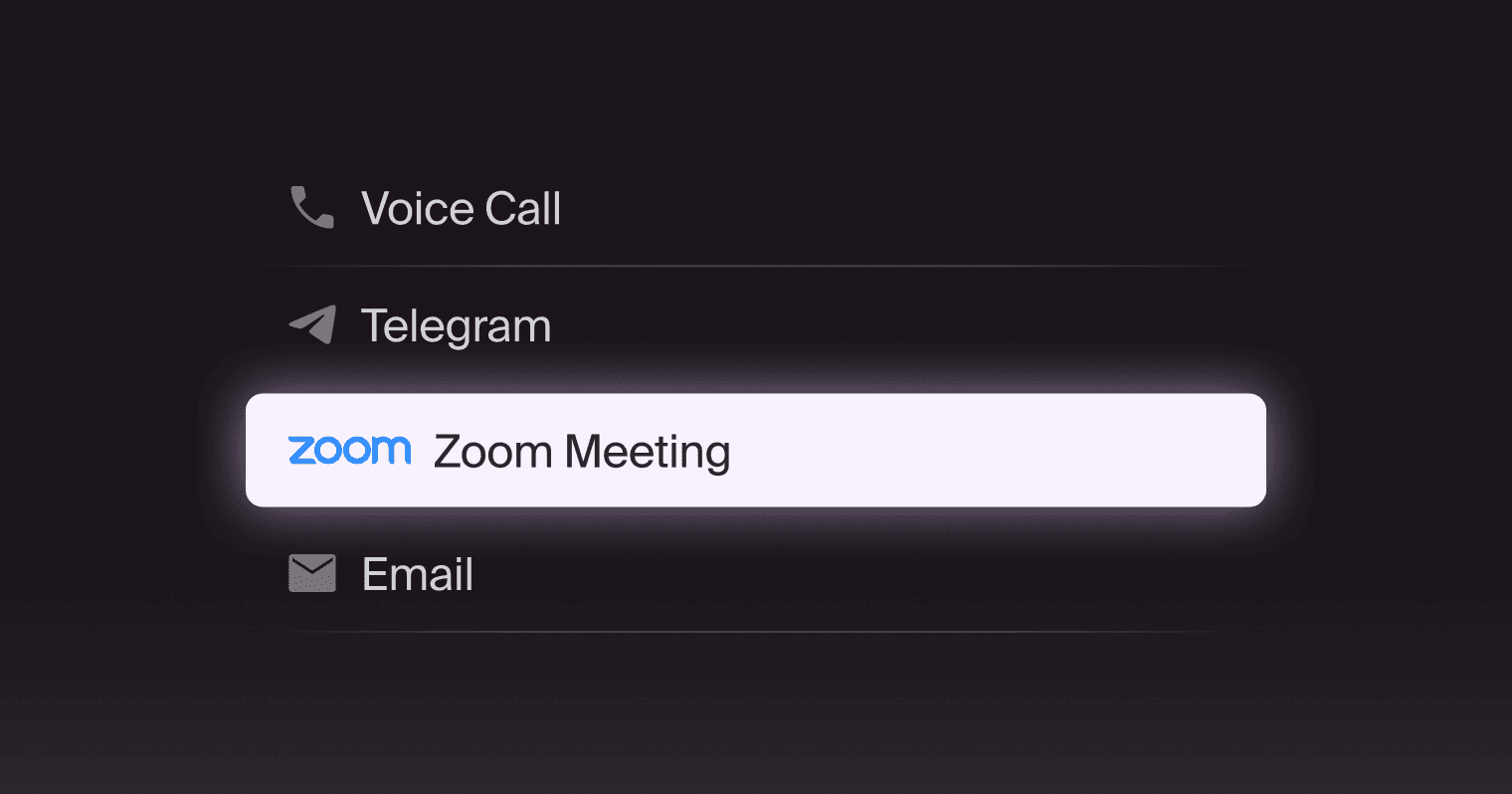
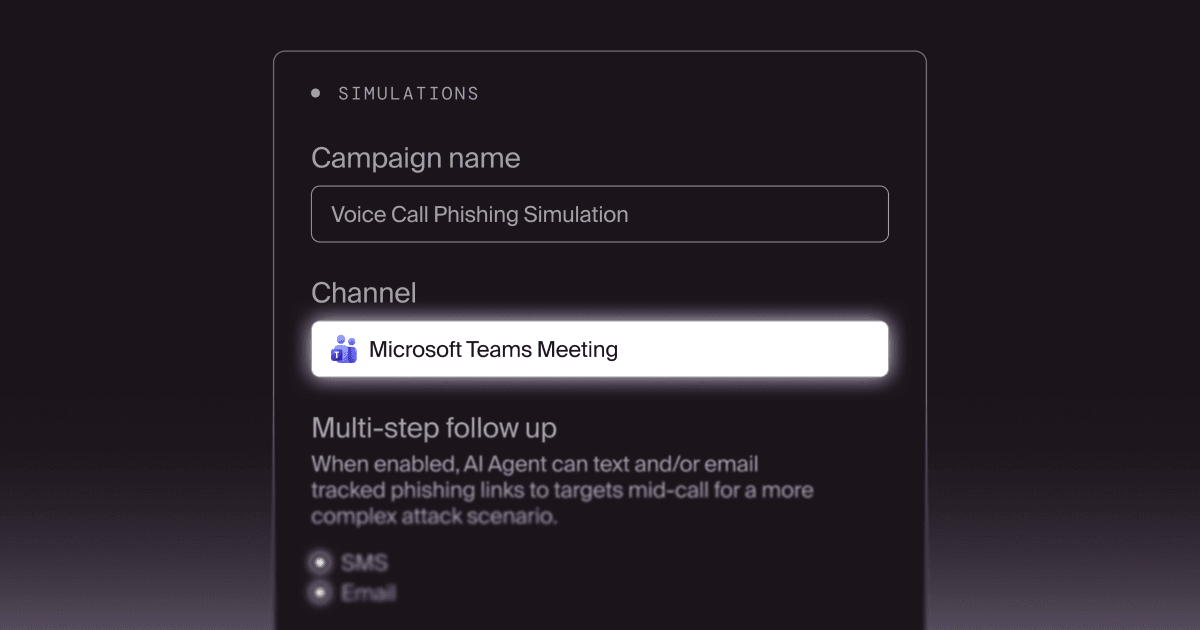
Doppel’s agentic AI-native social engineering defense platform allows security teams to run automated, multi-channel threat simulations tailored specifically for VIPs and their closest staff.
By safely and repeatedly simulating high-stress social engineering attacks, Doppel trains the EA, the finance team, and the executives themselves to instinctively trigger out-of-band verification in real-time. We remove the awkwardness of challenging authority. We bridge the massive gap between a written compliance policy and actual human resilience.
When out-of-band verification becomes a practiced, frictionless reflex, business velocity is maintained, and the organization is insulated from catastrophic fraud.
The stakes for a corporate data breach aren’t confined to brand reputation and quarterly earnings. The stakes are deeply personal.
As regulatory bodies continue to aggressively target executive liability, corporate leaders should recognize that their own names, finances, and careers are on the line. Generative AI has forced an irreversible overhaul of how we verify authority in the enterprise.
You can’t trust your eyes or your ears. You can only trust the protocol.
It is time to stop relying on static compliance manuals and hoping your staff makes the right decision under pressure. By implementing robust out-of-band verification and utilizing Doppel to continuously simulate advanced threats, you can harden your inner circle, maintain business velocity, and protect the C-suite from both cybercriminals and regulators.
Ready to secure your executives against AI-driven threats? Get a demo with Doppel to see how our multi-channel threat simulations train your VIPs and inner circle on real-time out-of-band verification.