The days of a single, poorly written phishing email being the entirety of a cyberattack are over.
We used to live in a world where an attacker would send a malicious link, your email gateway would block it, and that would be the end of the story. The threat actor would pack up their digital bags, accept the loss, and go home.
In 2026, attackers aren’t that polite. They don’t stay in one lane.
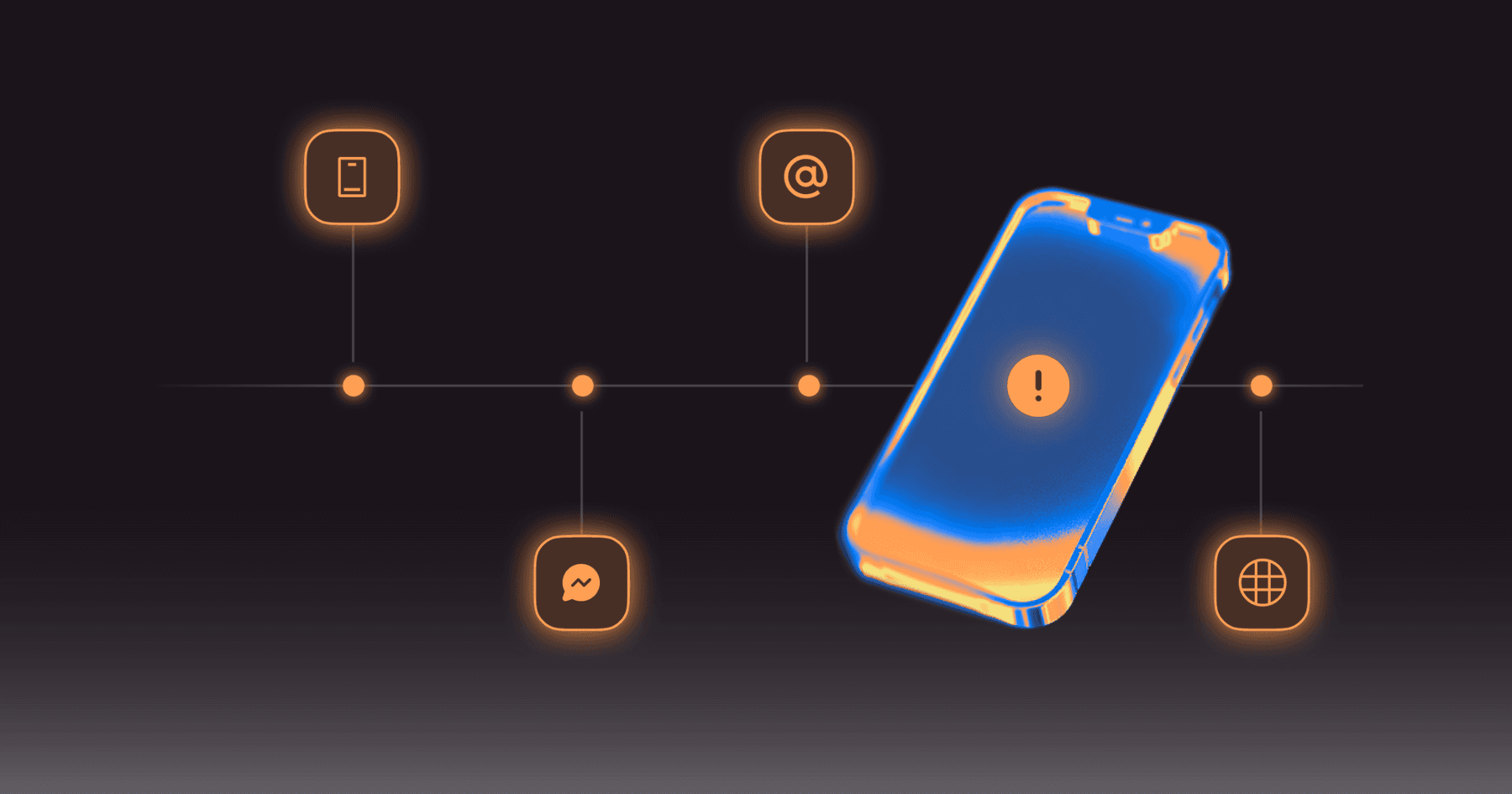
If an initial phishing lure is blocked at the inbox, they don’t give up. They pivot. Within minutes, a sophisticated adversary will shift the exact same campaign to SMS, messaging apps like Zoom or Microsoft Teams, or direct deepfake voice calls.
Attackers treat the perimeter like a water balloon: If you squeeze it in one spot, the pressure shifts somewhere else.
Traditional security tools fail spectacularly against this strategy because they’re entirely channel-siloed. Your email security tool has no idea what is happening on your employees' mobile phones, and your brand protection tool has no visibility into your internal collaboration channels.
To defeat a dynamic, multi-channel adversary, security teams need a defense mechanism that tracks a campaign across disparate platforms, correlates the intelligence, and autonomously dismantles the infrastructure before the attacker can change lanes.
Let’s take a look under the hood and watch exactly how an AI agent tracks, pursues, and neutralizes an escalating, multi-channel campaign in real time.
An Escalating Social Engineering Attack in 2026
To see this play out, let's walk through a highly realistic, technical scenario. A financially motivated threat syndicate is targeting your enterprise, specifically focusing on your high-value executive leadership team.
The attack doesn’t unfold in a vacuum. The social engineering scales and morphs as it encounters resistance:
- Initial Phish: The attacker registers a typosquatted domain (lT-support-portal.com) and launches a highly targeted credential-harvesting email disguised as an urgent password reset notification from corporate IT.
- Pivot to SMS: Your secure email gateway detects the suspicious domain and blocks the email. Realizing the email bounced, the attacker immediately calls an automated script that pulls the target's mobile number from a public data broker. Within 90 seconds, the target receives an urgent SMS text message containing a shortened link routing to the exact same lookalike domain.
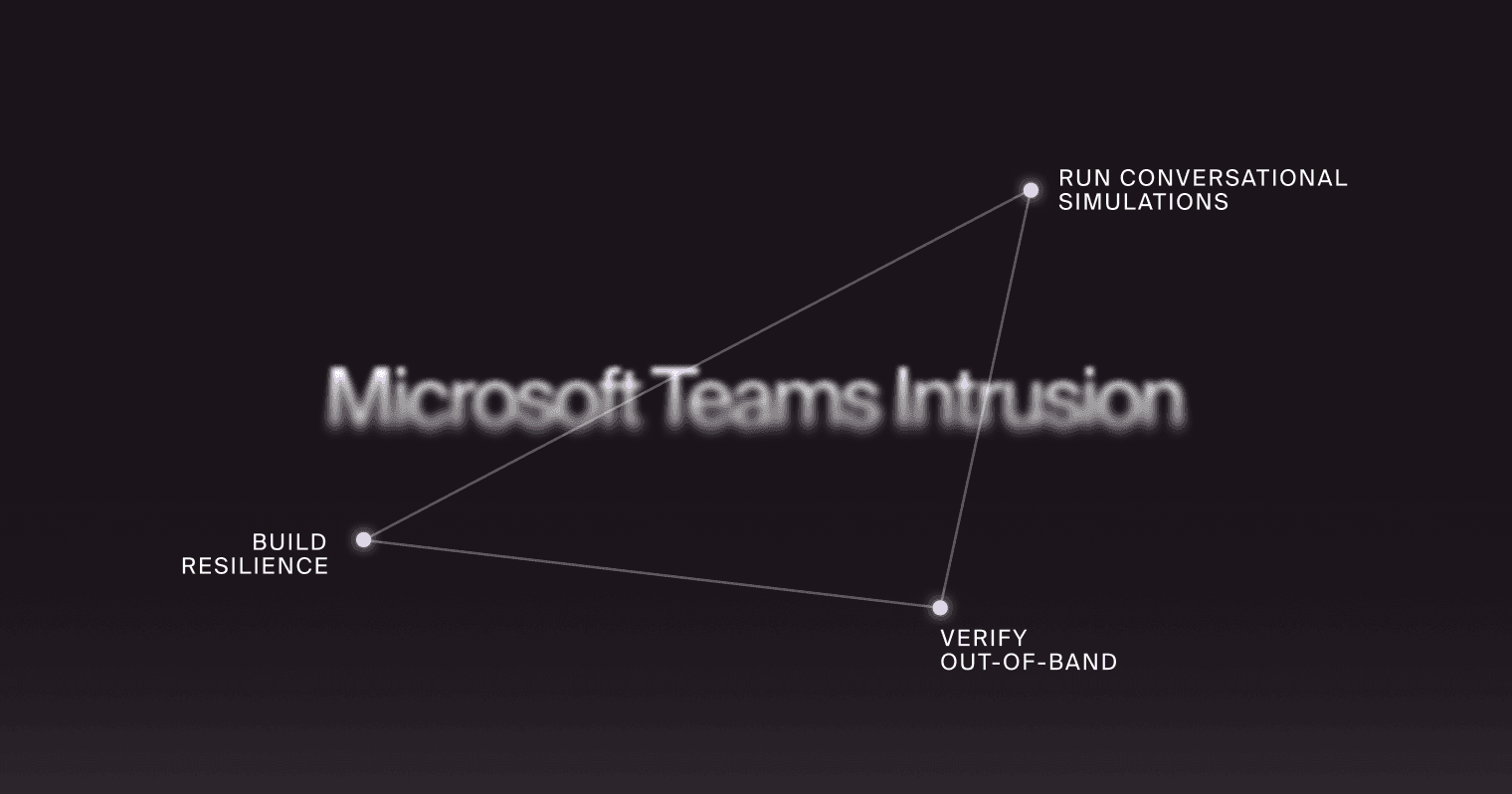
- Collaboration Infiltration: The employee, busy in meetings, ignores the text. The attacker pivots again. Using previously compromised third-party vendor credentials, the adversary injects themselves into an active project thread on Microsoft Teams, pinging the target directly.
- Voice-Cloning Vishing: The attacker initiates a direct voice call to the target's desk phone. Using a deepfake voice clone generated from public earnings calls, the attacker impersonates a senior executive and demands that the employee approve the multi-factor authentication (MFA) (opens in new tab) prompt they are about to receive.
This is a coordinated campaign. If your security stack relies on a human analyst to manually connect the dots between an email alert, a personal text message, a Teams ping, and a phone call, the attacker wins every time.
Agentic Pursuit: Step-by-Step Social Engineering Defense
An AI-native security agent doesn’t wait for a human to open a ticket, nor does it look at alerts in isolation. It treats the entire attack lifecycle as a fluid, interconnected graph.
Here’s how an autonomous agent handles this multi-channel onslaught without human intervention.
The moment the initial phishing email attempts to enter the network, the AI agent intercepts it. It analyzes the behavioral intent of the message, and the agent detects a subtle lookalike routing header — the sender's domain uses a character substitution that mimics official corporate infrastructure.
The agent immediately flags the message, neutralizes it, and extracts the core indicators of compromise (IOCs) (opens in new tab).
Step 2: Querying the Threat Graph
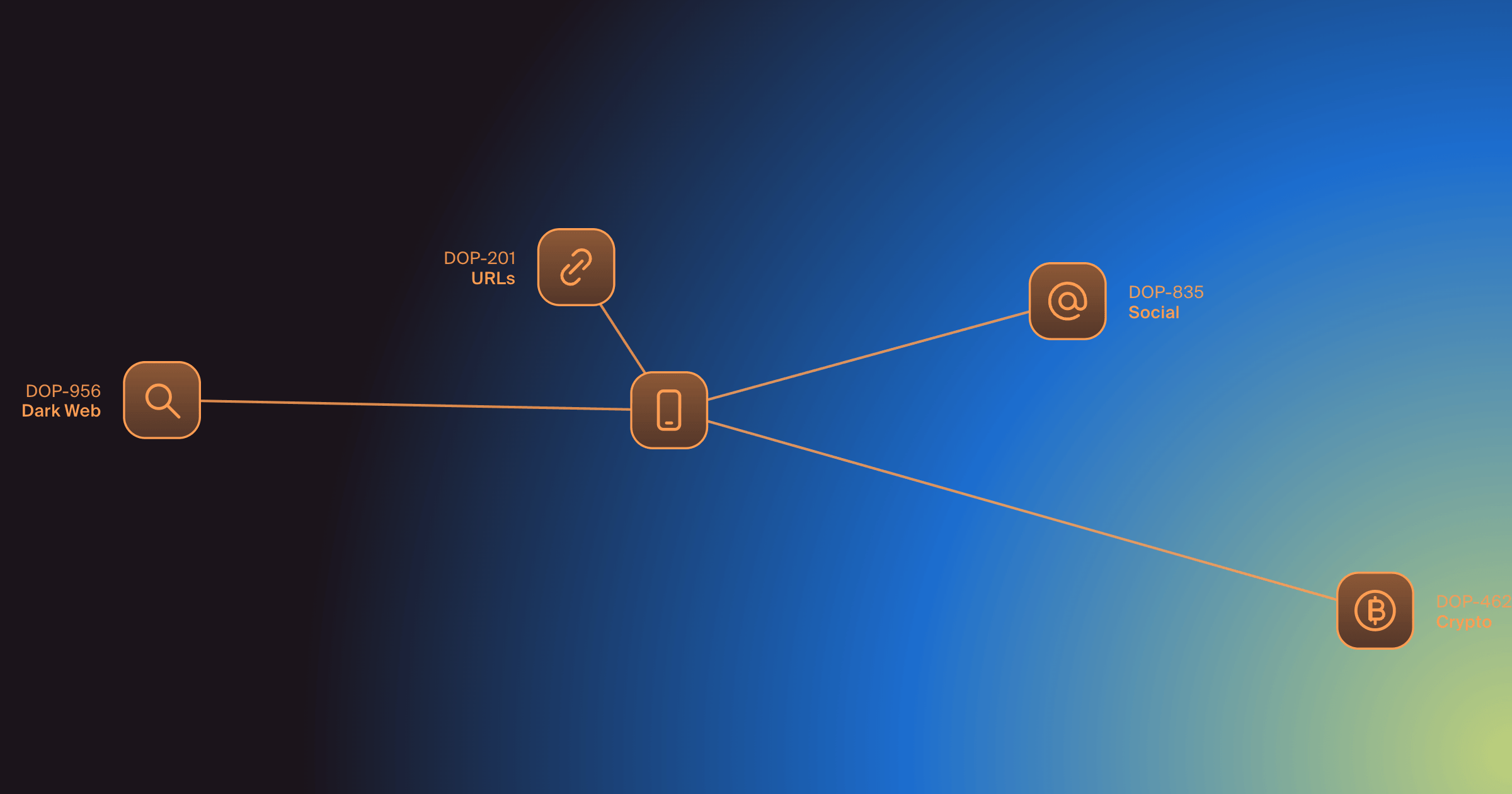
Instead of closing the ticket and moving on, the AI agent goes on the offensive. It takes the newly discovered typosquatted domain and queries its global threat graph.
The agent is looking for a pattern. It asks: Where else does this infrastructure live? What other assets are tied to the registrant account or the backend hosting pipeline?
Step 3: Uncovering the LinkedIn Ad Network
Through graph correlation, the AI agent uncovers something a human analyst would likely miss for days: The attacker isn't just using this lookalike domain for direct messaging, and the threat graph reveals that the same infrastructure is tied to a network of fraudulent, sponsored advertisements currently running on LinkedIn.
The attacker is paying to boost fake corporate announcements, attempting to drive your broader employee base to the exact same credential-harvesting trap.
Step 4: Machine-Speed Takedown
The AI agent now understands the campaign's overall state, and it doesn’t pause to write a report or beg a human for approval.
Operating on pre-approved natural-language policies, the agent executes simultaneous strikes. It fires direct, API-driven takedowns to the domain registrar to suspend the lookalike URL, alerts the hosting provider to rip out the backend server, and issues automated takedown demands to the social media ad network to kill the distribution channel.
The attacker's entire setup is burned to the ground in minutes, completely neutralizing their sunk costs.
Siloed Analysts vs. Agentic Pursuit
Look at the massive operational gap between a traditional, human-dependent SOC and an AI-native agentic loop.
Capability | Legacy Manual Triage | Agentic AI Pursuit |
Cross-Channel Visibility | Completely blind to pivots; SecOps handles email alerts, while fraud or brand teams handle separate channels | Unified visibility; correlates threats across email, web domains, SMS, social platforms, and voice channels simultaneously |
Response to Blocked Lures | Defensive and passive; closes the email ticket and waits for the next alert to trigger | Offensive and proactive; actively hunts connected lookalike infrastructure and active ad networks |
Takedown Speed | Sluggish; relies on manual investigations and filling out legal forms, which can take days or weeks | Autonomous; executes infrastructure and registrar-level takedowns via direct API integrations in minutes |
Post-Incident Training | Outdated; assigns a generic compliance video module thirty days later during the standard calendar cycle | Immediate; automatically generates and deploys live vishing simulations based on the active threat within the hour |
Outmaneuvering the Adversary
When an automated threat syndicate can pivot from email to SMS to Teams in under 3 minutes, relying on a human-speed ticketing queue is a recipe for a catastrophic breach.
Your defense needs to pivot faster than they do.
Doppel’s agentic AI-native social engineering defense platform replaces the passive, siloed dashboards of the past with a continuous, reasoning-based agentic SOC.
By unifying external digital risk protection and internal human risk management into a single, automated threat graph, Doppel ensures your defense operates holistically. Our AI agents track campaigns across every digital highway, hunt the root infrastructure, and execute machine-speed takedowns before the attacker can find a blind spot.
Stop playing defense in a single lane. It's time to build a defense that outsmarts, outpaces, and outmaneuvers the adversary at every turn.
Ready to see an agentic SOC in action? Get a demo to see how Doppel’s AI-native agents track multi-channel campaigns and execute automated takedowns at machine speed.