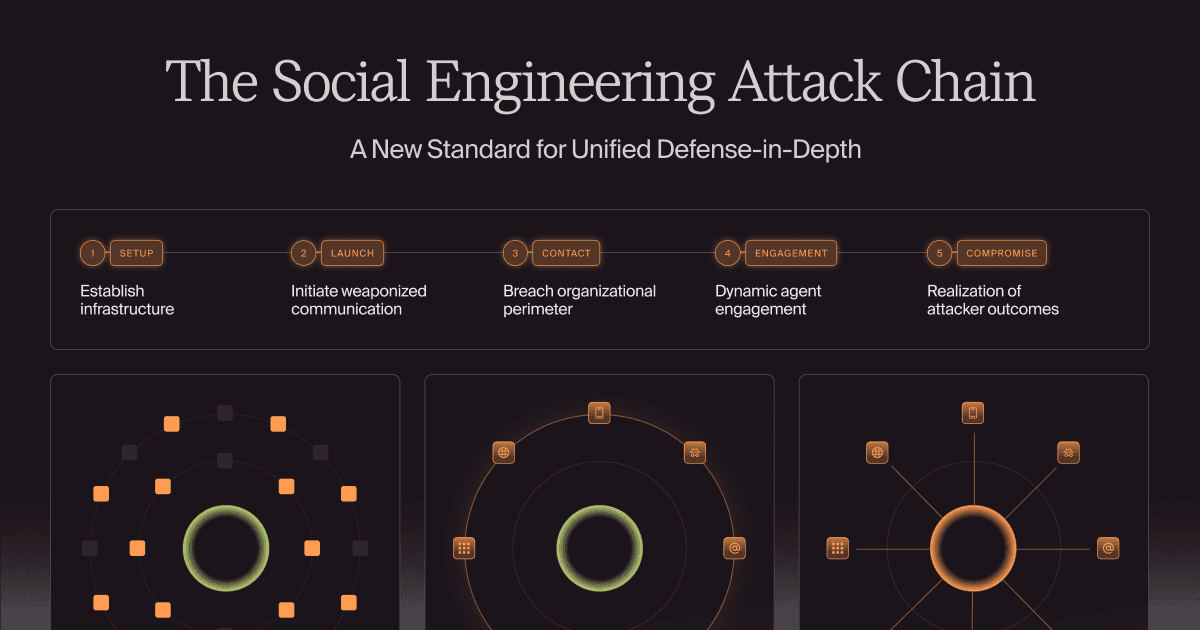
Brand protection has become harder in 2026 because brand impersonation now runs at an industrial scale. Attackers set up lookalike domains, fake social profiles, scam ads, and counterfeit storefronts wearing a company's identity to extract money, credentials, or trust from people who believe they're dealing with the real brand.
In 2024, reported U.S. cybercrime losses reached $16.6 billion (opens in new tab), and phishing and spoofing topped the list of most reported cybercrime types. When a customer falls for a scam that uses your logo and color scheme, the financial loss may be theirs, but the reputational damage lands on you.
This article walks through what brand protection means today, how online brand protection fits within it, and why the work has become more urgent in 2026.
Key Takeaways
- Brand protection combines trademark and copyright enforcement, fraud prevention, cybersecurity measures, counterfeit detection, digital monitoring, takedowns, and employee and consumer education into one coordinated program.
- Online brand protection is the digital subset that defends against social media impersonation, phishing, domain squatting, fake reviews, scam ads, counterfeit app listings, and exposure on the dark web.
- AI has lowered the cost of brand impersonation and campaigns now run across domains, social, ads, messaging apps, and the dark web in parallel, so single-channel defenses miss most of the activity.
- A robust brand protection program must combine legal groundwork, full-channel monitoring, automated takedowns, and training.
What Is Brand Protection?
Brand protection is the set of strategies, tools, and enforcement actions a business uses to defend its identity and intellectual property against misuse. It spans legal action, fraud prevention, anti-counterfeiting operations, and cybersecurity measures that stop impersonation wherever it appears.
A complete brand protection program usually rests on the following pillars:
- Trademark and copyright enforcement. Registering and defending trademarks, copyrights, patents, and trade dress in every jurisdiction where the brand operates or plans to expand.
- Fraud prevention. Stopping scams that use the brand's name, logo, or executives to deceive customers, employees, partners, or investors.
- Cybersecurity measures. Protecting the domains, accounts, and digital assets that attackers often try to clone or compromise.
- Counterfeit detection. Identifying and removing unauthorized replicas of physical or digital products across marketplaces, storefronts, and resale channels.
- Digital monitoring. Continuously identifying spoofed domains, fake social profiles, counterfeit app listings, scam ads, and unauthorized use of brand assets.
- Takedown and enforcement. Removing fraudulent content through platform APIs, registrar relationships, legal mechanisms like the UDRP (Uniform Domain-Name Dispute-Resolution Policy), and coordinated law enforcement action.
- Employee and consumer education. Training internal teams and informing customers about how to identify legitimate brand communications versus impersonation attempts.
If customers can find your brand somewhere, bad actors can imitate it there, too. A program that covers only one or two of these pillars leaves the rest exposed.
What Is Online Brand Protection?
Online brand protection is a subset of brand protection focused specifically on defending against digital threats. It uses the same legal foundation as the broader discipline. It operates across the channels where attackers actually run their campaigns, including search results, domains, social platforms, paid ads, app stores, messaging apps, e-commerce marketplaces, dark web forums, and telco channels.
The most common online brand threats include:
- Social media impersonation. Fake accounts mimicking the brand, its executives, or its support team.
- Phishing scams. Emails, SMS messages, voice calls, and chat messages that harvest credentials or payment data.
- Domain squatting. Lookalike or typo-variant domains that attackers register to deceive customers.
- Fake reviews. Coordinated review fraud that distorts buyer trust, often run by bot networks at scale.
- Scam ads andfake app listings. Paid placements and store listings that imitate the brand to drive traffic to fraudulent destinations.
- Dark web exposure. Phishing kits, stolen credentials, and leaked assets that fuel the next wave of attacks.
Digital risk protection (DRP) is the technology category that operationalizes online brand protection. DRP platforms detect impersonation across these surfaces and drive takedowns in quick succession.
Why Brand Protection Is Important
Brand protection defends the trust that drives revenue, the customer relationships behind that revenue, and the long-term equity of the brand itself. Every part of the program ladders up to one of those outcomes, and the urgency around each has grown as attacks themselves have evolved.
Brand Impersonation Attacks Have Evolved
Brand impersonation no longer looks like the clumsy phishing email of a few years ago. AI has lowered the cost of impersonation, so attackers can generate a convincing phishing page, clone an executive's voice, or spin up dozens of fake social profiles without specialized skill. Attacks have also gone multi-channel. Financial Services and Fintech attackers increasingly combine ads, messaging apps, phishing sites, and private channels into coordinated funnels that move victims from initial exposure to compromise, according to Doppel telemetry. A single campaign may pair a fake domain, a spoofed social profile, a paid ad, and a messaging-based scam funnel over a short period, so watching one surface in isolation means missing most of the campaign. That's the threat environment any modern brand protection program has to match.
Reputational Damage Lands on the Real Brand
Every successful impersonation leaves a residue on the real brand. Customers don't always distinguish between a legitimate company and an attacker who has borrowed its name. Once that confusion sets in, it shows up in support volume, social sentiment, and press coverage. Reputation damage compounds because it:
- Erodes the credibility of legitimate brand communications.
- Increases customer skepticism toward future marketing and product launches.
- Attracts regulatory scrutiny in industries subject to consumer protection rules.
Each of these effects is easier to prevent than to reverse, which is why reputation defense usually sits at the center of a mature brand protection program.
Revenue and Customer Trust Are on the Line
Counterfeit listings, scam ads, and fraudulent storefronts divert revenue from the real brand to attackers. Customers who lose money to a brand-themed scam frequently churn, even when the brand itself did nothing wrong. The revenue impact typically shows up as:
- Lost sales diverted to counterfeit or unauthorized sellers.
- Higher support and refund costs tied to fraud incidents.
- Reduced conversion as customers second-guess legitimate touchpoints.
Tracking these losses alongside enforcement outcomes is how brand protection teams show that the program is paying for itself.
Successful Attacks Erode Long-Term Brand Value
Brands build equity over years and lose it in days. Sustained impersonation campaigns gradually shift how customers perceive a brand's reliability and safety. Protecting that equity requires ongoing investment in:
- Trademark portfolios that cover current and planned markets.
- Continuous monitoring of every channel where the brand can appear.
- Enforcement workflows fast enough to remove fraud before it scales.
Treated together, these investments compound. The more consistently a brand removes impersonation, the less attractive it becomes as a target.
Seven Threats Every Brand Faces Online
Enterprise brands typically deal with some combination of the following variants of brand attacks, abuse, and misuse.
1. Domain Spoofing and Typosquatting
Attackers register domains that differ from a legitimate brand by a single character, a swapped letter, or an alternative top-level domain. These lookalike domains host phishing pages, credential-harvesting forms, or counterfeit storefronts. UDRP filings hit record highs (opens in new tab) as cybersquatting pressure continued to rise.
Fake accounts mimicking a brand's official profiles appear across Facebook, Instagram, LinkedIn, TikTok, X, and Telegram. Some impersonate customer support channels to collect personal data. Others run fraudulent promotions or investment schemes. On fast-moving platforms, these accounts spread quickly, and manual reporting alone struggles to contain them.
3. Phishing and Credential Theft
Phishing campaigns use a brand's logo, color scheme, and messaging style to trick recipients into clicking malicious links or entering credentials on fake login pages. These campaigns now run across email, SMS, voice calls, and messaging apps simultaneously, and attackers adjust their lures in real time based on which channel drives the most engagement.
4. Counterfeit Products and Marketplace Fraud
Unauthorized replicas of a company's products appear on major e-commerce marketplaces and independent storefronts. Counterfeiting affects every sector, from fashion and electronics to pharmaceuticals and automotive parts.
In sectors such as healthcare and automotive, substandard counterfeits can also pose direct safety risks to consumers. Marketplace fraud also includes coordinated fake-review activity. Platform verification flows usually handle individual fake reviews, but bot-driven review farms that prop up counterfeit listings or attack legitimate listings are a brand-protection problem worth disrupting at the source.
5. Executive Impersonation and Deepfakes
Attackers can clone executives’ identities using AI-generated text, voice, and video. A convincing deepfake of a CFO can authorize a wire transfer. A fake LinkedIn profile of a CEO can solicit sensitive information from employees, partners, or investors.
Executive impersonation and deepfakes have emerged as a brand protection challenge because AI-generated voice, video, and text make fraudulent personas increasingly difficult to tell apart from the real thing. Voice cloning has also become a practical tool for financial fraud.
6. Dark Web Brand Exposure
Criminal marketplaces sell phishing kits that target specific brands. Stolen customer credentials tied to a brand's platform circulate on dark web forums. Leaked internal documents or code appear on paste sites and repositories. Monitoring these surfaces gives security teams earlier visibility into attacker infrastructure before campaigns reach customer-facing channels.
7. Gray Market and Unauthorized Resellers
Genuine products that move through unauthorized distribution channels undermine pricing structures, void warranties, and erode trust with authorized partners. Gray market goods are legitimate products, but they reach consumers through paths the brand never sanctioned, creating customer confusion and support burdens.
How to Build a Brand Protection Strategy
A brand protection program that matches how attacks happen now combines legal groundwork, continuous monitoring, automated enforcement, and internal training.
Register and Enforce Intellectual Property
Trademark registration is the legal foundation for enforcement action. File in every jurisdiction where you manufacture, sell, or plan to expand. Record trademarks with customs authorities so they can seize counterfeit goods at the border. Enroll in e-commerce platform IP programs such as Amazon Brand Registry, eBay VeRO, and Alibaba's IP Protection Platform, which provide rights holders with direct tools for reporting and removing infringing listings.
Monitor Every Channel Attackers Use
Coverage should match the places attackers actually use: domains, social media, paid ads, app stores, messaging apps, dark web forums, telco channels, and e-commerce marketplaces. Watching only one or two channels creates blind spots that attackers can use.
Platforms like Doppel help teams get that wider view. Doppel is the AI-native social engineering defense platform that unifies Digital Risk Protection and Human Risk Management, detects impersonation campaigns, maps attacker infrastructure through the Doppel Threat Graph, and connects spoofed domains, fake social profiles, scam ads, and dark web signals into a single campaign-level view.
Automate Detection and Takedowns
Manual takedown workflows create delays. By the time an analyst submits a removal request to one registrar, attackers often redeploy on other infrastructure. Automated enforcement, using direct API connections to registrars, social platforms, ad networks, and telco providers, cuts the time between detection and removal.
In practice, that makes impersonation campaigns harder and less profitable to run against your brand.
Train Employees to Recognize Brand Abuse
Employees often encounter impersonation attempts first, whether through phishing emails, spoofed Slack messages, or fraudulent voice calls. Training programs that reflect real attacker tactics across multiple channels prepare teams to identify and report threats before they escalate. The most effective programs tie training content to live threats targeting the organization.
Making Brand Protection Hold Up in 2026
The brands that maintain customer trust over the next few years will be those that treat brand protection as an ongoing infrastructure.
Attacker campaigns now run on AI-assisted tooling, span every channel a customer touches, and rebuild themselves within hours of a takedown. Defenses have to operate on the same footing, with continuous monitoring, automated enforcement, and a clear feedback loop from real attacks into employee and customer education.
The practical path forward is to map where your brand currently shows up online, identify the channels you're not monitoring today, and close those gaps before attackers find them. From there, ROI comes from tightening the loop between detection, takedown, and the next campaign that attackers attempt.
If you want to see what that looks like in practice, you can explore Doppel's brand protection capabilities or request a demo to see brand protection in action against live impersonation campaigns.
Frequently Asked Questions About Brand Protection
What Is Brand Protection?
Brand protection covers the legal, operational, and technical work a company does to keep bad actors from misusing its name, logo, products, or executives. In practice, that means trademark and copyright enforcement, anti-counterfeiting, fraud prevention, and cybersecurity controls working in parallel, so impersonation gets caught and removed before it reaches customers.
Why Is Brand Protection Important?
Because customers can't always tell a real brand from a convincing fake, every successful impersonation pulls revenue, trust, and goodwill away from the legitimate company. A working program limits that bleed: fewer scams reach customers, fewer counterfeit listings divert sales, and the brand's reputation stays intact.
How Do You Protect Your Brand?
Start with the legal foundation, registering trademarks, copyrights, and design rights wherever you operate or plan to. Layer on continuous monitoring across the channels attackers actually use (domains, social, paid ads, app stores, marketplaces, messaging apps, and the dark web), connect that monitoring to automated takedowns, and keep employees and customers trained on what real brand communications look like.
What Is Total Brand Protection?
Total brand protection means running every piece of the program (IP enforcement, anti-counterfeiting, digital risk protection, executive impersonation defense, and dark web monitoring) as one connected system rather than as separate workstreams.
What Role Does AI Play in Brand Protection Today?
AI sits on both sides of the brand protection fight. Attackers use AI to mass-produce phishing pages, clone executive voices, and launch convincing impersonations at almost no cost. Defenders use AI to sift millions of signals across channels, link isolated indicators into a single campaign view, and trigger takedowns faster than any manual workflow could.