
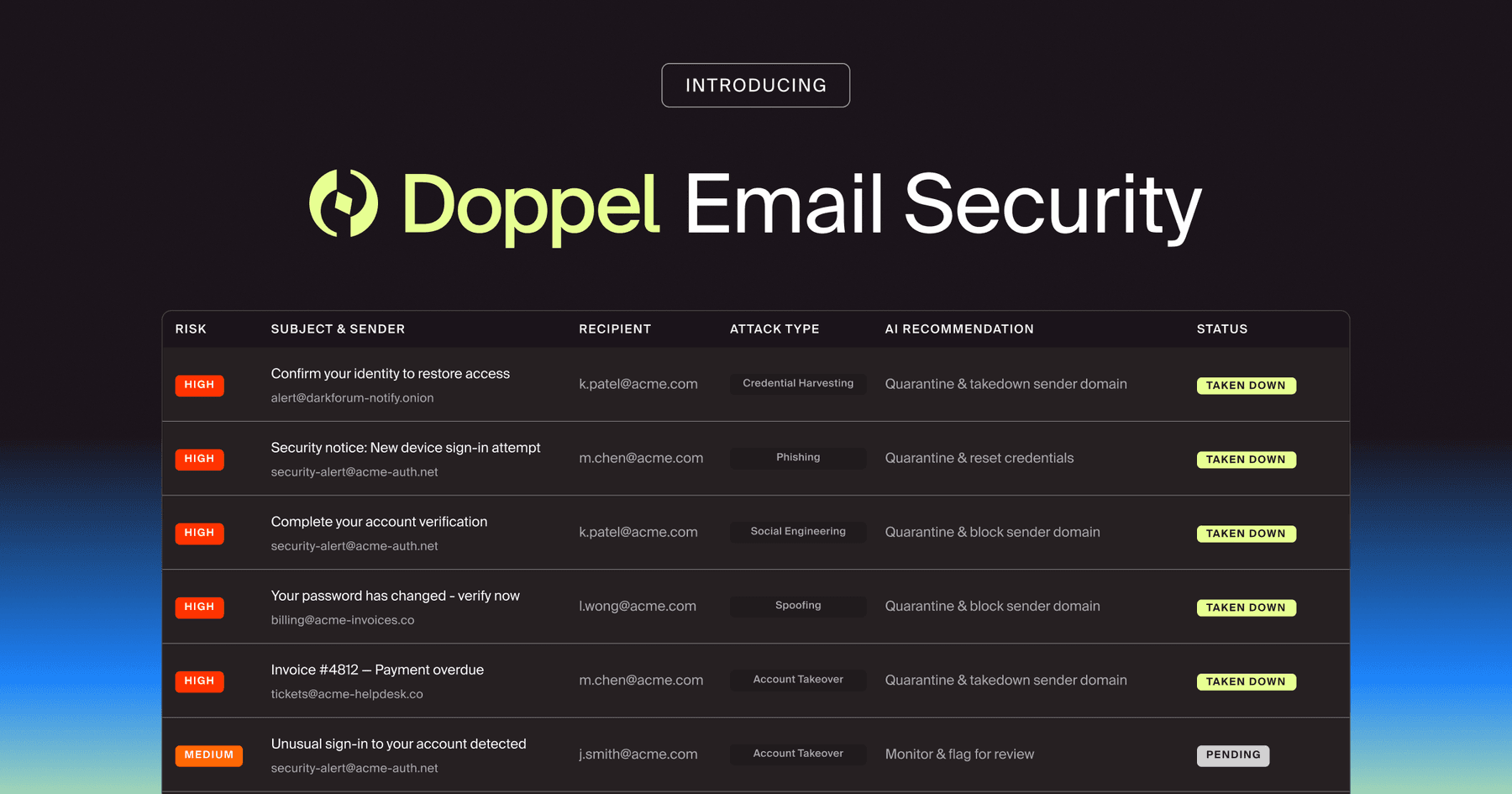
Doppel Email Security is now generally available
The agentic email security solution that empowers you to fight back against social engineering attacks. Detection isn't enough. Disruption is the difference.
Whaling attacks target executives to steal millions. Learn how they work, real examples like deepfake CEO scams, and how to defend your leadership.

by Jordan Evers
A financial controller opens an email from the CEO's address about an acquisition that the board has kept quiet about. The message requests an urgent wire to a law firm before markets open Monday, and the thread reads like the CEO wrote it, because the attacker spent weeks studying earnings calls, press releases, and LinkedIn posts to learn the CEO's voice.
That is a whaling attack: social engineering that targets or impersonates senior executives, built on deep reconnaissance into one person, and often priced in millions per success. Whaling targets the people whose authority moves the most money. Business email compromise scams caused $2.77 billion (opens in new tab) in reported losses in 2024, and whaling sits at the highest-stakes end of that threat category.
This article defines whaling, separates it from phishing and spear phishing, walks through the plays behind real losses, and lays out the prevention program that stops the next attempt.
Whaling is a spear phishing attack (opens in new tab) aimed at senior executives and the small set of people whose access and authority carry outsized value. The name tracks the metaphor: if phishing casts a wide net, whaling goes after the biggest catch.
CEOs, CFOs, general counsel, board members, and division presidents all carry the authority whaling converts into money, data, or access. Organizational norms condition employees to trust requests that appear to come from these leaders, especially when those requests involve payments, records, or system access.
Whaling runs in two directions. In the first, the executive is the direct target. A tailored lure tricks them into entering credentials, clicking a malicious link, or disclosing confidential data. In the second, the attacker impersonates the executive and issues instructions to the people who act on their authority, such as a finance controller, an HR director, or an executive assistant.
Both directions exploit the same asset: the executive's identity and the organizational weight it carries.
Phishing, spear phishing, and whaling sit on a single spectrum of targeting precision. Where each lands on that spectrum determines which defensive layer carries the load.
Attackers send generic messages to a broad, undifferentiated audience and profit from volume rather than precision. Email filters, URL scanning, and attachment sandboxing catch most of them, which is exactly what those controls were built to do.
The attacker narrows focus to a named individual or small group, using open-source intelligence to personalize the message so it looks like a routine work request. The research is often shallow, a job title or a vendor name pulled from LinkedIn, but it is enough to defeat the skepticism that generic phishing triggers.
Whaling occupies the far end of the spectrum: the attacker invests extensively in one executive's communication style, current business context, and authority structure. They then write the message in the executive's voice and request a legitimate-sounding action in plain text.
Signature-based defenses have little to score, so process controls such as out-of-band verification and dual authorization carry the primary defensive load.
Documented whaling incidents repeat five plays: the CEO wire-transfer order, the confidential acquisition, the W-2 payroll request, the voice-clone approval call, and the executive credential harvest. Seeing each play in concrete form shows where a security team can interrupt the loss.
An email in the chief executive's voice instructs finance to wire money to a fabricated vendor, law firm, or deal counterparty against a deadline. The address is spoofed or the account is compromised, but the authority reads as real, and the deadline discourages the one phone call that would unravel it.
A secrecy pretext walks one finance leader through staged transfers while forbidding them to verify with anyone. One such pretext, which cited SEC regulations to enforce silence, cost a commodities firm $17.2 million (opens in new tab) across a series of wires to an overseas account.
An "executive" asks HR or payroll for employee tax records, and one reply turns into workforce-scale identity theft. The request mimics routine compliance traffic and asks for exactly what HR sends legitimately every year, which is why it succeeds without a single malicious link.
An AI-cloned executive voice, sometimes backed by deepfake video, pushes a payment or access approval past a hesitant employee. In one foiled 2024 attempt (opens in new tab), scammers cloned the voice of Ferrari's CEO over WhatsApp, complete with his southern Italian accent, and pressed an executive about a confidential acquisition.
The executive asked what book the CEO had recommended days earlier, and the caller hung up.
The attacker targets the executive directly with a tailored lure. In the VENOM campaign (opens in new tab), attackers selected senior executives by name and sent spoofed Microsoft SharePoint notifications carrying QR code phishing rendered in Unicode characters, a technique that bypasses email scanning and shifts the attack to mobile devices, where corporate security controls have less coverage.
Four structural advantages keep the odds with the attacker: deference to executive authority, the executive's public footprint, the low-volume lure, and the collapsing cost of AI-generated pretexts. The same advantages run through how whaling phishing unfolds stage by stage, from reconnaissance to execution.
Executive instructions carry override authority in most organizations, and employees act on them without pausing to verify. In one support-desk impersonation case (opens in new tab), an attacker who failed at phishing called IT support, impersonated the executive, cited travel-related access issues, and secured an MFA reset.
Earnings calls, LinkedIn profiles, press releases, conference recordings, and corporate websites give attackers the raw material for convincing impersonation without ever touching the corporate network. A short clip of conference audio can be enough to build a voice clone.
Whaling messages frequently carry nothing but a plain-text request from a spoofed or compromised executive address. When a campaign targets a single recipient, volume-based anomaly detection has almost no statistical signal to work with.
Generative AI has removed the skill, time, and language barriers that once constrained executive-grade social engineering. Convincing pretexts, detailed target research, and fluent messages in any language used to require a skilled team. LLM-based tooling now folds that work into a single operator's afternoon, and the same economics apply to cloning a voice or staging a fake video call.
Prevention works as a coordinated program with four parts: out-of-band verification, a smaller executive digital footprint, rehearsal against live lures, and multi-channel detection that dismantles impersonation infrastructure. Each control covers a gap the other three leave open.
Finance teams must confirm any financial or sensitive data request through a separate channel, using a verified number from the corporate directory. Dual-authorization thresholds should require two people to approve any transaction above a defined amount.
Codify a no-urgency rule that treats any request that cannot wait for standard verification as automatically suspicious, and write into policy that staff can hold a transaction until verification completes, no matter whose name is on the request.
Every public data point about an executive is raw material for targeted attacks, and removing it costs less than defending against the pretext built from it. Run a recurring OSINT audit across LinkedIn profiles, conference speaker bios, corporate leadership pages, personal social media settings, and data broker entries, the same surfaces that make up the executive's digital footprint.
Federal guidance (opens in new tab) already treats footprint reduction as a baseline defensive practice for high-value targets.
Design executive simulations around role-specific risks and track them with metrics that measure behavior change. Deepfake scenarios, voice cloning, and other forms of impersonation belong in the simulation library. Financial regulators (opens in new tab) now expect institutions to train against AI-enabled social engineering.
Frame each exercise as a rehearsal and debrief immediately, so the lesson lands while the call is still fresh.
Impersonation infrastructure goes up before the lure goes out, and finding it early is the one prevention control that works without requiring a single employee to make the right call.
Attackers now deliver whaling lures through voice phishing, SMS phishing, LinkedIn outreach, and fabricated video conferences, so detection has to cover the spoofed domains, fake social profiles, and cloned voices tied to named executives across all of those channels, and dismantling that infrastructure removes the lure at the source.
Most organizations already pay for DMARC; its reports flag domain-spoofing attempts, and few teams ever operationalize that signal.
Doppel is the AI-native Social Engineering Defense platform unifying Digital Risk Protection (DRP) and Human Risk Management (HRM). Doppel Executive Protection runs the parts of that prevention program that a platform can own: shrinking the executive footprint, detecting and dismantling impersonation across every channel, and converting live threats into rehearsal.
Doppel removes exposed executive PII across hundreds of data broker sites, including family members, and catches dark web credential exposure tied to named executives before attackers weaponize it.
Family coverage matters because attacker reconnaissance routinely starts with relatives, where personal data is easier to find and feeds the pretext that ultimately reaches the executive.
Across domains, social media, email, and telco channels, Doppel's agentic AI detects spoofed accounts, deepfake content, and impersonation infrastructure tied to named leaders, then executes takedowns without waiting for analyst approval.
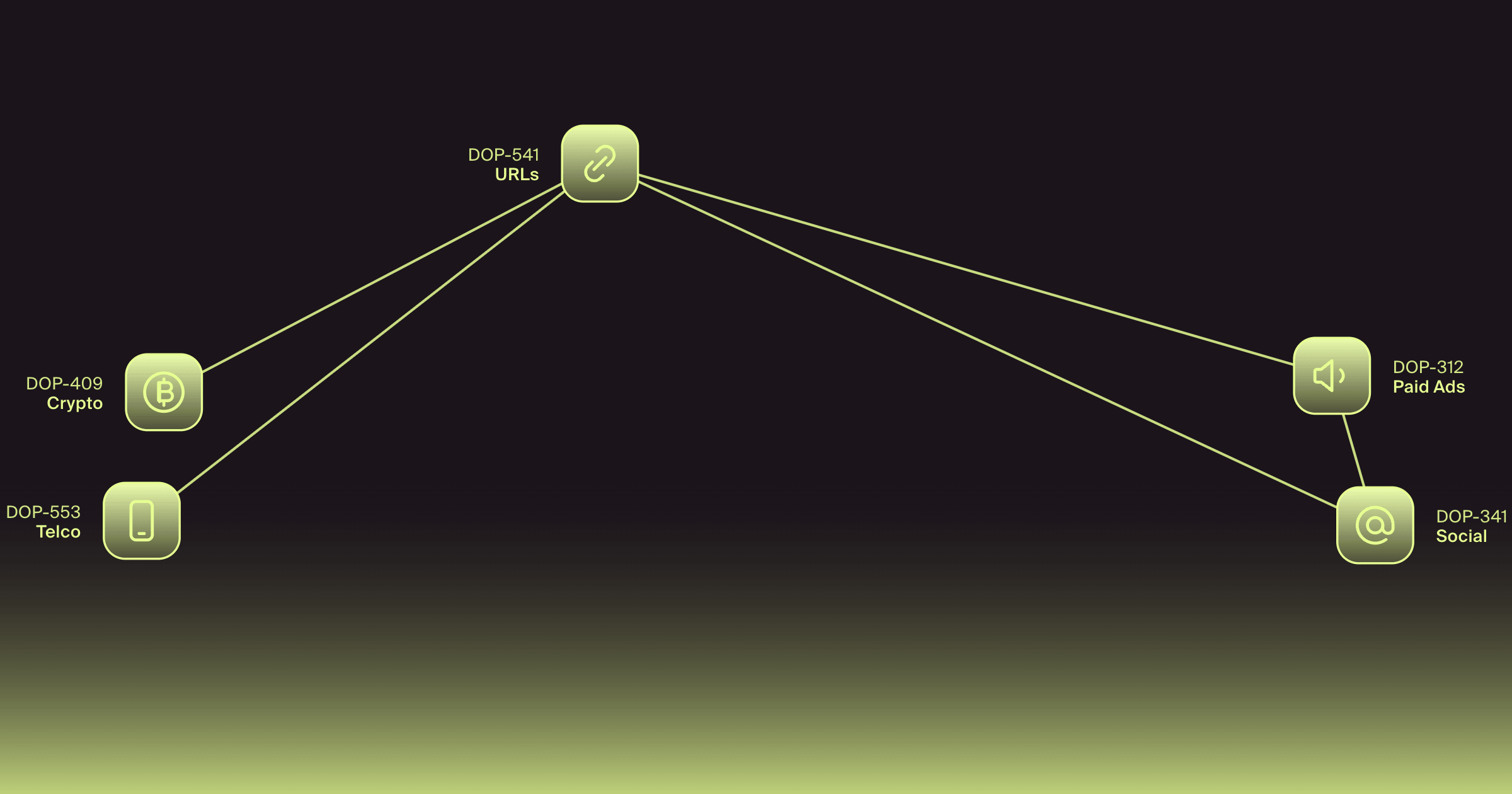
The Doppel Threat Graph correlates those signals into campaign-level views, so security teams disrupt the attacker's broader infrastructure rather than chasing one asset at a time. Analysts review only the novel or escalated cases that fall outside the automation path.
Coinbase works with Doppel to detect and dismantle impersonation at scale, removing fraudulent social accounts and domains.
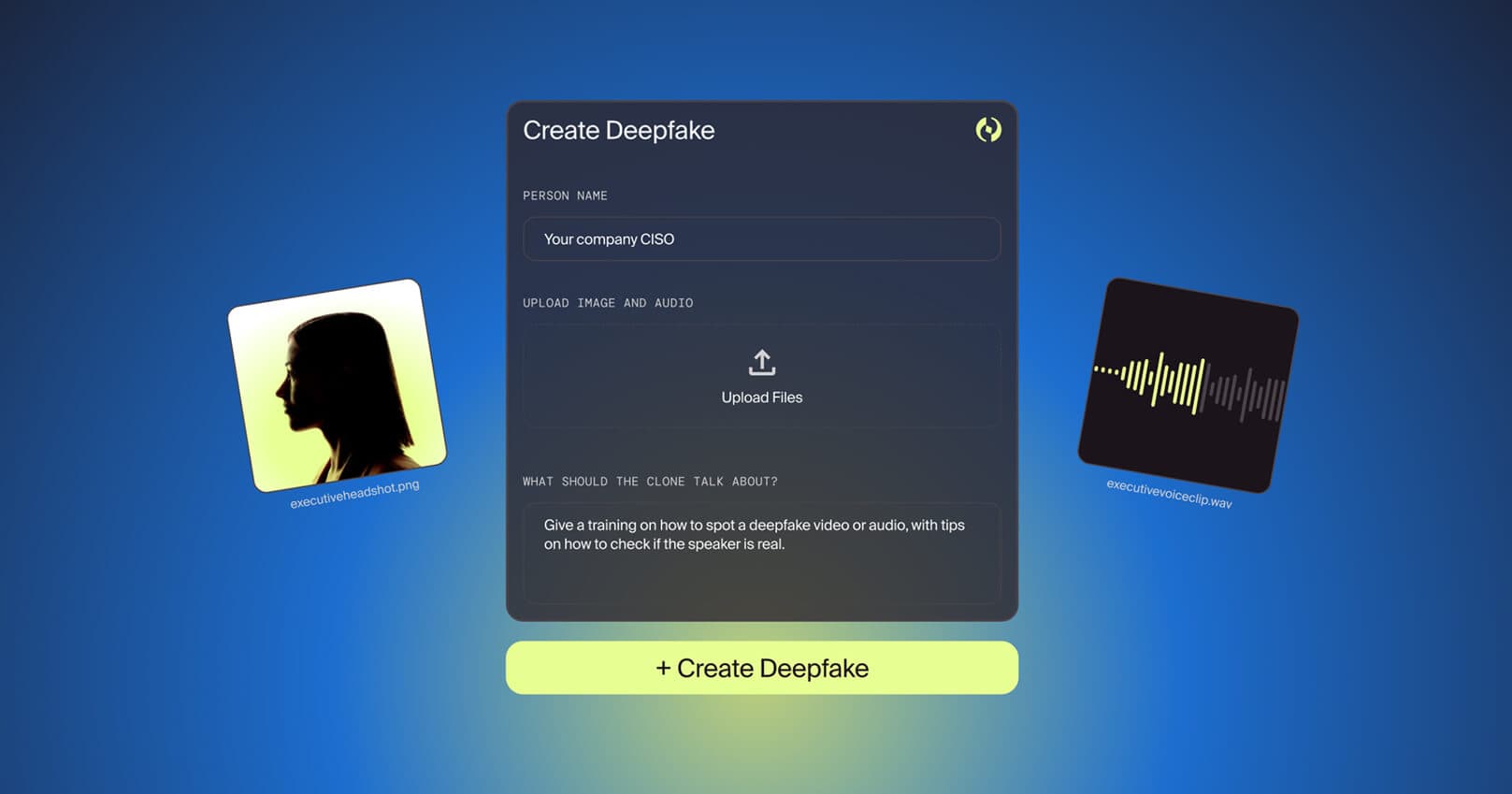
The closed loop between DRP and HRM converts the whaling lures Doppel detects in the wild into Dynamic Simulation exercises for the people those lures target. If a CFO is being impersonated today, Doppel can adapt the same tactics into an executive simulation across email, voice, SMS, and Microsoft Teams, including custom voice clones built from short audio samples, so finance teams rehearse the exact deepfake call they may one day answer.
Helpdesk-mode voice agents navigate IVR menus, hold queues, and live transfers, which makes the support-desk impersonation path testable at scale. Success is measured in outcomes: campaigns dismantled, infrastructure removed, and staff who verify before they act.
Attackers are already researching the next whaling attempt against your organization. They are studying your executives' public footprints, mapping who acts on their authority, and building lures around the org chart you publish. Teams that treat executive protection as a continuous program turn that attempt into a takedown log entry.
Request a Demo to see how Doppel Executive Protection defends your leadership across every channel.
BLOG
Train your team against real-world cyber threats with Doppel’s new simulation features: DRP Clone for instant threat-to-simulation conversion, AI-powered vishing simulations, and conversational attack training.

by Doppel Team