There’s a misunderstanding of how modern cybercrime actually operates.
Society has trained us to view threat actors as digital magicians. We picture isolated savants sitting in dark rooms, furiously typing green code to magically breach a corporate firewall for the thrill of the hack.
The reality is much more corporate — and much more boring.
Modern cybercriminals aren’t digital magicians; they’re highly disciplined project managers. Phishing syndicates and ransomware gangs run highly structured, profit-driven businesses. They have overhead. They have operational expenses. They manage sunk costs, and they’re obsessed with their profit margins.
If you treat cybersecurity as a purely technical problem, you’ll remain one step behind the adversary. To actually stop a sophisticated social engineering campaign, you can’t just block an IP address. You have to attack the adversary's wallet.
But legacy digital risk protection (DRP) tools play a losing game of whack-a-mole. They treat the superficial symptoms of an attack while ignoring the underlying disease.
To win the war against automated syndicates, modern defense requires upstream disruption: Target the operational core of a campaign to permanently spike the financial cost for adversaries.
Here’s how you stop playing whack-a-mole and set the attacker's return on investment (ROI) entirely on fire.
Sunk Costs of a Social Engineering Campaign
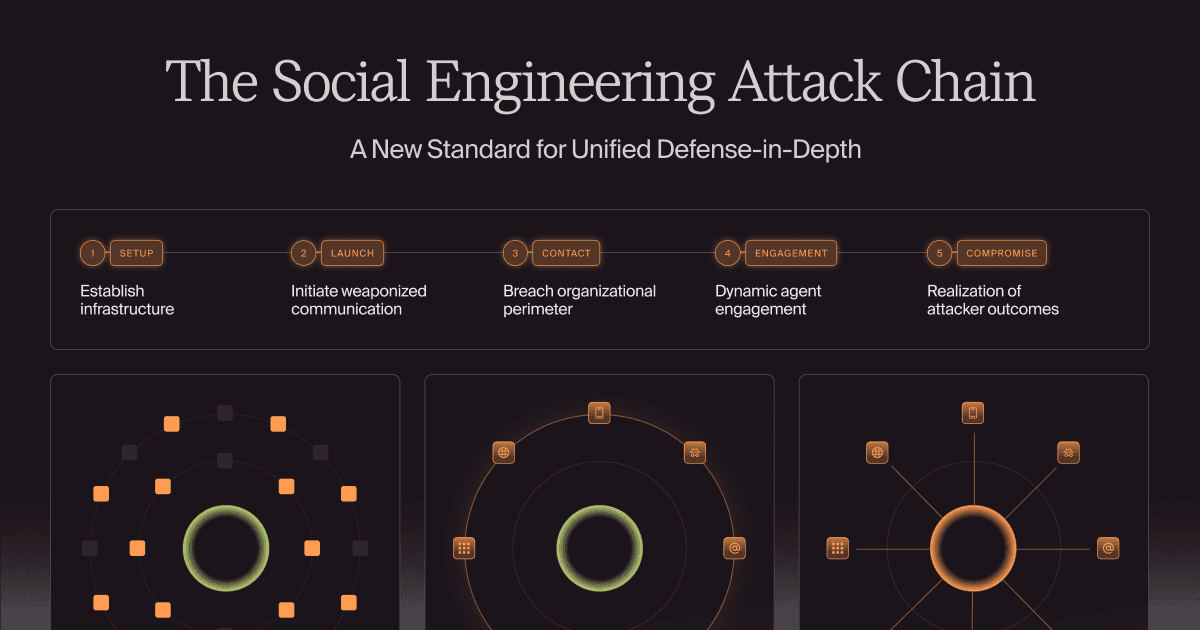
Launching a highly believable, multi-channel social engineering campaign isn’t free. Threat actors have a customer acquisition cost (CAC) just like any legitimate marketing department.
Before they ever send a single malicious email or launch a credential-harvesting trap, they have to invest serious capital into their infrastructure.
Let’s recap the actual financial investment an attacker makes to target your brand:
- Infrastructure Setup: Attackers can’t host a fake banking portal on a cheap, blacklisted server if they want it to look legitimate. They purchase batches of typosquatted domains, pay for legitimate SSL certificates, and rent premium, high-reputation hosting pipelines to ensure high deliverability and bypass standard security reputation filters.
- Malicious API Endpoints: A fake login page requires a backend. Attackers invest time and money in developing complex routing infrastructure. They spin up malicious API endpoints designed to silently harvest credentials, proxy multi-factor authentication (MFA) (opens in new tab) tokens in real time, and immediately validate stolen sessions without triggering alarms.
- Ad Spend & Amplification: The best digital trap in the world is useless without traffic. Threat actors heavily fund sponsored social media advertisements across Meta, LinkedIn, and Google. They pay to build or rent fake amplifier networks (bot farms) to drive massive waves of targeted victims to their freshly built infrastructure.
Every single one of these line items represents a sunk cost. The attacker spends this money upfront, assuming they will recoup the investment once the stolen credentials or wire transfers start rolling in.
Legacy Digital Risk Protection & the Whack-a-Mole Trap
So, how does the cybersecurity industry typically respond to this highly funded, highly organized threat? With passive alerts and basic legal templates.
This is the exhausting reality of legacy digital risk protection platforms.
When a legacy DRP tool finds a fake website impersonating your brand, it does not actually solve the problem. It simply generates a dashboard alert and passes the operational burden directly onto your SOC.
Your analysts are then forced to investigate the alert, verify the threat, and figure out how to take it down.
When legacy tools actually offer a takedown feature, they almost universally rely on basic, automated Digital Millennium Copyright Act (DMCA) (opens in new tab) templates. The tool sends an email to a webmaster, claiming that a specific URL is infringing on your corporate copyright.
This is a band-aid solution. And against a modern syndicate, it completely fails.
Taking down a single webpage via a copyright claim while leaving the attacker's underlying server and registrar account perfectly intact is completely useless. It means the attacker can simply spin up a new, identical version of the scam on a slightly different URL in about three minutes.
It costs them absolutely nothing to pivot.
You didn't cost the attacker any money. You didn't disrupt their operations. You merely inconvenienced them for a few minutes while forcing your own highly-paid security analysts to waste hours managing the paperwork.
This is the definition of whack-a-mole, and it’s a game you will always lose.
Remediation Metric | Legacy Digital Risk Protection (Whack-a-Mole) | Upstream Disruption (Agentic Defense) |
Target Focus | A single offending URL or individual phishing page | The entire operational infrastructure and backend routing |
Action Taken | Automated DMCA notices sent to abuse inboxes | Machine-speed registrar suspensions and network-level takedowns |
Impact on Attacker Cost | Negligible; the attacker pivots for free | Devastating; the attacker loses all sunk infrastructure costs |
Time to Execute | Days or weeks pending human review by external webmasters | Minutes via direct API integrations and agentic AI execution |
Long-Term Result | The campaign respawns under a new URL tomorrow | The attacker’s unit economics are destroyed, forcing them to abandon the target |
How Upstream Disruption Works
If DMCA notices are obsolete, what does a real takedown look like?
Upstream disruption requires you to trace the threat graph backward. You have to map the exact pathway the attacker used to build their trap, and you have to burn every single node along that path.
When you dismantle the core infrastructure, you permanently ruin the campaign. Here’s a breakdown of the specific targets security teams must disrupt to set the attacker's ROI on fire.
1. Targeting the Registrar Accounts
When an attacker targets your brand, they rarely buy just one typosquatted domain. They buy them in batches, and they assume you might catch one, so they have 10 more ready to go.
If you just ask a hosting provider to pull down a single page, the attacker uses their backup domain.
Upstream disruption attacks the registrar level. You don’t just report the specific URL; you provide the evidence necessary to work directly with the domain registrar to suspend the entire malicious account. When the account is burned, the entire batch of pre-purchased typosquatted domains goes up in smoke.
The attacker's initial financial investment is zeroed out.
2. Dismantling Hosting Provider Pipelines
A sophisticated credential-harvesting site relies on a fast, reliable server to process incoming data.
If you only attack the frontend domain, the attacker still controls the backend server. They just point a new domain to the old server and resume operations.
To permanently disrupt the campaign, you must trace the threat back to the specific hosting provider. By executing a takedown at the infrastructure level, you rip out the actual servers powering the spoofed assets. The attacker loses their customized environment and must rebuild their backend routing from scratch, costing them days of valuable development time.
3. Severing Malicious API Endpoints
Modern phishing often utilizes adversary-in-the-middle (AiTM) (opens in new tab) frameworks. These attacks use complex API endpoints to silently intercept MFA tokens between the victim and the legitimate corporate application.
Even if you take down the visible phishing page, those malicious API endpoints might still be active and listening for connections from other channels.
A true upstream disruption strategy identifies and blocks these exact credential-harvesting APIs. By severing the connection at the API level, you neutralize the payload. Even if the attacker manages to keep a fake frontend page live for a few more hours, the backend data pipeline is broken. The trap is empty.
4. Burning the Ad Networks
Phishing syndicates spend massive amounts of money on sponsored social media ads to distribute their deepfakes and malicious links.
If you only take down the destination website, the ad continues to run.
Upstream disruption demands simultaneous strikes against the distribution channels. You must actively report and execute takedowns against the ad platforms funding the attack. When the destination site is dead, but the ad continues to run (or vice versa), the attacker is paying for dead traffic.
You’re actively draining their marketing budget with zero return on investment.
Doppel’s Approach to Ruining Attacker ROI
You won’t win a war of attrition against an automated adversary if it costs them absolutely nothing to attack you.
As long as legacy security tools continue to play whack-a-mole with single URLs and basic DMCA templates, threat actors will continue to view your brand as a highly profitable target.
To win, change the unit economics of cybercrime. Make exploiting your brand an unsustainably expensive nightmare.
Doppel built an agentic AI-native social engineering defense platform to move far beyond passive alerts and administrative band-aids.
Doppel continuously maps the overarching threat graph surrounding your brand. When a threat is detected, the platform doesn't just look at the edge symptoms. Instead, it identifies the operational core of the entire campaign.
Our AI agents execute automated, multi-channel takedowns. We strike the registrar accounts, the hosting pipelines, and the distribution networks simultaneously. We also completely remove the manual burden from your SOC, executing complex infrastructure disruption at machine speed.
When you burn the infrastructure to the ground, the attacker loses their time, their tools, and their money.
The era of passive monitoring is over. Burn the infrastructure, destroy the ROI, and take the fight directly to the adversary.
Get a demo to see how Doppel’s agentic AI executes upstream disruption and permanently dismantles attacker infrastructure.