This week, an active phishing page hosted on a fraudulent website impersonated ADP India (opens in new tab)'s payroll and billing workflows.
The goal: Trick employees into updating their personal information.
For a CISO, this is a nightmare. For a fraudster, it’s a high-margin business. By spending little more than $10 on a domain, an attacker can trigger a domino effect that can:
- Divert entire salary pools to anonymous wallets
- Result in MFA fatigue and bypass by using fake password reset prompts to harvest session tokens
- Turn one HR credential into a gateway for your entire ERP system
In this blog, we’ll analyze the mechanics of the recent ADP India payroll scam to show you how modern attackers move faster than manual defense.
The Anatomy of a Payroll Trap
Attackers continue to win because fake HR and payroll portals still work extremely well against real users.
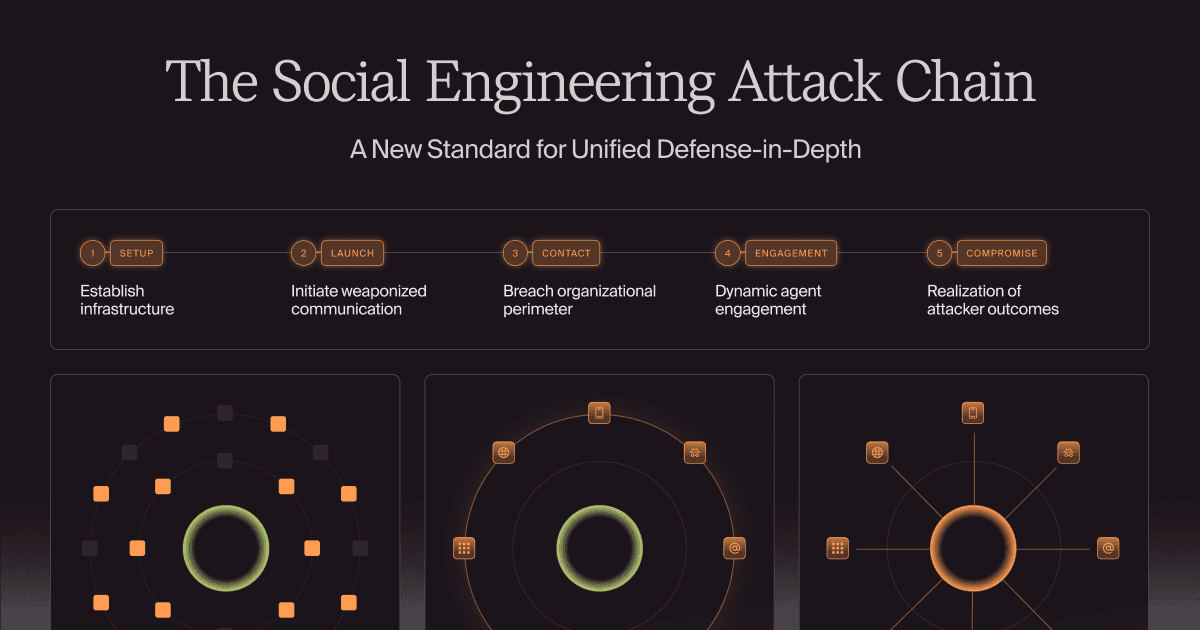
When an employee attempts to update a billing address on a Friday afternoon, clicking one link means handing over the keys to the kingdom. That’s because modern adversaries don't rely on a single vector. These campaigns are distributed across multiple channels, often hitting an employee via a targeted phishing email and a coordinated SMS lure simultaneously.
Behind the scenes, what looks like one malicious link is actually part of a highly coordinated, clustered domain infrastructure. To evade traditional signature-based detection and reputation checks, attackers deploy these clustered domains across decentralized or varying infrastructure providers, such as utilizing bulletproof hosting, proxy networks, and varied autonomous system numbers (ASNs).
By rotating hosting providers and staggering domain activation, they ensure that if one node of the campaign is flagged, the rest of the infrastructure remains operational and invisible to legacy security gateways.
This specific ADP campaign highlights the shift toward industry-specific impersonation. Attackers don’t use generic lures anymore. Nowadays, they can clone the exact portals your employees trust, turning a routine administrative task into a catastrophic breach.
Legacy risk protection tooling is failing because it treats threats like library books: identifying them, cataloging them, and waiting for someone to check them out.
But in the age of AI-native deception, an alert without immediate disruption is useless. Here’s why.
- There’s more volume: With AI, the cost of launching an enterprise-grade attack has dropped to zero, leading to a 1,000% (opens in new tab) increase in phishing volume.
- Attacks happen faster: 22% (opens in new tab) of confirmed breaches start with stolen credentials. If your triage takes hours, the attacker has already exfiltrated the data.
- Attacks are multi-channel: Modern attacks are rarely a single email. They are multi-channel campaigns spanning LinkedIn, SMS, and cloned portals.
What Can You Do?
When you move from legacy tools to Unified Social Engineering Defense (SED), you’re doing more than simply switching your dashboard. You are buying operational ROI. Here’s the breakdown.
1. Reclaim Your SOC Team’s Time
Legacy: Your team manually reviews hundreds of potential links.
SED: Agentic AI acts as a continuous, automated red team. It triages and validates threats at machine speed, reducing alert fatigue. Your security team stops being a "cleanup crew" and starts being a strategic asset.
Legacy: You send a takedown request. The attacker moves to a new domain before the request is even processed.
SED: SED goes after the infrastructure. By using a Real-Time Threat Graph, you identify the entire campaign ecosystem simultaneously. Rather than just taking down the link, this approach makes it economically impossible for the attacker to continue.
3. Proof of Resilience for the Board
Legacy: You show the board a completion rate for a generic compliance video.
SED: You show the board continuous validation. When a threat like the ADP India scam is detected, a modern SED platform can automatically generate a live-intelligence simulation. You can prove your workforce is hardened against the exact tactics being used in the wild today.
The Unified SED Advantage
Doppel’s platform is built to synchronize infrastructure disruption with behavioral modeling.
While our AI agents are busy de-platforming malicious links, our Human Risk Management (HRM) engine is already training your high-risk targets, like your help desk.
By transforming live threat data into micro-coaching moments, we turn your employees from your greatest vulnerability into a distributed sensor network that catches the targeted attacks your technical gateways miss.
Ready to see machine-speed defense in action?
Schedule a demo today and see how we dismantle payroll campaigns before they reach your inbox.