
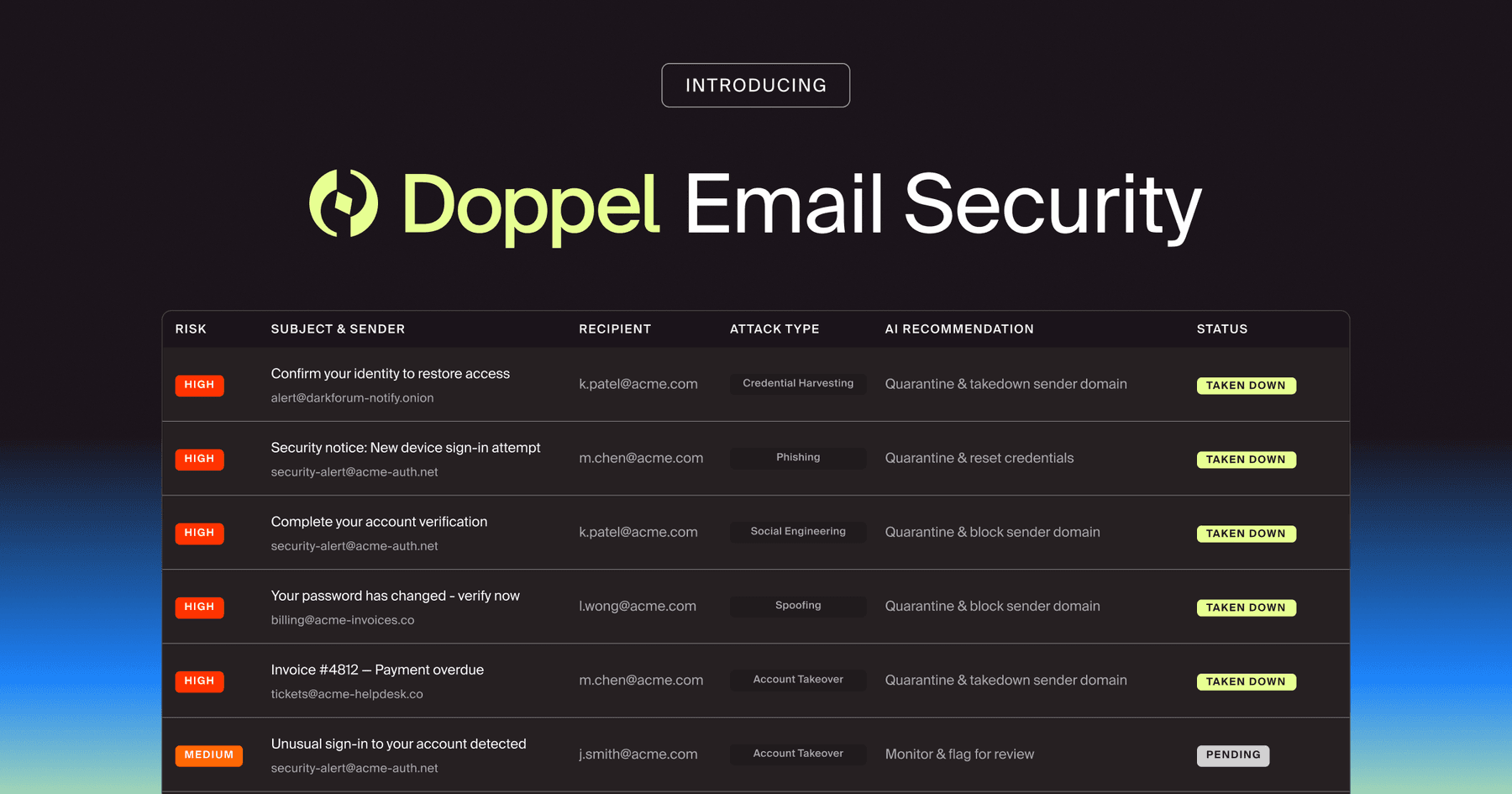
Doppel Email Security is now generally available
The agentic email security solution that empowers you to fight back against social engineering attacks. Detection isn't enough. Disruption is the difference.
Threat actors use OSINT and LLMs to perfectly mimic your company’s culture and tone. Discover why you can't rely on your gut feeling to spot an attack.
Human intuition should catch what technical controls miss, right?
When an email bypasses filters, we tell employees to trust their instincts. If a message feels slightly wrong, we want them to hit the report button.
Security awareness training (SAT) has always relied on a gut feeling as the safety net. But that instinct-driven defense mechanism is a massive vulnerability in 2026.
Threat actors aren’t just spoofing domains or replicating login pages. They’re flawlessly mirroring your corporate culture.
Cybercriminals use generative AI to craft attacks that bypass an employee’s emotional threat radar entirely, so the communication used for social engineering doesn’t set off alarm bells.
Every email, text message, and phone call feels exactly like a daily chat with your closest colleague.
This is vibe phishing, and it renders a gut feeling completely useless.
Phishing attacks were relatively easy to spot if you knew what to look for.
In the past, they relied on a predictable set of visual and grammatical anomalies. Emails and text messages featured awkward phrasing and contained glaring spelling errors. There were also mismatched logos and generic greetings, like “Dear Customer.”
Attackers operated at scale and often dealt with language barriers, so these mistakes were unavoidable. As a result, security awareness training was adapted to this low bar.
Employees were trained to be spell-checkers. We taught them to hunt for typos, scrutinize sender domains and phone numbers, and look for manufactured urgency. When the grammatical errors disappeared, employees assumed the message was safe.
Now, this baseline of defense is gone. LLMs write with perfect fluency in any language.
When you remove the typos and the awkward phrasing, legacy security awareness training collapses.
If your employees are still looking for bad grammar, they’re blind to social engineering in 2026.
Vibe phishing is the deliberate hijacking of your organization’s internal culture. It’s an attack designed to sound exactly like the people you work with every day.
Instead of a formal, urgent email demanding a wire transfer, vibe phishing looks much different:
Threat actors use AI to perfectly mimic your specific internal jargon, casually referencing current company initiatives. They match the exact level of formality — or informality — that’s expected in your daily communication.
Forget bypassing a gut feeling. Conversational social engineering bypasses your emotional threat radar by creating a manufactured, false sense of familiarity.
Attackers use open-source intelligence (OSINT) (opens in new tab) to know everything from the inside jokes to the specific acronyms used by your engineering team.
Your company’s public footprint is massive, so threat actors don’t need to breach your network to learn how you speak. They just need to scrape the internet.
Attackers feed LLMs with a massive diet of your publicly available data: LinkedIn posts, press releases, webinar recordings, and much more.
But beyond that, they also scrap the personal X, LinkedIn, and GitHub accounts of your individual employees. Then they prompt the AI to analyze this data and generate a comprehensive communication profile, enabling LLMs to learn exactly how your employees structure their sentences.
AI learns the specific sign-off format your HR department uses for company-wide announcements. It learns the technical buzzwords your developers favor.
Within seconds, an attacker can generate a highly targeted, contextually perfect message. AI outputs a lure that sounds so authentic, the target’s intuition never registers a threat.
How do you defend your organization if employees can’t trust the tone of a message? Change what your employees are looking for.
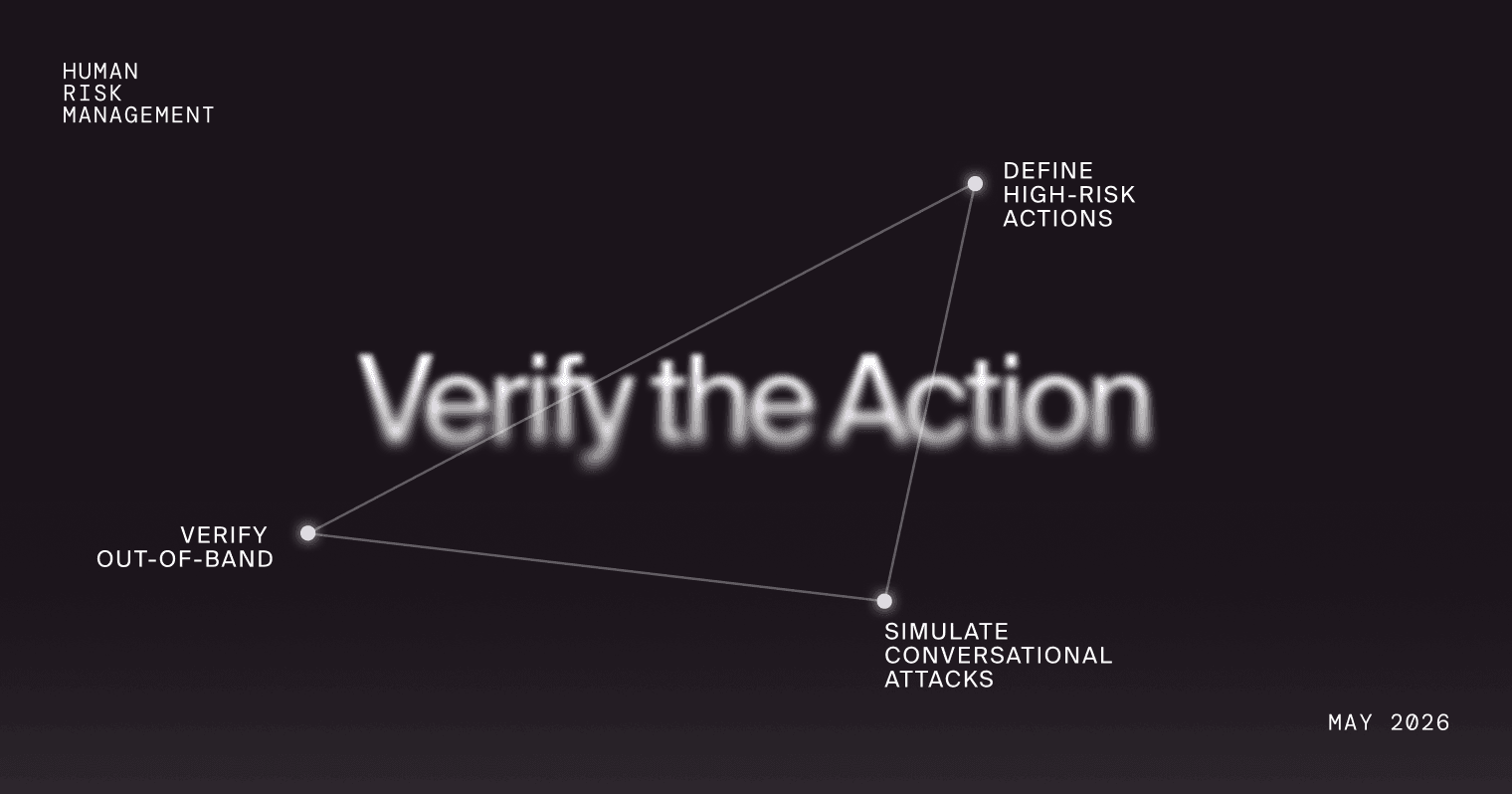
Security leaders need to shift the workforce’s focus from verifying the sender to verifying the action.
How legitimate the sender sounds doesn’t matter as much as what they're asking you to do, and this shift requires a pivot toward true behavioral resilience.
Let’s look at the difference between typo-hunting and behavioral resilience.
Defense Strategy | Typo-Hunting | Behavioral Resilience |
Primary Focus | Analyze the sender’s identity and grammar | Analyzing the requested action and risk level |
Trigger | A mispelled word or a slightly altered domain name | A request involving funds, credentials, or system access |
Validation | Checking if the tone ‘feels right’ or matches expectations | Enforcing strict out-of-band verification protocols |
Response | Forwarding the email to IT if it looks visibly suspicious | Pausing the interaction to verify via a secondary channel, regardless of the tone |
Training Method | Static, multiple-choice quizzes and obvious phishing templates | Continuous, multi-channel simulations mimicking internal requests |
Transitioning your workforce away from their gut feeling takes time and deliberate practice.
Here are the steps security teams should take to secure the human perimeter against vibe phishing:
You can’t defeat AI-native social engineering with a static compliance video.
If your employees only ever see obvious, poorly written phishing emails during their training, they’ll fail when they encounter a highly polished vibe phishing campaign.
Your workforce needs to experience these sophisticated, culturally accurate lures in a safe, controlled environment.
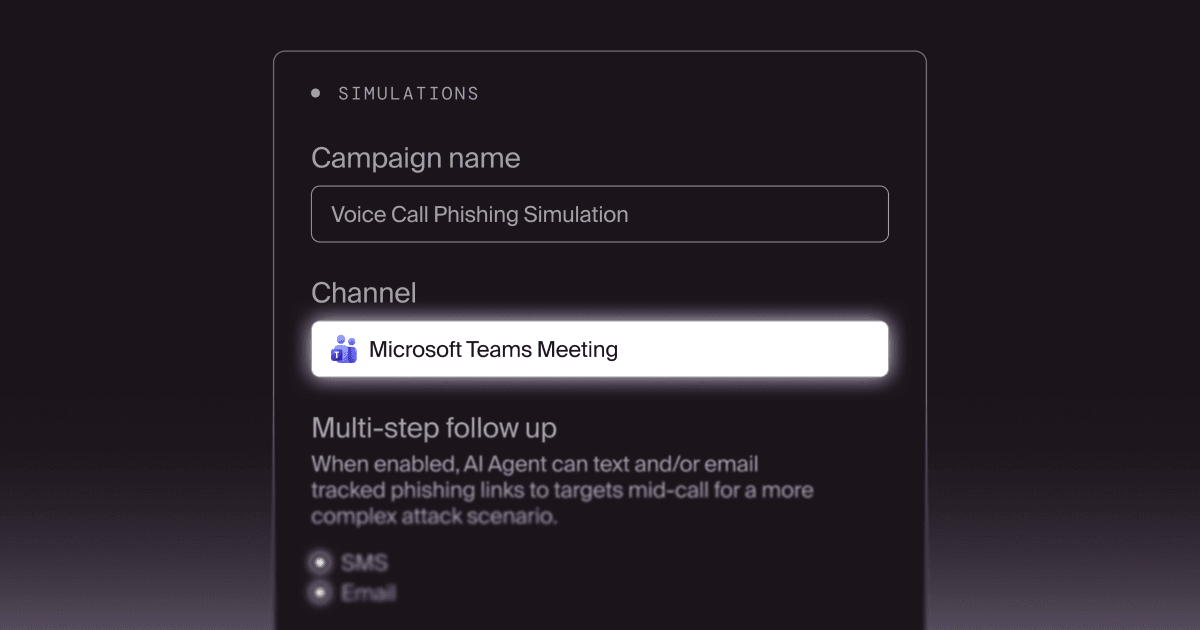
Doppel’s AI-native social engineering defense (SED) platform moves your organization beyond outdated typo-hunting. The platform empowers security teams to build true behavioral resilience. Doppel allows you to run highly sophisticated, multi-channel simulations that mimic the exact tactics of vibe phishing.
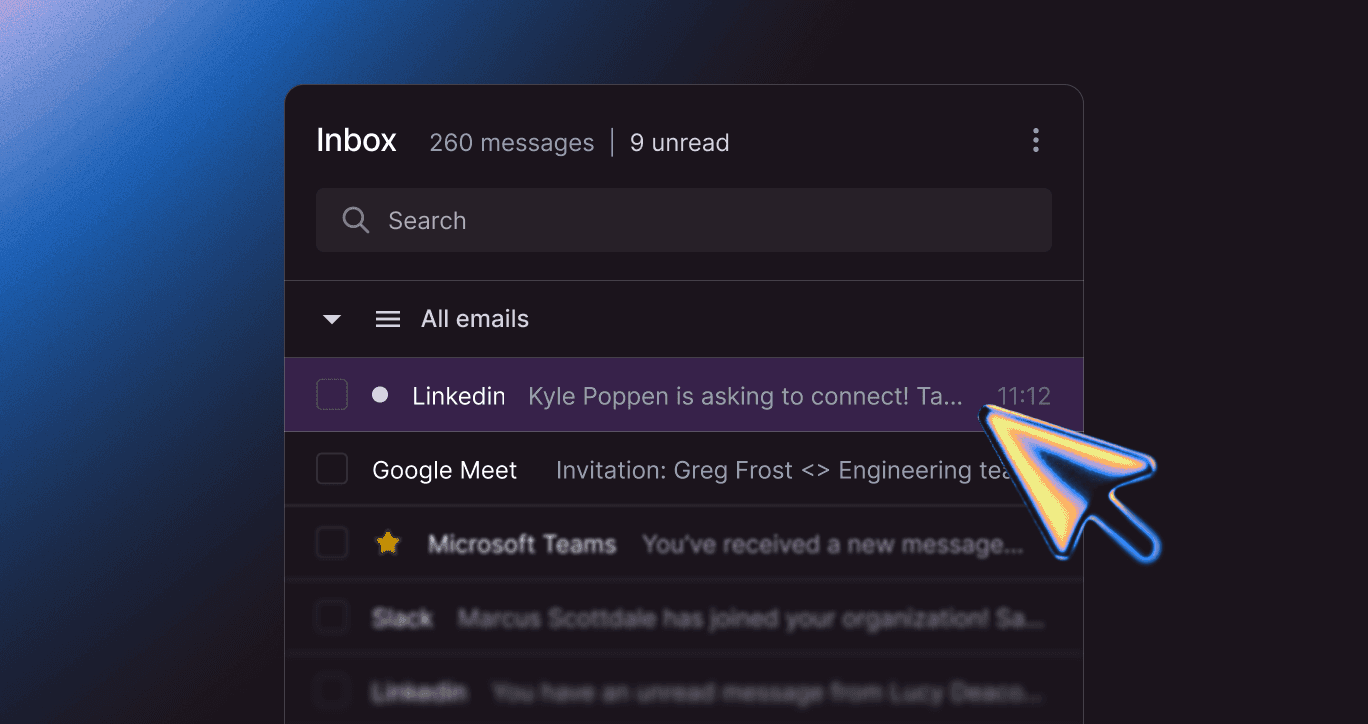
Simulate the casual Slack message, the urgent Microsoft Teams request, and the convincing SMS text from a ‘colleague.’
By exposing your workforce to these conversational scenarios, Doppel trains your employees to critically evaluate the request itself, rather than relying on a false sense of familiarity. You’ll deliver immediate, in-the-moment coaching when an employee makes a mistake, building the muscle memory required to verify high-risk actions out of band.
The playbook of relying on human intuition is broken. The attackers are using AI to mimic your culture. It’s time to use AI to harden your defense.
Is your workforce prepared to spot a vibe phishing attack? Get a demo with Doppel to see how our multi-channel simulations build true behavioral resilience.