
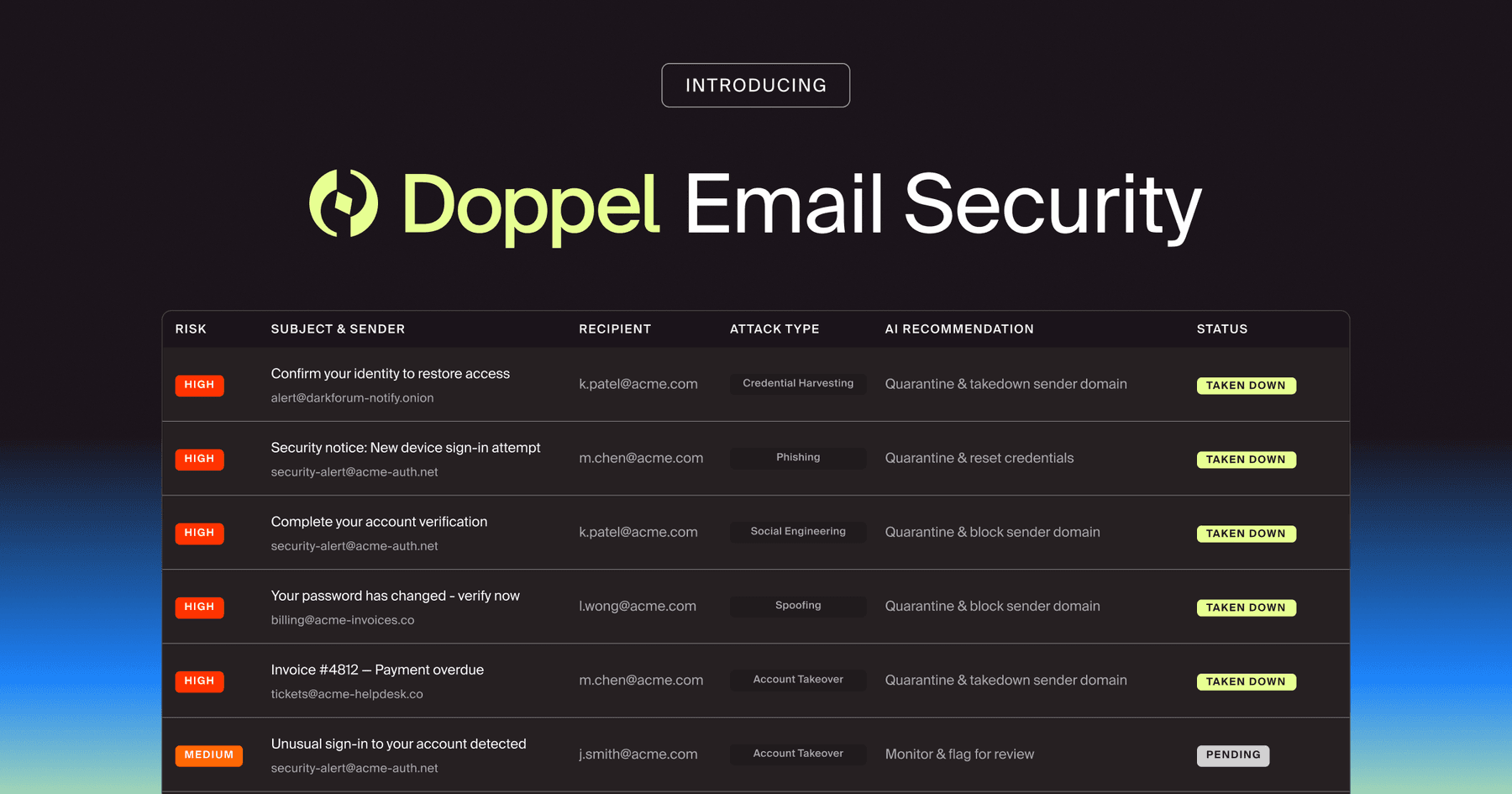
Doppel Email Security is now generally available
The agentic email security solution that empowers you to fight back against social engineering attacks. Detection isn't enough. Disruption is the difference.
Here’s why scheduled compliance training is failing your workforce. Learn how to rebuild your security culture using live threat data and behavioral metrics.
“YOUR SECURITY TRAINING IS DUE.” Now, there’s a collective groan that echoes across your organization as that email subject line hits every inbox.
Employees immediately calculate how fast they can click through the slides, or open a video in another tab and mute the audio while doing actual work.
Security awareness training (SAT) isn’t a chore for your security team, so it shouldn’t be one for your workforce either. But it’s seen as a mandatory hurdle standing between them and their day-to-day responsibilities.
In 2026, this check-the-box compliance model is harming organizations.
Check-the-box compliance creates a culture of resentment, not resilience. Security teams are pitted against the rest of the company, acting as hall monitors rather than strategic enablers.
Right now, you need to rebuild your security culture — and it starts with human risk management (HRM).
Social engineering is an around-the-clock endeavor for cybercriminals, so security awareness training shouldn’t be a scheduled event for your employees.
Employees are assigned a 30-minute training module every quarter or a long-form video semi-annually. Once the video is marked complete, the organization considers that employee ‘secure’ until the next scheduled cycle.
This logic is flawed. Cybercriminals don’t operate on a quarterly schedule. Threat actors don’t pause social engineering because your marketing team hasn’t watched their mandatory Q3 video yet.
Aside from that, these scheduled trainings almost always rely on static, generalized content. They feature outdated phishing templates or generic password hygiene tips that rarely match the employee’s daily reality.
Treating security awareness training as a scheduled event completely ignores the dynamic nature of cybercrime. Security is a continuous behavior, not a quarterly compliance checkbox.
This is why social engineering defense (SED) platforms, like Doppel, are dismantling the rigid training calendar.
Doppel, for example, integrates dynamic, multi-channel simulations that run seamlessly in the background of everyday work.
Training shouldn’t be dreaded every time it rolls around. It should be a continuous, invisible fabric that protects the entire organization in real time.
One of the biggest reasons employees resent security awareness training is the gap in relevance.
Employees tune out the moment a training video introduces a scenario they’ll never actually see in the wild.
If your SAT relies on spotting the spelling errors in an outdated wire-fraud scam, your workforce won’t take it seriously. They know that attackers are using sophisticated AI and mimicking internal Slack channels.
Building true cultural resilience starts by using live threat data to drive your human risk management strategy. Training only resonates when it mirrors the exact threats targeting the employee’s specific role or department right now.
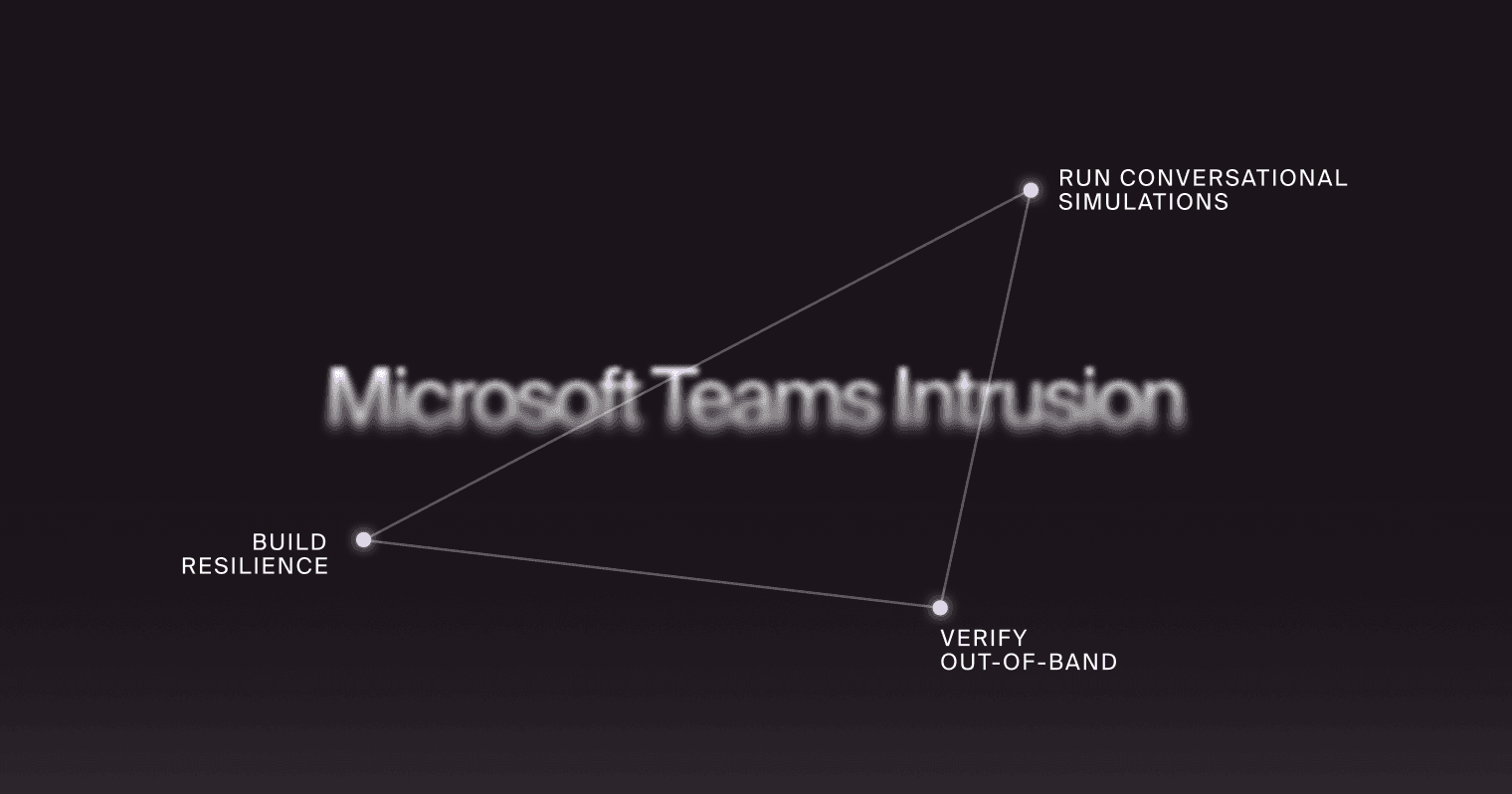
Doppel actually ingests live threat intelligence to power its simulations, so if a new AI-driven Microsoft Teams exploit begins targeting the financial sector on a Tuesday, you can deploy a simulation of that exact attack against your finance team immediately.
This changes the psychological dynamic of training.
Threats feel immediate, real, and urgent. Employees stop viewing phishing simulations as a trick and start viewing them as a necessary defense drill against an adversary.
When training matches reality, security stops feeling like a chore. It feels like survival.
Gotcha. Legacy security awareness training traps employees.
When an employee inevitably clicks on a deceptive email, they’re redirected to a landing page that essentially screams, “You failed!”
Next, the employee is assigned a punitive 15-minute video to re-educate them on their mistake.
This approach is disastrous for corporate culture. It builds an environment rooted in fear and shame.
When employees fear being reprimanded or labeled a security risk, they alter their behavior. They don’t become more secure. They simply start hiding their mistakes.
If an employee clicks a suspicious link, a shame-based culture ensures they’ll never report it to the IT help desk.
Normalize the pause, and provide a zero-shame environment. When an employee falls for a simulation, deliver a 30-second, in-the-moment explanation. They need micro-coaching that explains exactly what psychological trigger the attacker used.
Doppel’s social engineering defense platform is built around this philosophy, delivering automated micro-coaching at the exact moment of failure.
A contextual feedback loop helps employees understand manipulation and transforms a moment of vulnerability into a moment of empowerment.
The compliance checkbox mentality doesn’t just fail the employees. It fails the executive board.
Historically, boards of directors have been trained to look at the completely wrong numbers.
Security leaders proudly report that they achieved a "100% completion rate" on the annual security training. They report on the volume of phishing tests sent and the frequency of employee logins to the training portal.
These are vanity metrics. A 100% video completion rate does not equal a secure company.
It simply means your workforce is highly compliant at clicking the "Next" button.
To rebuild security culture, rethink how success is measured. Move from tracking compliance activities to tracking behavioral resilience.
Legacy Security Awareness Training | Modern Human Risk Management | |
Primary Focus | Measuring training activity and video consumption | Measuring behavioral change and risk reduction |
Key Indicator 1 | Percentage of compliance videos completed on time | Percentage decrease in successful simulation bypasses over time |
Key Indicator 2 | Total number of simulated phishing emails sent | Average time-to-report for suspicious messages |
Key Indicator 3 | Quiz scores at the end of a training module | Rate out-of-band verification usage during high-risk scenarios |
Executive Takeaway | “Our employees have finished their required assignments” | “Our workforce actively identifies and neutralizes attacks faster than last quarter” |
By shifting the narrative to resilience metrics, you change the conversation in the boardroom.
Rebuilding a broken security culture doesn’t happen overnight. It requires a systematic dismantling of the legacy compliance mindset.
Commit to treating your employees as intelligent partners, rather than liabilities to be managed.
Here’s an step-by-step guide for security leaders to build their culture in 2026:
A security culture isn’t bought, and you certainly can’t achieve it by forcing your employees to watch a static presentation twice a year.
The check-the-box mentality has generated massive profits for legacy security vendors. However, it’s left organizations incredibly vulnerable to modern, AI-driven social engineering.
Rebuilding your security culture in 2026 requires abandoning the schedule. It requires moving from resentment to true behavioral resilience.
The ultimate goal is to transform your employees from a vulnerable attack surface into a highly resilient, distributed sensor network.
Doppel makes this transformation possible. By leveraging live threat data and continuous micro-coaching, our AI-native social engineering defense platform helps organizations build a culture in which security is a reflexive habit rather than a dreaded chore.
Ready to ditch the compliance checkbox and build a security culture of actual resilience? Get a demo to see how Doppel’s live threat simulations transform human risk management.