Overnight, a compromised staff account can turn a political campaign into a national news catastrophe.
In 2026, attackers aren’t just trying to trick the 204.6 million Americans registered to vote (opens in new tab) with election scams. They’re targeting election campaign staff, candidates, and internal systems directly.
There are countless efforts to secure the electorate’s vote (opens in new tab) across the country, but for campaigns, it’s a different story, as they are expected to secure themselves, which cybercriminals know all too well.
Political campaigns are operational beasts. They’re transient, fast-moving startups operating under immense public and financial pressure.
Every campaign relies on a massive influx of temporary volunteers and rapid onboarding, making them an attractive playground for social engineering. You have several stressed, tired people running on cold pizza and adrenaline to hit near-impossible deadlines. It’s an attacker’s dream scenario.
The sheer volume of digital threats is simply too much for any campaign to handle alone. To survive through Election Day (opens in new tab) and reclaim control over their candidate’s brand, campaign offices must leverage proactive digital risk protection (DRP) tools. Here’s how to do it.
Cybercriminals and state-sponsored actors targeting campaigns don't stop at a single email inbox. They operate laterally.
If you only secure your campaign's official email inbox, you're locking the front door while leaving every window wide open.
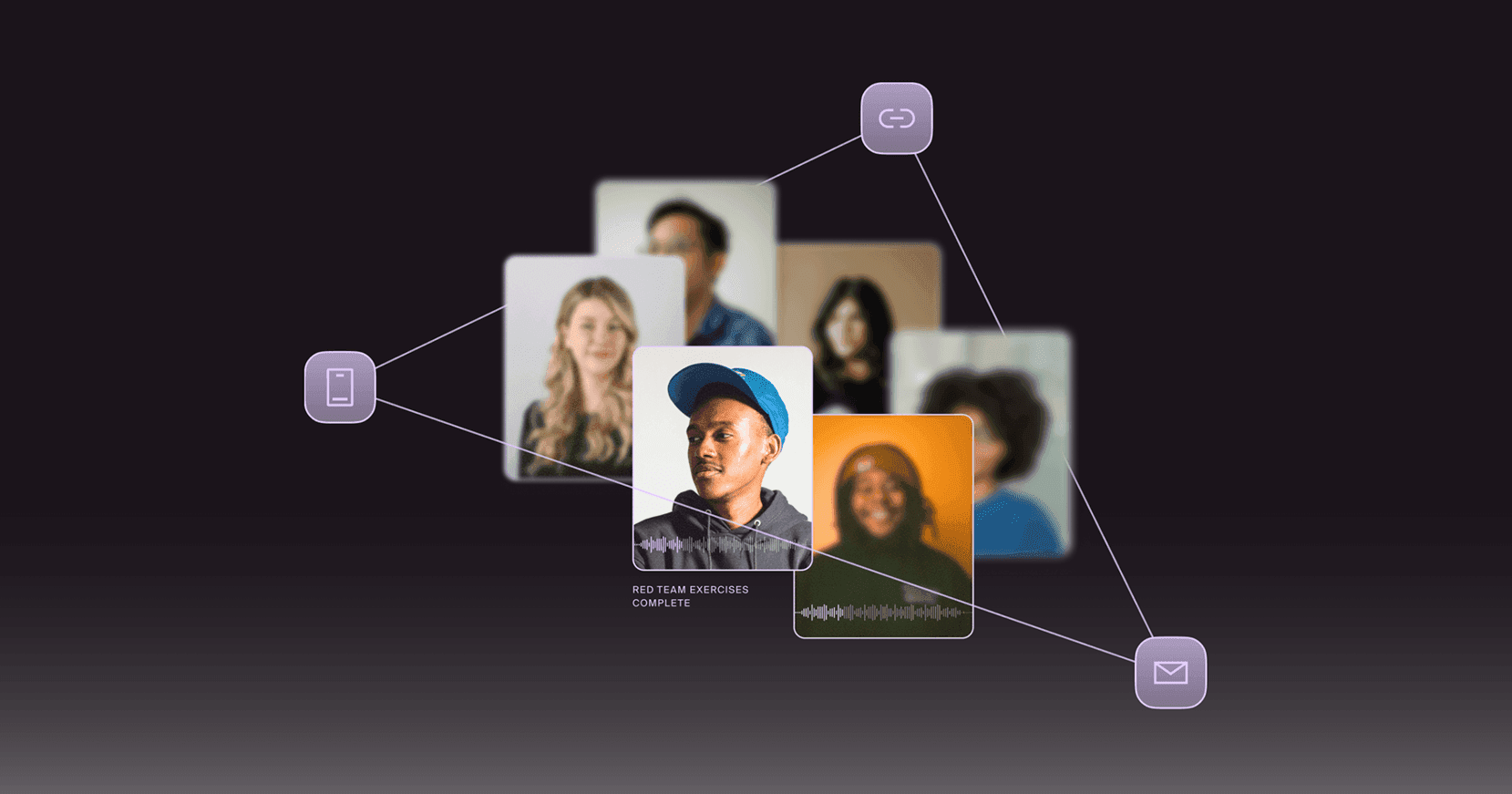
Adversaries target the political campaign across multiple vectors simultaneously. They'll create fake social media profiles for the candidate, build lookalike domains for internal portals, and launch sophisticated phishing vectors aimed straight at your most exhausted staffers.
Campaigns need to actively hunt impersonators across the open web. Attackers routinely set up spoofed donation sites (cloning platforms like WinRed or ActBlue) to siphon critical fundraising dollars right out from under you and destroy public trust. They'll register domains that look entirely identical to your official campaign site, swapping a single sneaky letter, and use them to trick major donors or distribute malware to field organizers.
This is why traditional security falls short in 2026. Most tools only protect what lives inside your firewall.
Digital risk protection, on the other hand, actively maps the open web and social platforms. It executes machine-speed takedowns of lookalike domains and fraudulent accounts before voters or staff interact with them.
3 Social Engineering Tactics You Should Know About
When threat actors realize your perimeter firewalls are strong, they immediately pivot and target the human element. The 2026 election cycle is entirely defined by the weaponization of high-pressure social engineering against lower-level campaign staff.
Here are the specific, aggressive techniques adversaries are using to breach political campaign offices right now:
- Voice Phishing: Attackers scrape public audio from a candidate’s speech, debate, or press conference to feed into AI voice-cloning software. They then call a field organizer or volunteer at 7:00 AM, perfectly mimicking the candidate or campaign manager's voice and cadence. The deepfake, used for vishing, will demand immediate access to an internal database or press the staffer to initiate an urgent wire transfer for a "last-minute ad buy."
- Push Bombing: Attackers deploy automated scripts to bombard the staffer's mobile phone with dozens of consecutive multi-factor authentication (MFA) (opens in new tab) push notifications at 3:00 AM. They're counting on the exhausted, stressed-out staffer to eventually hit "Approve" just to make their phone stop buzzing so they can go back to sleep.
- Security Lapse: Once the attacker triggers that single approval via fatigue, the game is over. They bypass millions of dollars' worth of technical security infrastructure to gain unfettered access to private campaign strategy documents, donor rolls, embargoed opposition research, and internal polling data.
To counter MFA fatigue, campaigns should transition away from simple "Approve/Deny" push notifications and implement strict number-matching MFA or deploy FIDO2 hardware security keys (opens in new tab) for all staff with access to sensitive data.
Legacy Campaign Security vs Agentic Digital Risk Protection
Traditional security checklists can no longer keep up. AI is completely changing the game, and campaign leaders must adapt.
Here’s what you need to know about protecting your candidate's social assets from modern threats using DRP.
What You’re Protecting | The Old Way | The New Way (DRP) |
Fake accounts and impersonation | Staff manually report fake profiles to social media apps using slow, frustrating online forms. | Fake accounts and lookalike sites are found and taken down instantly using automated tools. |
Login security (MFA protection) | Telling busy volunteers "don't click on weird links" in an onboarding email they’ll probably ignore. | Force hackers out by using smartphone-approval systems and physical security keys. |
Spotting attacks | Every field office is on its own, meaning no one realizes a hacker is targeting multiple teams at once. | All threats are linked together automatically, catching sneaky attacks before they spread. |
Response speed | It takes hours or days for a human to notice, review, and try to fix a security breach. | Threats are discovered and blocked in real time, stopping the attack before it does damage. |
Accelerating Campaign Operations While Securing Decisions
We can't discuss AI in the 2026 election cycle (opens in new tab) solely as a threat. It's also an absolute necessity for survival.
Campaign teams are notoriously understaffed, underfunded, and overworked. Utilizing generative AI tools to rapidly draft press releases, generate social media copy, or spin up rapid-response talking points is a massive operational lifesaver. It allows a small communications team to punch well above its weight and respond to a competitor's gaffe within minutes rather than hours.
But relying entirely on automated AI outputs without strict human guardrails introduces devastating security and reputational vulnerabilities.
If an AI agent is automatically publishing to your official social channels without review, you risk unintentionally leaking embargoed campaign data that the LLM ingested during training. Worse, the AI might hallucinate a policy stance or publish a highly offensive statement that costs the candidate a critical endorsement and drives negative headlines for a week.
To safely leverage this technology without shooting your campaign in the foot, offices need to implement a strict, non-negotiable organizational policy: AI for speed, humans for sovereignty.
AI should be unleashed to handle the grueling manual labor of drafting, researching, and formatting. But a senior campaign official needs to remain the final, un-bypassable decision-maker. A human has to review every single piece of code, copy, and outbound message before it goes live.
You can automate the heavy lifting, but think of AI like a brilliant campaign intern. Regardless of how good AI is, a human still needs to do the final strategic sign-off.
Securing a 2026 Political Campaign with Doppel
A political campaign simply can't afford to spend its final, critical weeks playing defense against a sophisticated cyber syndicate. When the race tightens, your team's total focus needs to be on voter outreach and strategy, not triaging phishing alerts or trying to get a spoofed donation site taken down.
Doppel acts as an essential, invisible shield for modern campaigns facing down automated adversaries.
Through our partnership with organizations like Defending Digital Campaigns (opens in new tab), Doppel's AI-native platform continuously monitors for candidate impersonation, blocks credential-harvesting lookalikes, and secures the human perimeter. We trace threats straight to their source and execute machine-speed takedowns across registrars and hosting providers, neutralizing the campaign before it reaches your staff.
By removing the massive manual burden of threat triage from your operations, Doppel ensures your campaign staff can focus on the only metric that actually matters: winning the race.
Ready to secure your campaign? Get a demo with Doppel to see how our AI-native platform powers digital risk protection trusted by many of the world’s top brands.
Ready to secure your campaign? Try Doppel and Defending Digital Campaign's free voter training course (opens in new tab) to learn how to recognize suspicious content, verify sources, and take safer next steps.