You just announced that your security team blocked 15,000 phishing emails and closed 2,000 abuse inbox tickets this quarter.
While you expected applause, you got blank stares. A board member asks, “Are we actually secure or not?”
This is a classic translation problem. CISOs often step into executive meetings speaking the language of tactical defense: alerts, queues, patches, and blocked indicators. But the board speaks a different language. They care about dollars, systemic risk reduction, operational resilience, and financial exposure.
Presenting vanity metrics accidentally frames your entire security team as a large, unavoidable cost center.
With the rise of agentic AI, you finally have the tools to shift the conversation away from defensive triage and toward a tangible story of protecting corporate valuation.
Here’s how to translate agentic security metrics into a language your board will actually understand and respect.
Why tactical metrics fail in the boardroom
Counting the number of emails your secure gateway blocked is a terrible way to measure security. It's roughly the equivalent of a hospital bragging about how many bandages they used without mentioning if the patients actually survived.
Legacy metrics fail at the executive level for a few reasons:
- They lack context. Telling the board you saw a 20% increase in phishing attempts doesn't actually tell them if your risk profile changed. Are these basic, spray-and-pray spam emails, or is a sophisticated syndicate actively targeting your finance team with deepfakes?
- They ignore the attacker’s business model. Closing an abuse inbox ticket doesn't stop the attacker; it just pauses them. If you only measure tickets, you aren't measuring resilience.
- They don’t reflect financial exposure. The board wants to know what happens to the company's valuation if a threat slips through. Tactical metrics don't answer the "So what?" question.
Shifting to campaign-level metrics
Stop talking about individual alerts and start talking about overarching campaigns.
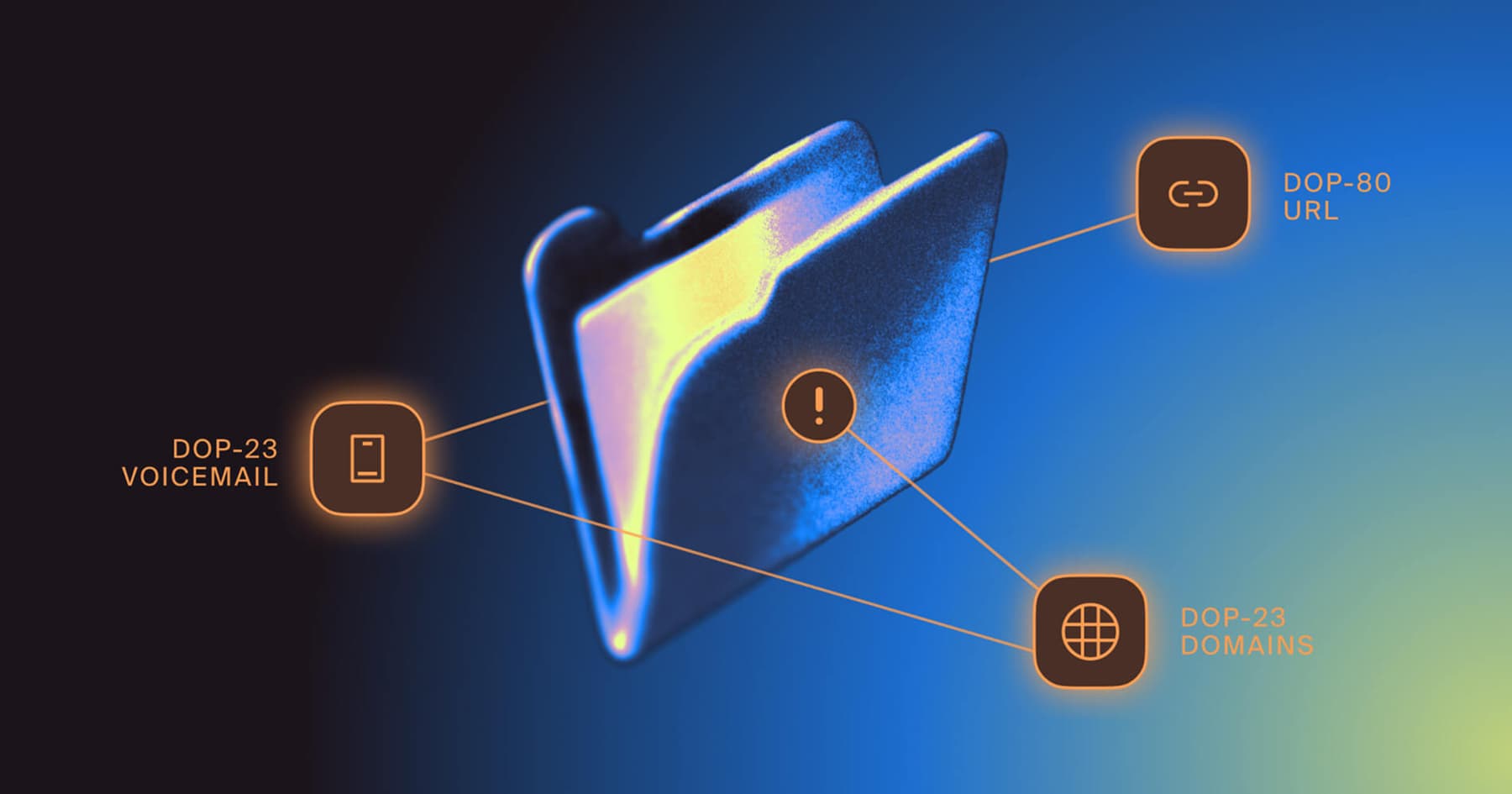
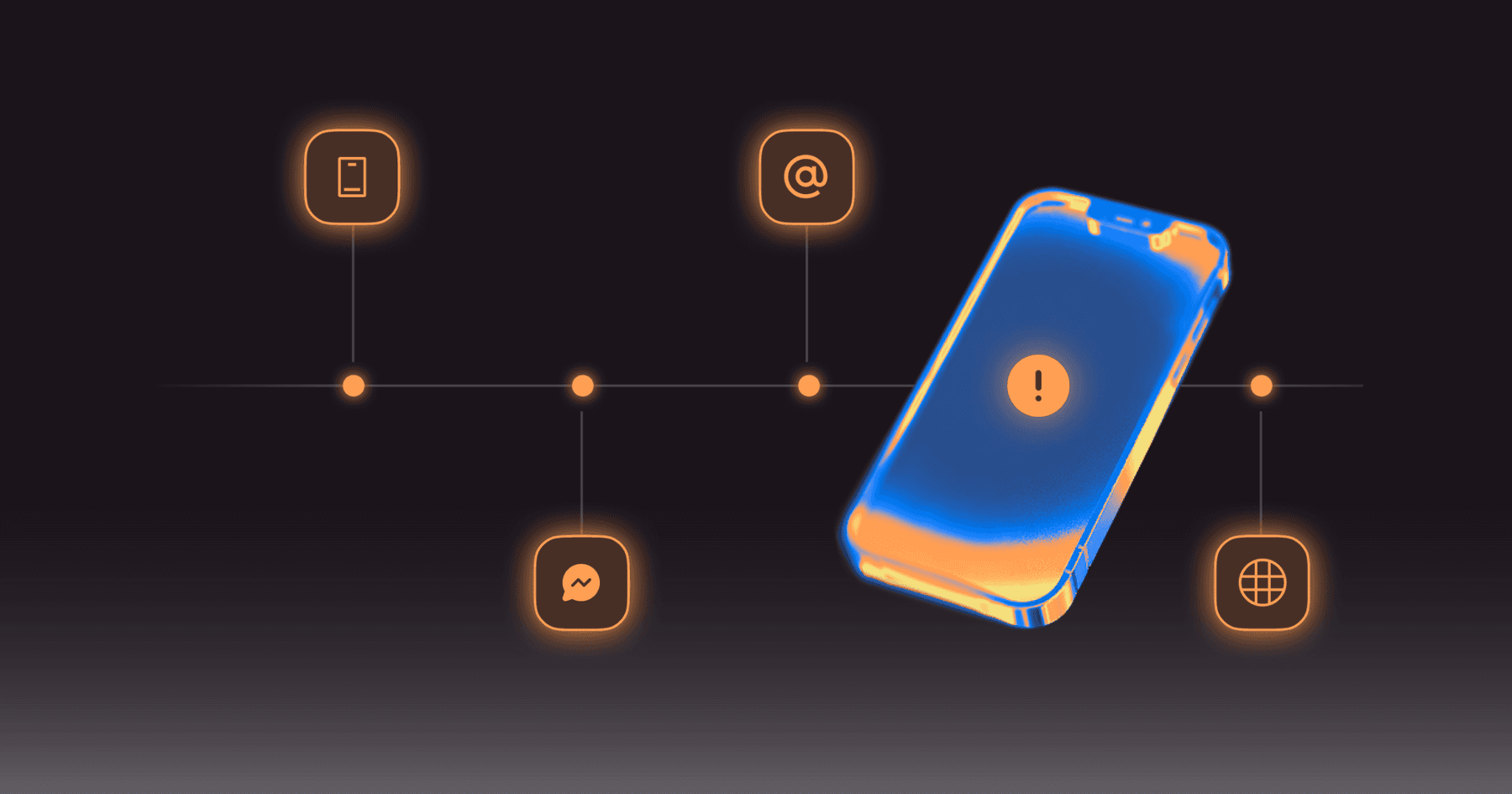
Traditional security tools force analysts to play a miserable game of whack-a-mole with isolated symptoms. Agentic AI, like the engine powering Doppel, looks at the holistic state of a threat. It maps the entire threat graph, connecting a typosquatted domain to a fake LinkedIn profile, a smishing text, and an inbound phishing email.
When you track campaigns instead of alerts, your metrics instantly become board-ready. You're explaining how an AI agent identified a coordinated, multi-channel attack against the executive team and autonomously neutralized the entire operation.
That’s a story of operational resilience.
Human-readable logic builds trust
One of the biggest hurdles CISOs face when discussing AI with the board is the ‘black box’ problem.
Board members are rightfully skeptical of automated systems that make critical decisions without any clear explanation. If you can't explain why the AI took a specific action, the board won't trust the investment.
Doppel's architecture solves this by operating on human-readable policies and intent-based logic.
Instead of relying on rigid, incomprehensible code, Doppel allows your team to set natural-language parameters. When an AI agent executes a takedown, it provides a clear, plain-English summary of its reasoning.
When a board member asks, "Why did we automatically block that vendor's domain?" you don't have to shrug and blame the algorithm. You can show them the exact logic: the agent detected a sudden shift in the registrar, correlated it with a known threat actor's infrastructure, and executed the takedown to prevent an imminent supply chain attack. It's transparent, defensible, and deeply reassuring to non-technical executives.
Tactical vs agentic metrics
To successfully translate your program's value, swap out your old dashboard for metrics that actually communicate risk reduction.
Here’s how you reframe the conversation to highlight true ROI:
Tactical metrics | Agentic metrics | Why the board cares |
Emails blocked or quarantined | Attacker Campaigns Dismantled | Shifts focus from isolated noise to stopping coordinated, systemic threats |
Abuse inbox tickets closed | Machine-Speed Infrastructure Takedowns | Proves the security team is actively destroying threats, not just managing administrative backlogs |
Mean time to respond | Dwell Time Eliminated | Highlights the direct reduction of financial exposure by removing the attacker’s window of opportunity |
Phishing simulation click rates | Real-Time Behavioral Interventions | Shows a proactive culture of resilience, proving that employee risk is actively managed, not just tested quarterly |
Setting the attacker’s ROI on fire
If you want to absolutely nail your next board presentation, stop talking about your own ROI and start talking about the attacker's ROI.
Cybercrime is a highly organized, profit-driven business. Threat actors have budgets, sunk costs, and operational expenses. When you use legacy tools to simply block an email, you cost the attacker absolutely nothing. They just spin up a new free email address and try again.
Agentic AI changes the financial math of an attack.
Doppel doesn't just block the edge symptom; it hunts down the root infrastructure. When Doppel's agents execute a multi-channel takedown, they burn the attacker's paid lookalike domains, rip out their premium hosting pipelines, and destroy their sponsored ad networks.
You're actively bankrupting the adversary. When you explain to the board that your security architecture makes it financially ruinous for syndicates to target your brand, you instantly validate your entire budget. You're protecting the corporate valuation by making your enterprise too expensive to attack.
From cost center to value driver
Executive communication doesn't have to be a painful translation exercise.
When you elevate your metrics from tactical alerts to strategic resilience, the board stops seeing security as a necessary evil and starts recognizing it as a core value driver.
With Doppel's agentic AI, you can walk into your next board meeting armed with a narrative that actually matters. You can show them how transparent, human-readable AI hunts down complex campaigns, destroys attacker infrastructure, and keeps the company's reputation completely insulated from harm.
Stop counting emails. Start dismantling campaigns.
Ready to change the conversation in your boardroom? See how Doppel’s AI-native agents track multi-channel campaigns, execute automated takedowns, and protect your corporate valuation at machine speed.