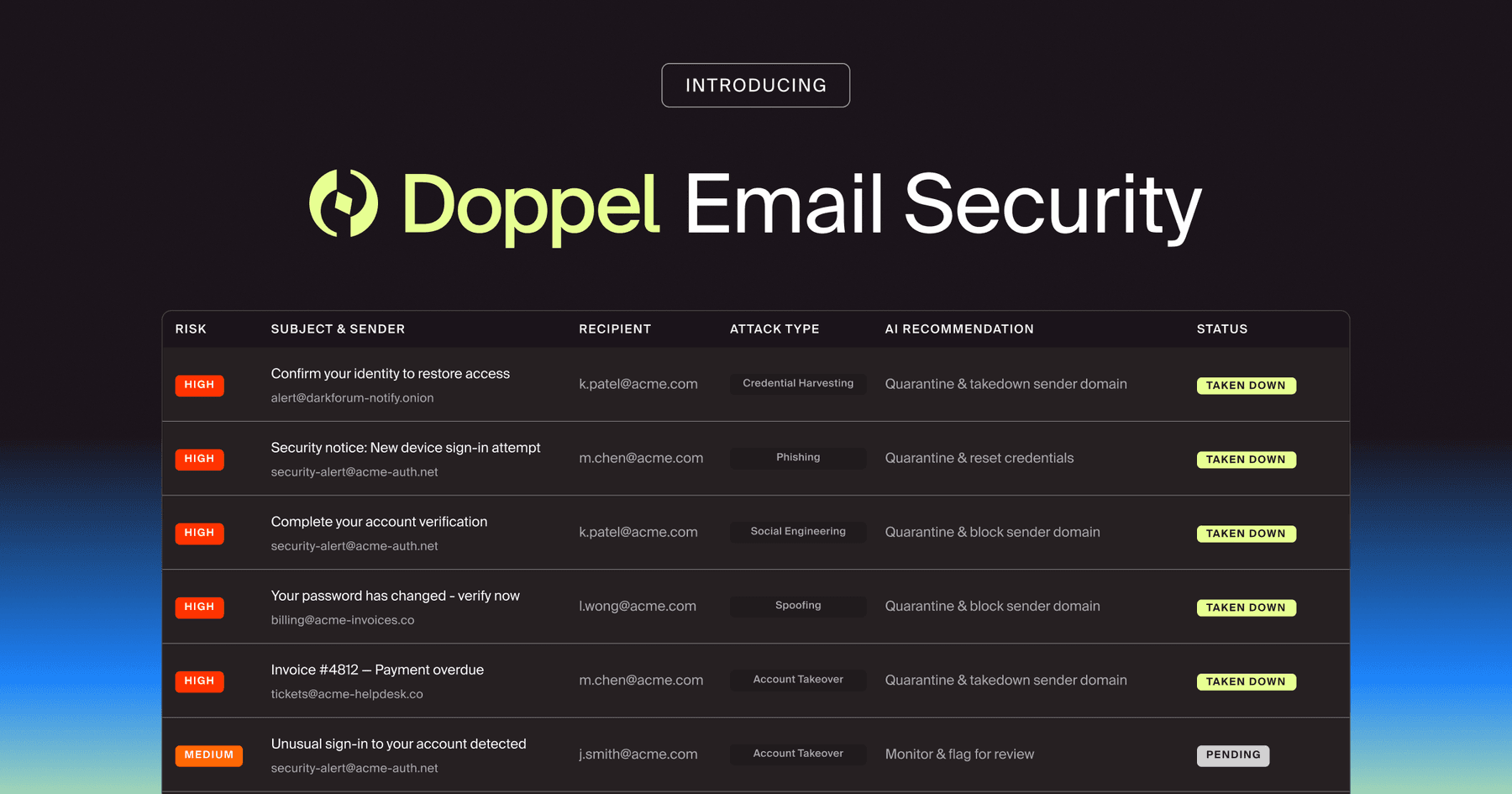
Doppel Email Security is now generally available
The agentic email security solution that empowers you to fight back against social engineering attacks. Detection isn't enough. Disruption is the difference.
Enterprise security teams rely on threat intelligence feeds to flag malicious domains, IPs, file hashes, and URLs before they cause damage. Most programs stop at ingestion, meaning indicators land in the security information and event management (SIEM) system, alerts pile up in queues, and the campaigns producing those indicators keep running. Total cybercrime losses reached $16.6 billion (opens in new tab) in 2024, much of it driven by coordinated, multi-channel impersonation campaigns that no single feed can fully see.
This guide covers what threat intelligence feeds are, how they work, where they fall short against social engineering attacks, what separates a useful feed from a noisy one, and why campaign-level intelligence is the layer that turns raw indicators into action.
A threat intelligence feed is a continuously updated stream of structured indicators that security teams ingest into their stack to detect or block known threats. Typical indicators include malicious domains, IP addresses, file hashes, URLs, malware signatures, and related artifacts. Most feeds ship as part of a broader security product, such as a SIEM, an endpoint detection and response (EDR) tool, or a threat intelligence platform (TIP), and they form the raw input layer that detection and response workflows depend on.
The value of a feed comes from what it lets a security operations center (SOC) do faster: recognize an indicator already seen elsewhere, correlate it against internal telemetry, and either alert or block in near real time. That speed advantage only holds when the feed delivers fresh, relevant, and contextualized data. Without those properties, the feed becomes a source of triage work for the SOC.
Many teams use a three-part model of strategic, tactical, and operational intelligence. Enterprise teams add a fourth layer to the model: technical intelligence.
Most commercial feeds deliver a mix of technical and tactical data, while strategic and operational intelligence usually require analyst-driven products or campaign-level platforms.
Threat intelligence feeds reach a SOC through three layers: standardized data formats, multiple source types, and integrations into the existing security stack. How those layers fit together determines whether a feed strengthens detection or just adds noise.
Standardized formats let producers and consumers exchange threat data without custom integration work. The three formats most commonly used in enterprise programs are Structured Threat Information eXpression (STIX), Trusted Automated eXchange of Intelligence Information (TAXII), and Open Indicators of Compromise (OpenIOC).
STIX is a JavaScript Object Notation (JSON)-based language that models threat intelligence objects and the relationships between them, including indicators, malware, campaigns, intrusion sets, threat actors, and vulnerabilities. TAXII is the transport protocol that moves STIX data between producers and consumers over Hypertext Transfer Protocol Secure (HTTPS).
OpenIOC, developed at Mandiant, is an eXtensible Markup Language (XML)-based format that focuses on host- and network-based forensic indicators for incident response and endpoint detection and response (EDR) workflows. STIX 2.1 and TAXII 2.1 became Organization for the Advancement of Structured Information Standards (OASIS) standards in 2021 (opens in new tab), and major security information and event management (SIEM) platforms support native TAXII ingestion.
Threat intelligence feeds come from three main sources, each of which plays a distinct role in a SOC.
Open source feeds like MISP and AlienVault OTX provide community-generated threat data at no cost, though analysts need to validate indicators before applying them to blocking. Commercial feeds from established vendors deliver curated, vetted indicators with attribution, TTP enrichment, and analyst context.
Industry-specific feeds flow through ISACs (Information Sharing and Analysis Centers) and ISAOs, with the Financial Services ISAC, Health-ISAC, and Multi-State ISAC each distributing indicators tuned to the threat profiles their members face.
Once a feed is selected, it must reach the tools where detection occurs. A common integration pattern published by CISA (opens in new tab) routes feed data through a TAXII client into a TIP, which normalizes, scores, and pushes actionable indicators into SIEMs, EDR tools, and firewalls. The SIEM cross-checks incoming logs against current indicators and alerts on matches.
EDR platforms consume file hashes, process names, and registry keys for host-based detection. Network-layer controls ingest the most atomic content, such as IPs, domains, and URLs. Security teams should always pass raw community indicators through a scoring and validation layer before letting them reach automated controls.
Modern social engineering campaigns generate signals across many channels at once and bypass many of the assumptions that standalone feeds rest on.
Raw indicators without campaign context produce more triage work than defense. An IOC that lands in the SIEM without context creates triage work that consumes analyst hours. Many organizations struggle to curate high-fidelity feeds that improve detection without overwhelming analysts with false positives.
Phishing and spoofing were the most reported cybercrime types in 2024, with 193,407 complaints (opens in new tab). At IC3-reported volumes, an analyst reviewing alerts one by one, with no signal linking them to the same campaign, burns hours on triage while the operation behind the alerts continues untouched.
Single-channel feeds cannot see the full shape of a multi-channel campaign. Any single-channel feed assumes that one channel's indicators can reveal a campaign, and modern social engineering defeats that assumption by design.
Attackers pair vishing with business email compromise (BEC), run paid ads alongside spoofed domains, and move victims from social platforms to messaging apps where conversations stay private, persistent, and outside corporate monitoring.
Telephone-oriented social engineering has emerged as a common initial access technique, driven in part by the growing efficacy of endpoint detection tools, which push attackers to channels and feeds that can't be monitored. A social feed catches the fake profile. Neither sees the SMS lure nor the WhatsApp conversation funneling victims between the two.
Detection without follow-on action allows the attacker to continue operating. Even with current, contextualized, cross-channel intelligence, the attacker's infrastructure stays fully intact behind the indicator. The phishing kit stays live while the impersonation profiles keep posting and the ad campaign keeps spending.
The Tycoon 2FA takedown shows what actual disruption requires: CloudFlare, Coinbase, eSentire, Health-ISAC, and others coordinated to dismantle Tycoon 2FA (opens in new tab). Repeated infrastructure takedowns force attackers to spend time and resources rebuilding. Detection alone imposes no equivalent cost.
Latency, exclusive contribution, and accuracy carry the most operational value when evaluating threat intelligence feeds.
A useful feed maps to where attackers actually target the brand. Existing commercial and ISAC feeds cover network and endpoint IOCs well, but domains, social media impersonation, dark web credential exposure, mobile and messaging channels, and supply chain exposure require explicit coverage. A high-volume feed with zero coverage of the channels attackers actually use delivers noise.
Bloated feeds full of stale IOCs waste storage and processing resources and create opportunity costs, and decay models for IOC retention (opens in new tab) rarely account for how specific threat actors cycle their infrastructure. For social engineering campaigns built on ephemeral domains and disposable infrastructure, latency from the emergence of a threat to the delivery of indicators determines whether a feed is usable or historical.
Indicators only become decisions when they arrive enriched. A useful feed includes:
Without enrichment, a feed adds alerts faster than it adds decisions.
STIX 2.1/TAXII 2.1 compatibility is a baseline requirement given their role as OASIS standards for machine-to-machine cyber threat intelligence exchange. A feed that can't pass output into the SIEM, TIP, and security orchestration, automation, and response (SOAR) tools the team already runs creates a parallel workflow instead of strengthening the existing one.
Campaign-level intelligence answers questions that tactical feeds cannot. Tactical feeds tell a SOC what hit the network. Campaign-level intelligence tells the SOC who is running the operation, how they operate across targets, and where they move next.
Correlation turns isolated alerts into a coherent campaign view. Every campaign leaves connective tissue: infrastructure reuse, TTP patterns, shared payloads, and registrar overlaps. Correlation traces those shared elements to link what appear to be separate incidents, such as a spoofed domain, a fake social profile, and a paid ad, into a single campaign view.
Removing one domain while the attacker's hosting, telco, and social infrastructure remain intact turns it into a game of rotation; the defender loses. The operational payoff of correlation is takedown against the shared infrastructure underneath.
Effective campaign coverage spans every channel attackers use to convert victims. Campaigns operate across domains, social media, paid ads, messaging apps, SMS, voice, app stores, and dark web forums, with each channel serving a distinct function in the conversion path. Telephone-based initial access grew sharply in 2024 (opens in new tab), reflecting a deliberate shift to channels that endpoint and domain-based feeds can't reach. Partial channel coverage leaves the campaign active across the channels you can't see.
Closed-loop workflows turn detection into disruption. When a platform correlates a signal into a campaign view, it can simultaneously submit every connected piece of infrastructure, including domains, social profiles, ad creatives, and telco numbers, for takedown. Every takedown then feeds back into the correlation layer, strengthening detection for the next campaign.
Doppel is an AI-native Social Engineering Defense platform that unifies Digital Risk Protection (DRP) and Human Risk Management (HRM) to detect and dismantle impersonation campaigns across the channels attackers actually use.
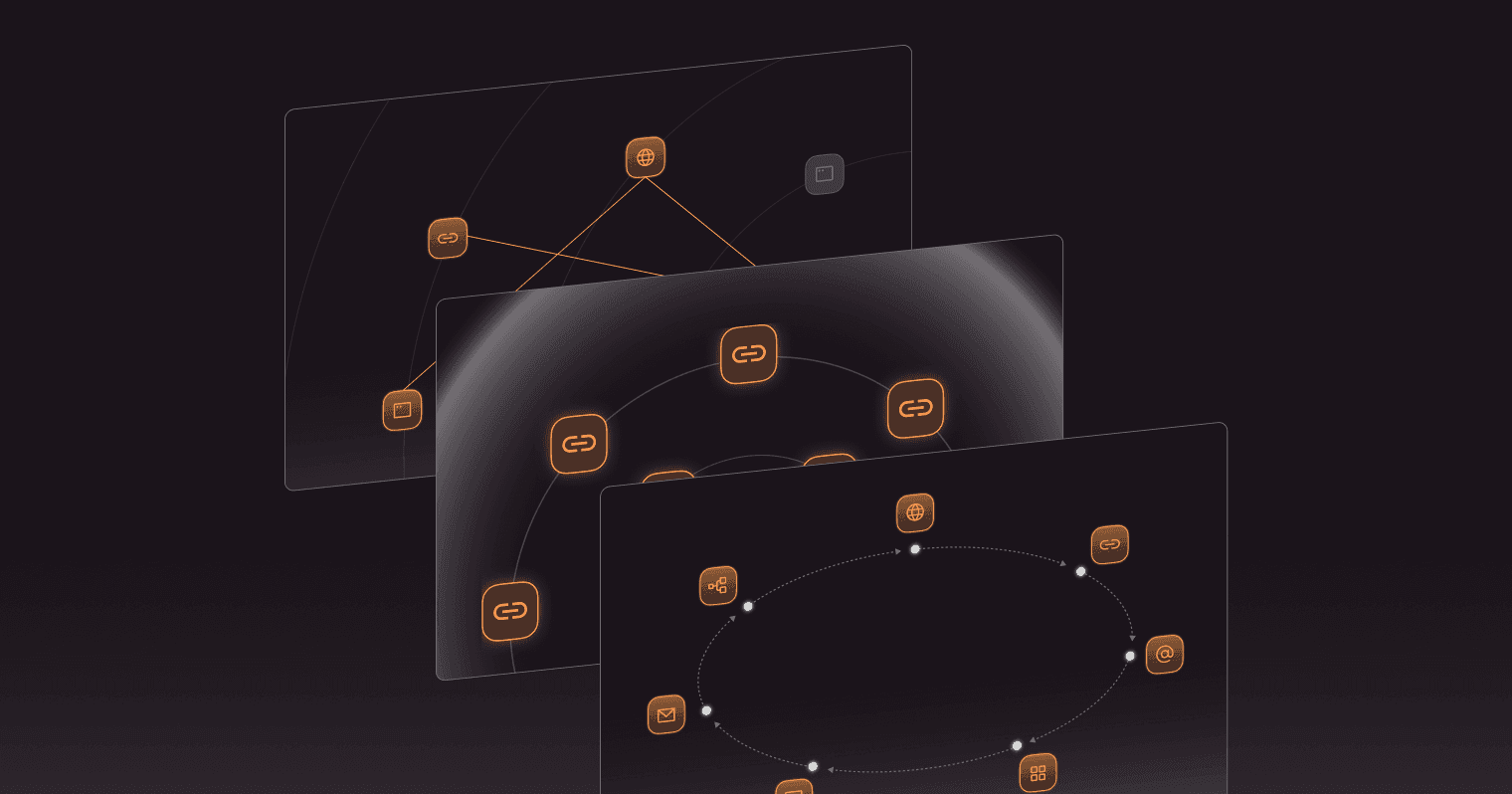
Doppel Threat Graph is the intelligence layer behind that work. It continuously ingests signals across domains, social media, paid ads, messaging apps, telco, dark web, and crypto, then stitches them into interactive campaign views that map full attacker operations.
Agentic AI handles correlation, prioritization, and autonomous cross-vector takedowns across registrars, social platforms, ad networks, and telcos, so analysts focus on the complex escalations that require human judgment.
When the platform surfaces an impersonation domain, Doppel Threat Graph connects related infrastructure, including phone numbers, messaging accounts like WhatsApp, social profiles, related ads, and dark web activity, into a unified view of the broader campaign. Doppel then runs coordinated cross-vector takedowns across the connected campaign infrastructure. Brand Protection extends this across domains, social media, paid ads, app stores, messaging, and the dark web, while Executive Protection targets impersonation of leaders with additional action against phishing sites and credential leaks. Findings from takedowns feed back into the Doppel Threat Graph, strengthening future detection as new attack patterns emerge.
Threat intelligence feeds remain a necessary input, and campaign-level intelligence is what turns those inputs into enforcement. The teams that pull ahead treat intelligence as the foundation for active disruption: correlating signals across every channel attackers use, attributing activity to specific operations, and converting every detection into enforcement that raises the cost of targeting the brand.
Doppel's approach to Social Engineering Defense makes the brand too costly to attack by connecting isolated signals into campaign-level views and dismantling the infrastructure behind them.
To see how an efficient simulation can turn attacker infrastructure into a ready-to-launch employee campaign, preview Doppel Simulation or request a personalized demo to see how Doppel Threat Graph maps and dismantles campaigns targeting your brand.
BLOG
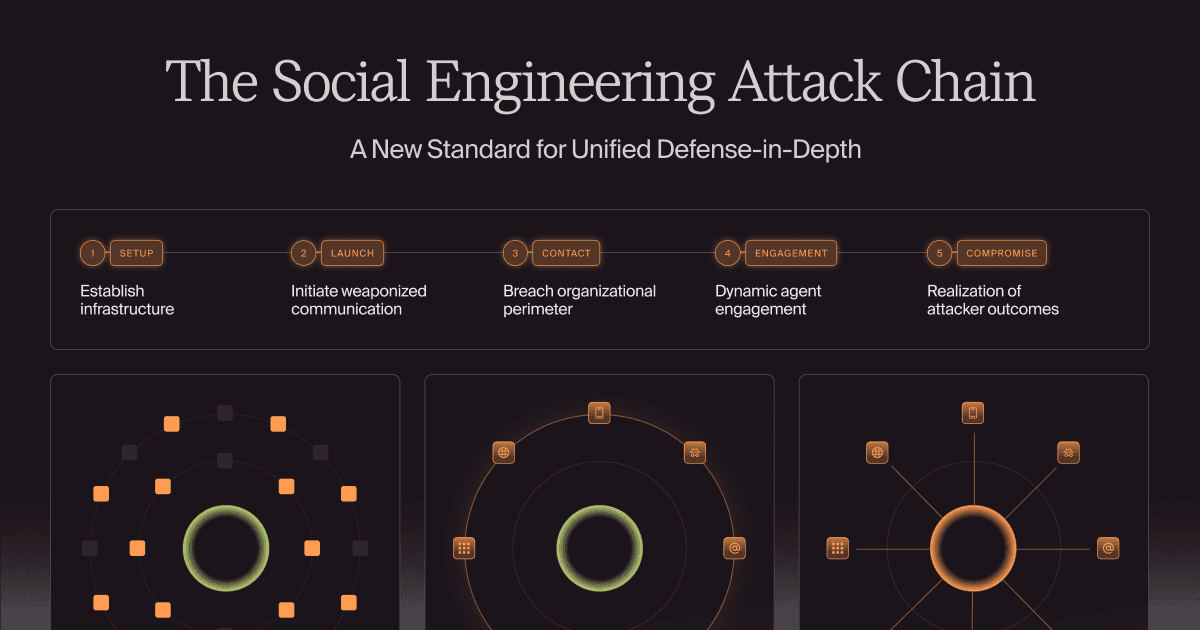
Modern social engineering is a relentless, AI-orchestrated lifecycle. Learn how to map the five-stage attack chain—from setup to contact—and why a unified defense platform is the only way to outpace AI-driven social engineering attacks.



by Bobby Ford, Rahul Madduluri, and Alvin Lin