There’s a massive difference between looking secure and being secure when a motivated, AI-equipped adversary decides your company is their next target.
Threat actors don’t care about your compliance reports. They attack your hidden blind spots, looking for the misconfigured cloud bucket, the newly hired employee with too much access, or the IT help desk analyst who’s too eager to assist a ‘frustrated executive’ over the phone.
Security teams need to embrace red teaming to bridge the gap between theoretical security and true operational resilience.
At a time where adversaries use generative AI and multi-channel social engineering to bypass the perimeter, red teaming is the ultimate stress test for your people, processes, and technology.
Penetration Testing vs Red Teaming: Knowing the Difference
One common misconception among business leaders is that if they’ve paid for an annual penetration test (‘pentest’), the company has been effectively red-teamed. But this is fundamentally incorrect.
While both are critical offensive security exercises, their scopes, methodologies, and objectives differ entirely.
If your goal is to find every technical bug in a specific application, you need a pentest. If your goal is to understand how your organization would fare against an advanced ransomware cartel (opens in new tab) or a nation-state actor (opens in new tab), you need a red team.
Here’s a breakdown of how the two approaches differ.
Feature | Penetration Testing | Red Teaming |
Primary Goal | Identify and exploit as many technical vulnerabilities as possible within a predefined scope | Achieve a specific objective without being detected |
Scope | Highly restricted, such as testing only a specific web application or subnet | Broad and holistic, encompassing the entire organization across physical, digital, and human elements |
Stealth | Low; the blue team (defenders) usually know the test is happening and expects noisy traffic | High; the red team actively attempts to evade the blue team, SIEM alerts, and security gateways |
Duration | Typically 1 to 2 weeks | Extended engagements, often lasting weeks or months, to simulate the ‘low and slow’ approach of advanced persistent threats |
Output | A list of technical patches and software updates | A comprehensive narrative of how an attacker successfully bypassed your human and technical defenses |
How It’s Done: Modern Red Team Methodology
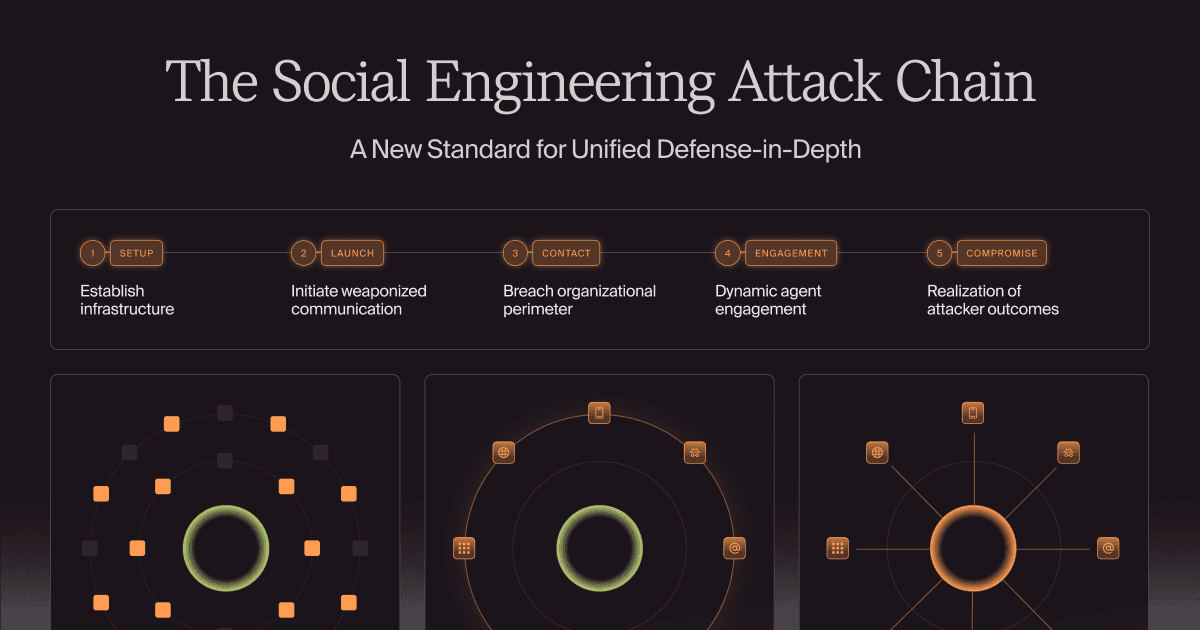
Professional red team engagement mirrors the exact tactics, techniques, and procedures (TTPs) of real-world adversaries. It heavily emphasizes social engineering and open-source intelligence (OSINT) (opens in new tab) because modern attackers know that humans are the path of least resistance.
Here’s how a red team systematically dismantles an organization’s defenses.
Reconnaissance
The attack begins long before a single malicious packet is sent. The red team spends days or weeks scraping public data, analyzing LinkedIn to map your corporate hierarchy, identifying new hires (who are less familiar with security protocols) and executives (who have high-level access).
They might also scour GitHub repositories for accidentally exposed API keys and monitor social media to understand the daily routines of key personnel.
Weaponization and Pretexting
Using the intelligence gathered, the red team crafts the lure. In 2026, this goes far beyond writing a generic phishing email .
They might register a typosquatting domain that looks identical to your corporate intranet. They’ll use generative AI to voice the clone of your CEO from a recent podcast or YouTube video. They’ll purchase a phishing-as-a-service (PhaaS) kit to build a pixel-perfect replica of your Microsoft 365 login page, complete with an adversary-in-the-middle (AitM) (opens in new tab) proxy to intercept session tokens.
Delivery and Exploitation
The red team knows your security email gateway (SEG) (opens in new tab) will likely catch a malicious attachment.
So, they shift channels: sending a text message to a target’s personal smartphone, posing as the IT department requiring an urgent VPN update, and reaching out via WhatsApp under the guise of an external vendor.
The goal is to bypass the technical perimeter by engaging the human target in an unmanaged space.
Action on Objectives
Once the red team has successfully tricked an employee into handing over a credential or approving a multi-factor authentication (MFA) (opens in new tab) notification, the exploitation phase begins.
They log into the corporate environment as a legitimate user. From there, they move laterally, escalating privileges until they reach their pre-defined objectives, whether that’s accessing a sensitive database, proving they could deploy ransomware, or exfiltrating mock intellectual property.
What Red Teaming Actually Uncovers
Red teaming should uncover how the organization’s assumptions failed. Yet many security leaders are often shocked by the findings, which rarely center on complex, unpatchable zero-day exploits. Instead, they uncover glaring human and process failures.
- Human Bypass: Technical controls often crumble against human manipulation. A confident vishing call to the IT help desk posing as a standard executive can easily bypass hardware security keys and multi-million-dollar identity and access management (IAM) strategies (opens in new tab).
- Process Illusion: A documented incident response plan doesn’t guarantee flawless execution. Red teaming tests your security team’s actual reflexes, exposing the gap between when an employee reports a threat and when it’s actually quarantined.
- Shadow IT Vector: Red teams frequently uncover unmonitored SaaS apps or legacy staging servers that employees use for convenience. These forgotten, unpatched assets provide easy backdoor access for attackers.
Red Teaming in the AI Era
In 2026, the necessity of red teaming has grown exponentially due to the speed and sophistication of AI.
Threat actors don’t need weeks to spin up a convincing campaign. LLMs allow them to draft culturally perfect, highly empathetic social engineering scripts in seconds, and voice cloning allows them to weaponize trust instantly. The barrier to entry for launching an enterprise-grade attack has effectively dropped to zero.
Your attack surface changes daily. And if you only test your defenses in March, you’re blind to the new tactics attackers invest in April. Maintaining resilience starts with shifting toward continuous validation.
Automating the Adversary
You can’t fix a vulnerability you don’t know exists. Red teaming forces an organization to face the uncomfortable reality of its security posture, stripping away the illusion of compliance and replacing it with the hard truth of operational readiness. You’ll find the open windows before cybercriminals do.
However, scaling this level of testing is difficult and expensive if done manually. This is where modern defense must leverage automation.
Doppel acts as a continuous, automated red team for your human perimeter. You don’t need to wait for an annual engagement to test your organization’s resilience against the latest AI-driven threats. Doppel exposes social engineering risks with security awareness training and simulations derived from live campaigns , testing readiness on real attacker playbooks.
Validate your organization’s readiness, identify human blind spots, and deliver in-the-moment micro-coaching to harden your workforce against tomorrow’s attacks.
Stop guessing if your human perimeter is secure. Start red teaming your workforce today with Doppel.