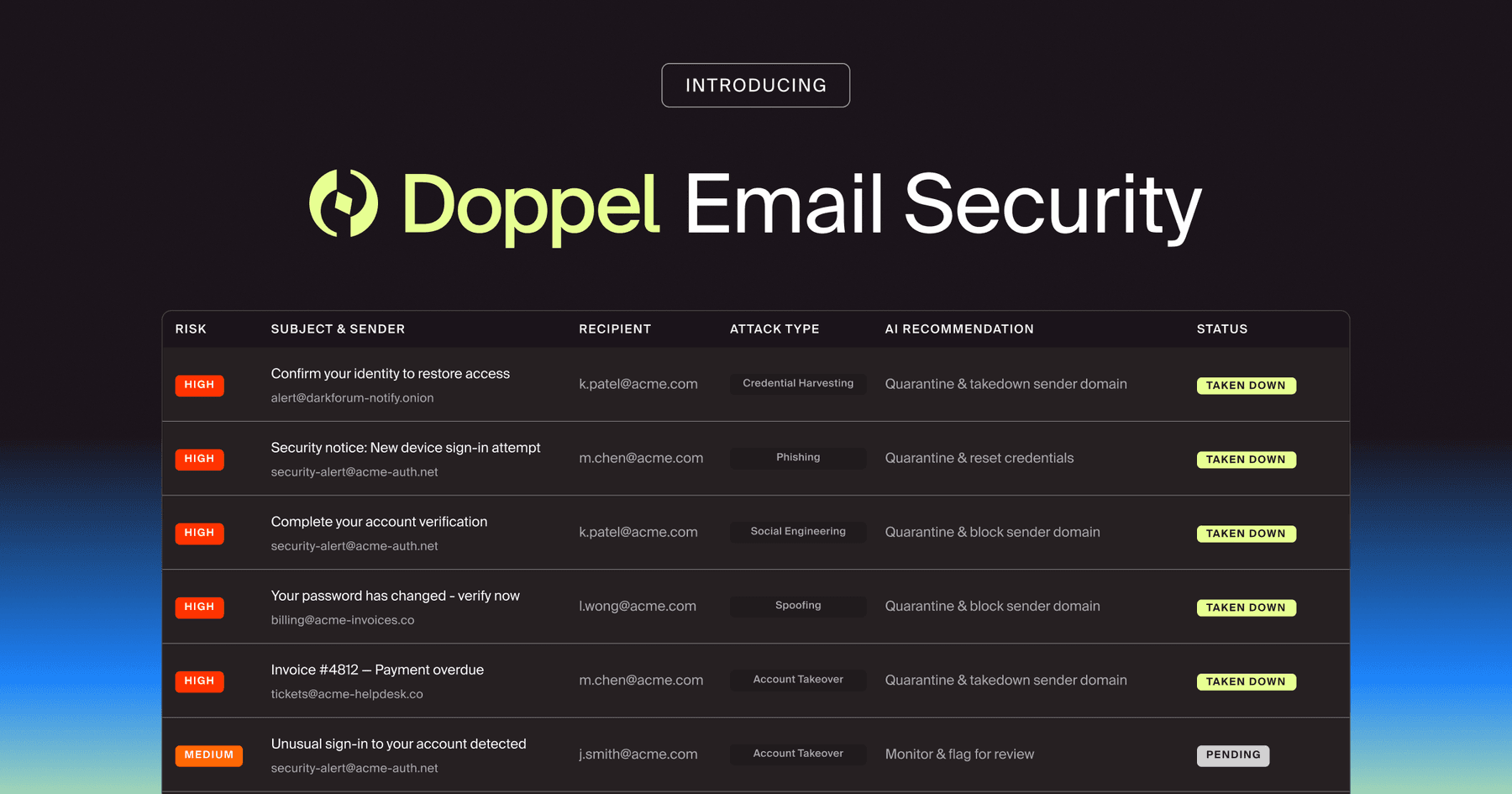
Doppel Email Security is now generally available
The agentic email security solution that empowers you to fight back against social engineering attacks. Detection isn't enough. Disruption is the difference.
That's a wrap for RSAC! Agentic AI is redefining the human perimeter. Learn 5 of the most important takeaways in our post-event strategic recap.
40,000+ RSAC attendees walked away knowing the tough reality that the human perimeter is being outpaced by an order of magnitude.
At Doppel, we spent the week conducting a massive live experiment in human risk. We gathered raw data on how the modern workforce (and even security professionals) fare against AI-native deception.
The results underscore a hard reality: Legacy Security Awareness Training (SAT) is a compliance tool being asked to do a combat veteran’s job.
To survive the next year, organizations must pivot to Social Engineering Defense (SED).
Here are the five key strategic takeaways from RSAC 2026.
Gartner found that 99.9% (opens in new tab) of people can’t distinguish an AI clone from a real person.
We put this to the test with our own “Deepfake Hotline” at RSAC to see if attendees could distinguish between a live colleague and an AI-cloned voice.
Our test proved that this is more than just a vishing problem. The barrier to entry for enterprise-grade impersonation has dropped to zero.
Attackers don’t need to hack your firewall. They just need $5 and a 15-second audio clip of your CFO from a podcast.
This weaponized trust is why we’ve seen an increase in deepfake-based social engineering. If your defense relies on an employee listening for a robotic tone, you have already lost.
Many of the attacks we tracked leading up to RSAC were multi-channel.
An attacker might start with a LinkedIn connection, pivot to a vibe phishing SMS, and conclude with a voice call to the IT help desk to reset an MFA token.
What makes this worse is that most legacy tools are siloed. Your email gateway doesn't talk to your SMS filter, which doesn't talk to your help desk logs. Security teams need a real-time threat graph that links these disparate signals into a single campaign view.
During our RSAC demos, we showed how Doppel turns noise from Telegram, Slack, and paid ads into a unified disruption workflow.
Without this, your dwell time will continue to hover around the industry average of 260 days (opens in new tab)—the longest of any threat vector.
The most common complaint we heard from CISOs at RSAC was alert fatigue. The volume of phishing has increased by over 1,000% (opens in new tab), while the cost for attackers has dropped by 95%.
This is called a velocity gap. AI agents can exploit an exposure in minutes. However, the traditional SOC model relies on manual queues and human analysts picking up tickets.
Autonomous attack agents operate 24/7 at infinite scale, but human speed can’t keep up. Analysts are drowning in "vanity metrics" and manual takedown requests.
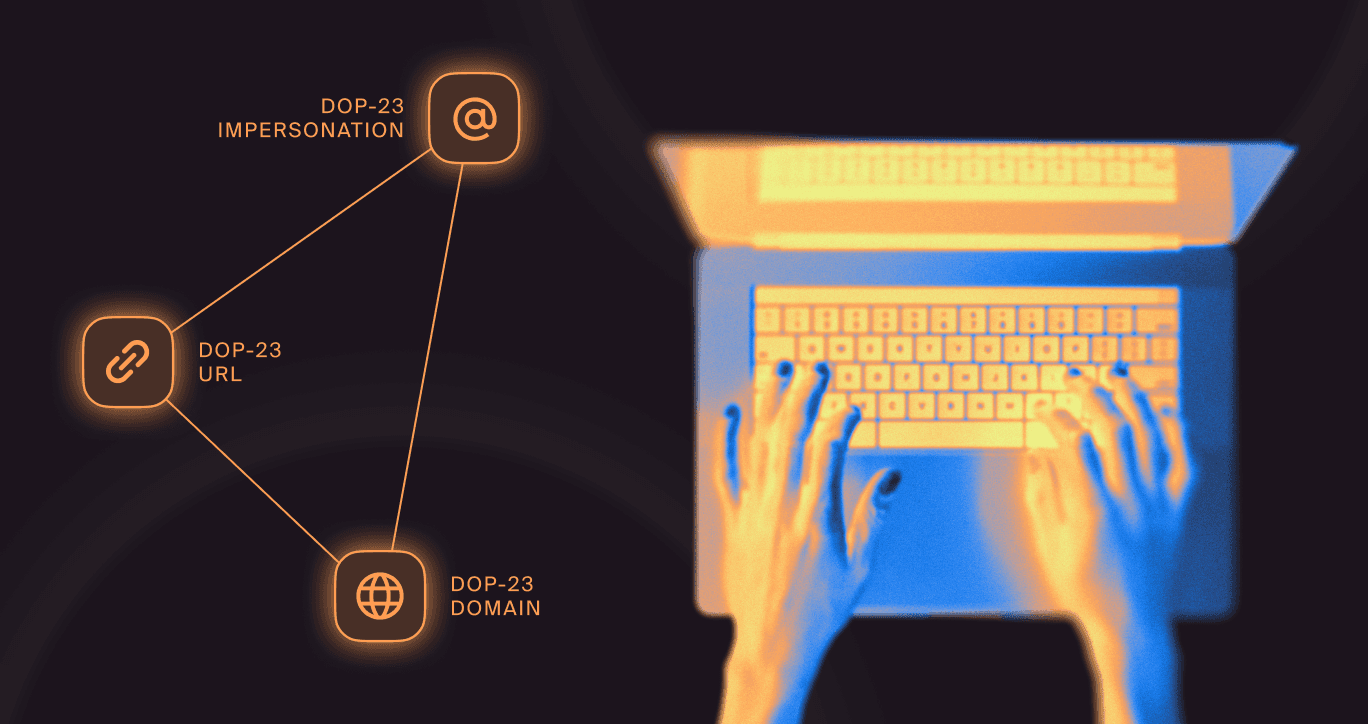
To bridge this gap, defense must become agentic. At our booth, we demonstrated how Doppel’s AI agents execute autonomous, cross-vector takedowns, removing the infrastructure (domains, phone numbers, ad IDs) before the threat ever reaches a human inbox.
For years, the industry has obsessed over click rates in phishing simulations.
But as we discussed in our Human Risk Management (HRM) sessions, click rates are a vanity metric that hides true risk.
Verizon's data (opens in new tab) shows that while training improves reporting rates (21% vs 5%), the median user still clicks a link in under 60 seconds.
In a world of privileged access, one click is all it takes to cause $4.4 million (opens in new tab) in damage.
Legacy SAT | Unified SED (Doppel) |
Focuses on catching employees | Focuses on disrupting the infrastructure |
Email-only simulations | Multi-channel (Voice, SMS, Telegram) |
Static, annual training | Just-in-time micro-coaching |
Compliance-driven | Risk-reduction driven |
The goal shouldn't be a 0% click rate. It’s to build a human sensor network where every report feeds directly into a technical disruption loop.
RSAC 2026 proved that the attack surface changes daily. If you only test your human perimeter once a year during a compliance audit, you are blind to the tactics attackers will use next month.
Our Social Engineering Defense Model advocates for continuous validation. This means:
Whether you made it to the Doppel booth or not, now is the right time to confront the hard truth that technical controls will eventually fail.
When they do, the organizations that survive will be those that invested in active social engineering defense.
Good news: You don't have to wait until next year to see how agentic AI is changing the game.
Schedule a demo to see our AI-native defense in action and learn how to turn your workforce into your strongest security layer.
BLOG
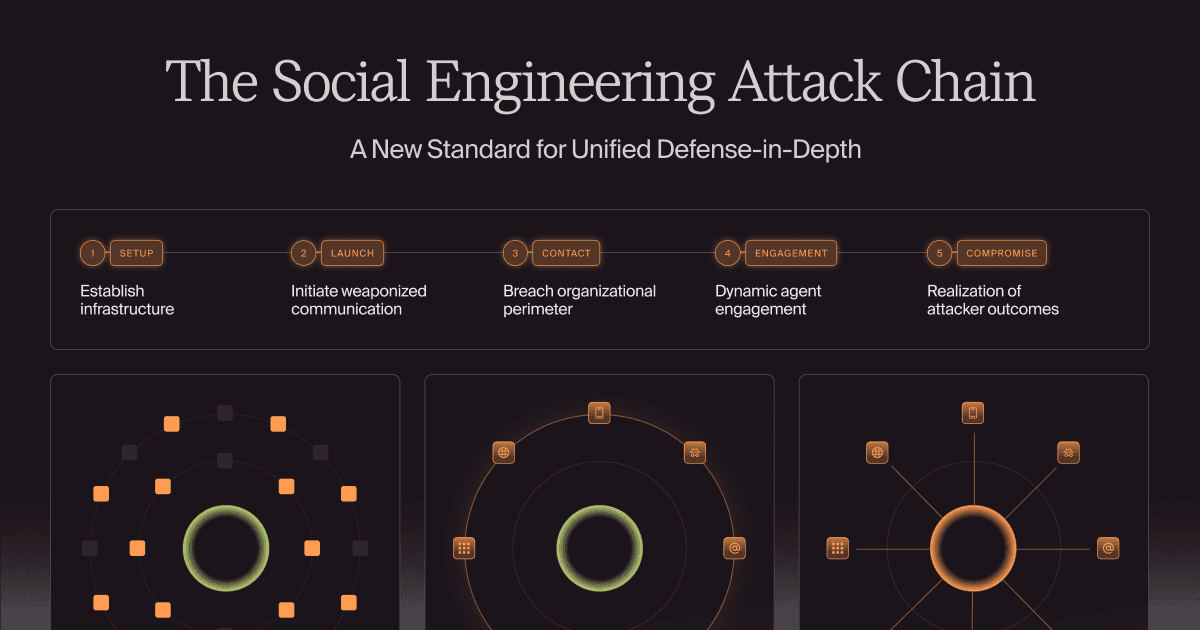
Modern social engineering is a relentless, AI-orchestrated lifecycle. Learn how to map the five-stage attack chain—from setup to contact—and why a unified defense platform is the only way to outpace AI-driven social engineering attacks.



by Bobby Ford, Rahul Madduluri, and Alvin Lin